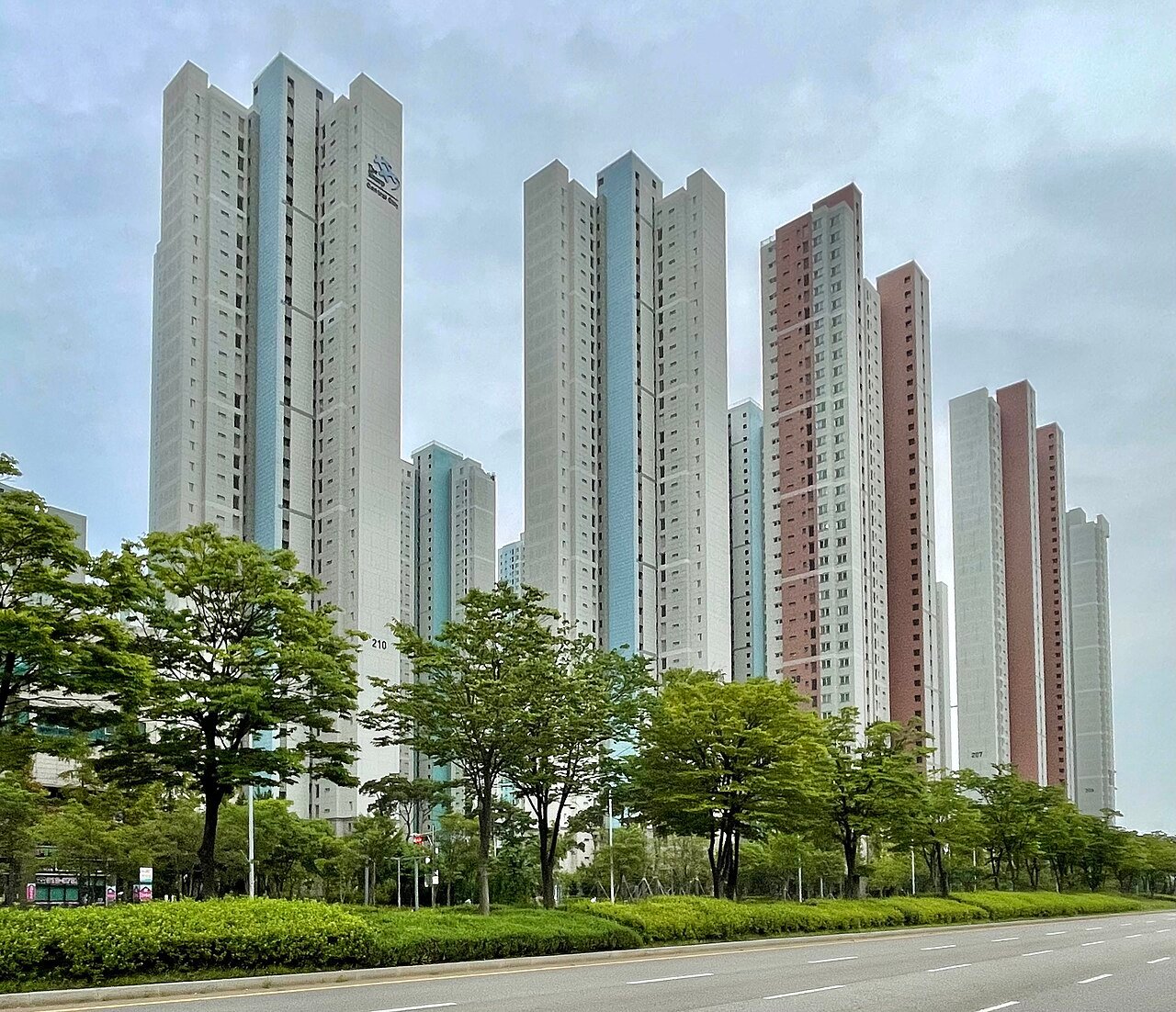
The first Korean apartment listing I ever showed a foreign friend had two numbers on it, and he assumed one of them was a typo. The headline said 34 pyeong. The line underneath said 84 m². He did the arithmetic on his phone, got 25.4, and asked me which one was the lie.
Neither. They are both true, and they are describing two different things. Almost every English-language converter will take your 84 and hand back 25.4 pyeong, which is correct and completely useless, because no Korean listing, agent or neighbour will ever call that apartment a 25-pyeong place. Learning which number is which is most of what you need to read a listing here.
What a pyeong actually is
평 (pyeong) is a traditional unit of floor area. One pyeong is exactly 400/121 square metres, which works out to about 3.3058 m², or 35.58 square feet. The origin is pleasantly human: it is six 자 (ja, a traditional foot) by six ja, roughly the patch of floor a person takes up lying down with their arms and legs spread.
In your head, three pyeong is about ten square metres. That rounding is close enough for walking around a viewing and it is the one Koreans use too. The converter above keeps the exact figure if you need it.
Why the listing says 34 and the contract says 84
Korean apartments are measured more than once, and the two measurements have different jobs.
전용면적 (jeonyong myeonjeok, exclusive area) is the space behind your own front door. Bedrooms, living room, kitchen, bathrooms. This is the number that goes on the contract, the number tax is calculated on, and the number that tells you how much room you actually have. People also call it 실평수 (sil-pyeongsu, real pyeong), which tells you how they feel about the other number.
공급면적 (gonggeup myeonjeok, supply area) is your exclusive area plus your share of the parts of the building everyone uses on the way to their door: the lift, the stairwell, the corridor, the entrance lobby. That share is real in the sense that you paid for it and you pay to maintain it. It is not real in the sense that you can put a sofa in it.
The pyeong number in a listing is the supply area. An apartment with 84 m² of exclusive area typically has around 114 m² of supply area, and 114 divided by 3.3058 is 34.5. So: 34 pyeong. Same apartment, same walls, different ruler.
There is a third one you will meet if you look at new-build brochures. 계약면적 (gyeyak myeonjeok, contract area) adds everything else the complex owns on your behalf: the underground car park, the management office, the gym. It is the largest of the three and the least useful for picturing a room.
And there is a fourth that nobody counts and everybody wants. 서비스면적 (seobiseu myeonjeok, service area) is the balcony. It is excluded from all three figures above, which is why an apartment can feel noticeably bigger than its exclusive area suggests once the balcony has been walled in and joined to the living room, which most of them have been.
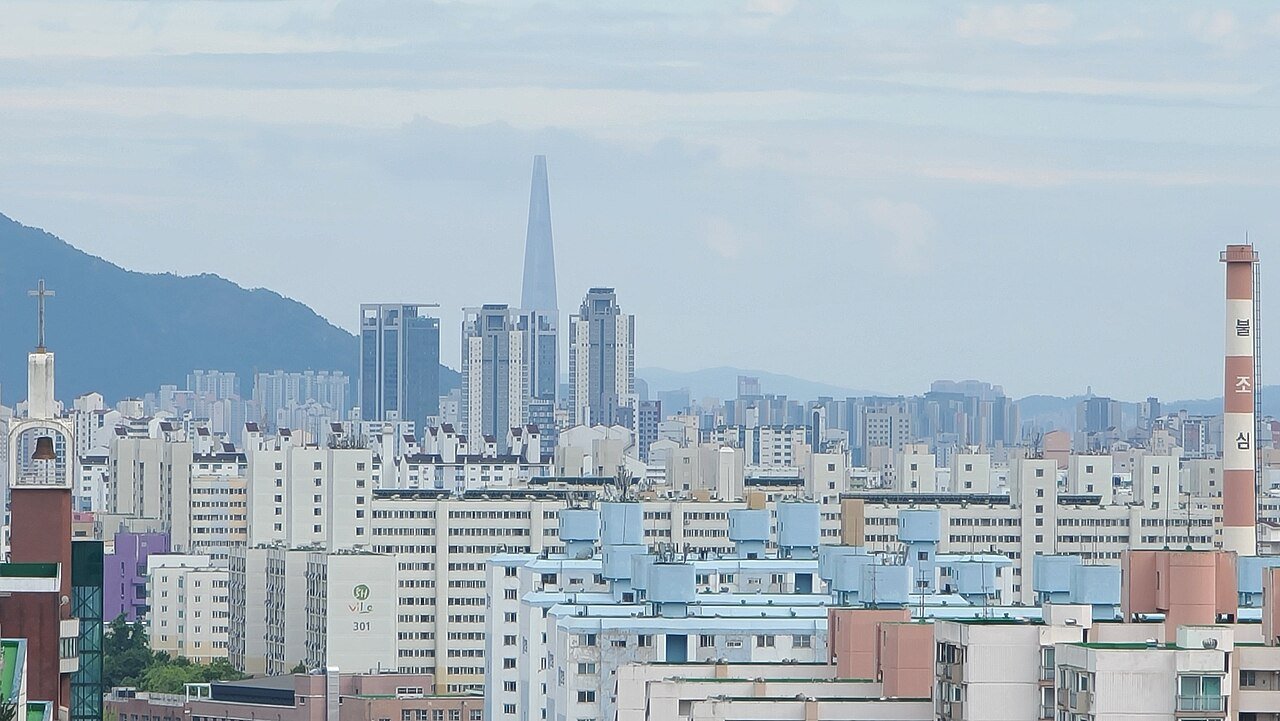
84 in an apartment is not 84 in an officetel
This is the trap that catches people renting for a few months, because a short lease in Seoul very often means an 오피스텔 (officetel) rather than an apartment. The word is office plus hotel, and it is a studio-style unit in a mixed residential and commercial building.
The ratio of exclusive area to advertised area is called 전용률 (jeonyongnyul, exclusive ratio). For apartments it runs around 80 percent. For officetels it is often close to 50. The reason is that officetels advertise their contract area, car park and all, while apartments advertise their supply area. Two buildings, two different rulers, one identical-looking number on the listing.
What that means in the room: an apartment with 59 m² exclusive can feel about the same size as an officetel advertised at 84 m². Officetels also cannot legally have a balcony, so they get none of that service-area bonus either. If you are comparing a listing in one category against a listing in the other, compare exclusive area or compare nothing.
What each size feels like to stand in
Numbers stop meaning much after a while, so here is the ladder people actually use when they talk about where they live.
A 고시원 (goshiwon) room is two pyeong or so. Bed, desk, a bit of floor, usually a shared kitchen down the hall. It was built for students cramming for exams, and it is priced accordingly.
A 원룸 (one-room) studio is usually somewhere between six and nine pyeong, around 20 to 30 m². One room with a kitchen against the wall and a separate bathroom. This is the standard first apartment and the standard short-stay rental.
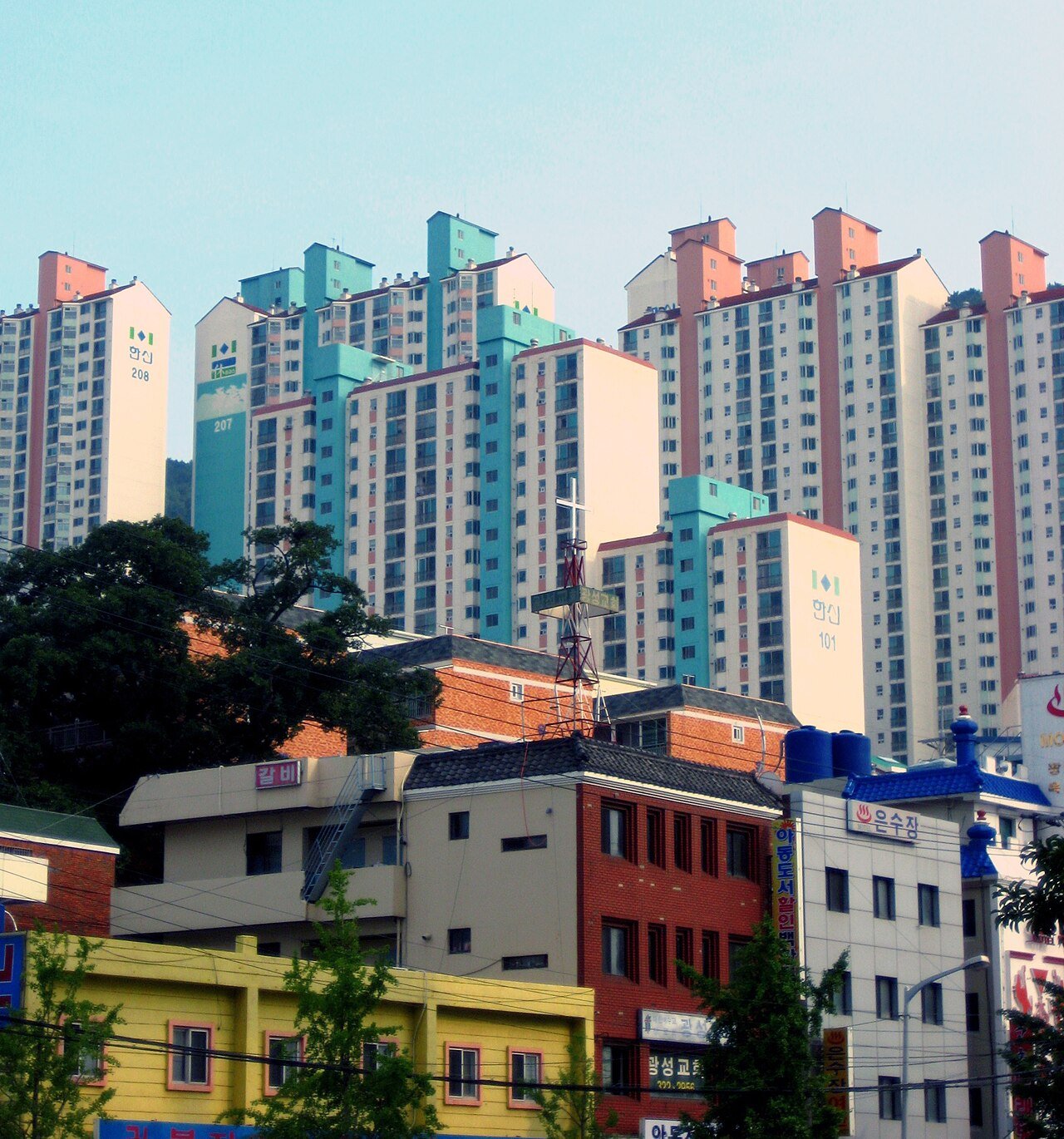
A 투룸 (two-room) adds a bedroom and lands in the low teens of pyeong. Above that you are into family apartments, where 59 m² exclusive is sold as 24 pyeong and 84 m² as 34. That 84 is common enough to have a nickname, 국민평형 (gungmin pyeonghyeong), roughly “the national size”, because it is the one builders have defaulted to for decades.
The fee that scales with the number
관리비 (gwallibi, maintenance fee) is billed monthly on top of rent, and in apartment buildings a large part of it is charged per unit of area. That is one practical reason the supply-area figure is not just marketing: the corridor and the lift you are paying to heat and light are inside that number.
What the fee covers varies, and it is worth asking rather than assuming. In some buildings it is cleaning, security and the lift. In others it also carries heating, hot water, internet, or the water bill. If you want the monthly figure in your own money, our Korean won converter will do it at the day’s rate. A studio advertised at a low monthly rent with a suspiciously round maintenance fee is usually a building that has moved part of the rent into the fee. Ask what is inside it before you sign anything, and ask in writing.
Pyeong has technically been illegal since 2007
Here is the part that surprises people. Korea removed pyeong from its legal units of measurement on 1 July 2007 under the 계량에 관한 법률 (Gyeryang-e gwanhan Beomnyul, the Act on Measurement), pushing everything official to square metres in line with international standards. Using it in a property advertisement can draw a fine of up to 500,000 won.
Nearly twenty years later, nobody says square metres out loud. The industry solved the problem by writing 34평형 (34 pyeong-hyeong, “34-pyeong type”) or “34 TYPE” instead of claiming a measurement outright, and everyone reads it the same way. So the contract is in square metres, the conversation is in pyeong, and you need both.
Quick reference
| Exclusive area | In pyeong | Usually listed as | Roughly |
|---|---|---|---|
| 23 m² | 7.0 | one-room studio | 248 sq ft |
| 39 m² | 11.8 | 16–17 pyeong | 420 sq ft |
| 49 m² | 14.8 | 20 pyeong | 527 sq ft |
| 59 m² | 17.9 | 24 pyeong | 635 sq ft |
| 74 m² | 22.4 | 29–30 pyeong | 797 sq ft |
| 84 m² | 25.4 | 34 pyeong | 904 sq ft |
| 114 m² | 34.5 | 45 pyeong | 1,227 sq ft |
The middle column is the honest one and the third column is the one you will hear. The listed figures assume an exclusive ratio around 74 percent, which is typical for apartments but not a rule; older buildings and officetels sit lower. When a number matters, ask for the exclusive area in square metres and put that into the converter. If you are pricing a whole trip rather than a lease, the Korea trip budget calculator handles nights, food and transport together.
Where to find the number you can trust
On the big listing apps the two figures usually sit side by side, written as 공급/전용 (gonggeup/jeonyong, supply/exclusive) with a slash between them. If you only see one number and it is a round, flattering one, it is the supply area. The exclusive figure is the one to write down.
For anything you are seriously considering, the building’s own paperwork settles it. The 건축물대장 (geonchungmul daejang, building register) records the exclusive area of each unit as registered with the local office, and an agent can pull it up in front of you. Asking for it is normal and slightly flattering, in the way that asking a good question usually is. If the register and the listing disagree, the register wins.
One more habit worth borrowing: when someone quotes you a price per pyeong, check whether they are dividing by the supply area or the exclusive area before you compare it to anything. Dividing the same rent by 34 instead of 25 makes a place look about a quarter cheaper, and nobody has said a single false word.
If you are only staying a month or two
A normal Korean residential lease is written for a year or two, and it comes in two shapes. 전세 (jeonse) is the famous one: you hand over a very large deposit, pay no monthly rent at all, and get the deposit back when you leave. 월세 (wolse) is a smaller deposit plus rent every month, and it is what most people renting a studio are on.
Neither is built for a stay of a few weeks, and the deposit is the reason. A short stay usually means a serviced studio, a share house, a goshiwon, or a monthly booking on a hotel or rental platform, all of which cost more per night than a real lease and all of which skip the deposit. That is the trade you are making, and it is usually the right one for a month. For what the rest of a month here costs, we broke down what a 10,000-won note actually buys.
The area numbers still matter, though, because those listings are written in the same language as everything else. A short-stay studio advertised at 30 m² in an officetel building is a smaller room than a 30 m² apartment, for all the reasons above. Put the exclusive area into the converter, look at the pyeong figure, and picture the goshiwon-to-one-room ladder. That is the number your suitcase cares about. If you are also trying to work out what to pack, Korean clothing runs small — our Korean size converter turns your size into the local one.
Read next
- Korean size converter — your size in Korean numbers, for clothes and shoes.
- Korean shoe size converter — why Korean shoes are labelled 250 and 270.
- Korean ring size converter — the ho number a jeweller here will ask you for.
- Is 10,000 won a lot in Korea? — what one note buys, item by item.