A coworker once caught me reapplying sunscreen at my desk on a grey, overcast January afternoon, indoors, nowhere near a window with real sun coming through it. She just stared for a second and went, “…why?” Fair question. From the outside it probably looks a little unhinged. From here, skipping it would be the weird part.
It’s not really about sunburn
This is the part that trips up a lot of visitors, I think. Western sun-safety messaging is mostly framed around burning — don’t get scorched, don’t get skin cancer, reapply if you’re at the beach. All true here too, obviously. But the bigger driver behind the daily-no-matter-what habit is something Koreans usually call 광노화, or photoaging: the slow, cumulative damage UV does to skin over years, long before you’d ever notice a burn. Fine lines, dullness, dark spots, that leathery texture skin gets with age — a huge chunk of that isn’t from time itself, it’s from decades of unprotected sun exposure quietly doing its thing. Once you frame it that way, “it’s cloudy today” stops being a reason to skip it.
Narrow it down further and the specific fear isn’t really wrinkles either. Ask around and what people say they’re worried about is 기미 and 잡티 — melasma, freckling, the scattered dark patches that turn up on cheekbones and around the eyes in your thirties and are miserable to get rid of once they’ve settled in. The goal people describe isn’t pale skin, it’s even skin: one tone across the whole face, no blotches, no patch that’s darker than the rest. That’s a different target from “don’t burn”, and it explains the intensity. A burn heals in a week. A pigment patch is a project.
Which is also why sunscreen is only one layer of the system. The real strategy here is physical: block the light before it lands. In July you’ll see parasols held by people of every age, and they’re sun parasols, not rain umbrellas — nobody finds it odd. Cyclists, delivery riders, market vendors and a lot of drivers wear 팔토시, fabric sleeves pulled from wrist to shoulder, because forearms catch sun all day and nobody wants two-tone arms. On a golf course or in a field you’ll see the full setup: a visor with a wide brim, a fabric mask that covers everything below the eyes, gloves, sleeves. To a visitor it reads as somewhere between beekeeping and a heist. It’s the same logic as the cream, applied by people who are outside for five hours instead of five minutes.
And the last piece: going to a dermatologist is a completely ordinary thing to do here. There’s a 피부과 on most busy commercial streets, often on the second or third floor above a coffee shop, and people go for pigment, redness or acne with roughly the same emotional weight as booking a haircut. It isn’t a luxury appointment or a last resort, which quietly raises the baseline for how much attention skin gets in general.
Clouds and windows don’t actually save you
UVA rays, the ones responsible for most of that long-term aging damage, go straight through cloud cover. They also go straight through window glass. So a full workday sitting near a window, even on a dreary day, still adds up to real exposure over a year. I used to think I was being paranoid until I actually looked into how little cloud cover blocks UVA specifically, versus UVB, which is more what causes burning and what clouds filter out more effectively. That mismatch — cloudy days feeling “safe” while still delivering aging-relevant rays — is basically the whole reason this became a daily habit instead of an occasional one.
It also helps that the information is unavoidable here. The UV index runs in the daily forecast right alongside the fine dust numbers — not buried in a specialist app, just there in the standard weather panel everyone checks on their phone in the morning next to the temperature and the rain chance. When a number labelled “very high” has been sitting in your weather app since breakfast, the sunscreen step stops being a decision you make and becomes something closer to picking up your keys.
The car windscreen thing deserves its own mention, because it’s the example that converts sceptics. Side windows filter UVB well and UVA poorly, which is why you’ll hear about long-haul drivers whose left side — the window side — visibly aged faster than their right. Whether or not you’ve seen the photographs that circulate about this, plenty of Koreans have, and it’s the reason for the sleeves on the driver’s arm, the tinting film, and the small sunshade suction-cupped to the driver’s window in summer.
Sunscreen here isn’t a separate chore
I think part of why this doesn’t feel like a burden to most people here is that sunscreen isn’t treated as its own annoying extra step, the way it can feel abroad. It’s just the last step of the morning skincare routine, same as moisturizer, and most people go straight from that into makeup or straight out the door. A lot of cushion compacts and BB creams sold here already have SPF built in, so touch-ups during the day double as reapplication without anyone having to smear on a separate white layer over their makeup. There are also sunscreen sticks and mist sprays made specifically for reapplying over makeup without wrecking it, which solves the one thing that used to make midday reapplication genuinely annoying.
Texture matters a lot too, honestly more than I expected before I moved here. Korean sunscreen formulas built for humid summers tend to be thin, almost watery, and dry down without that thick white-cast look older formulas were known for. Once you’re used to that, going back to a heavy, pasty sunscreen from somewhere else feels like a downgrade, not an upgrade.
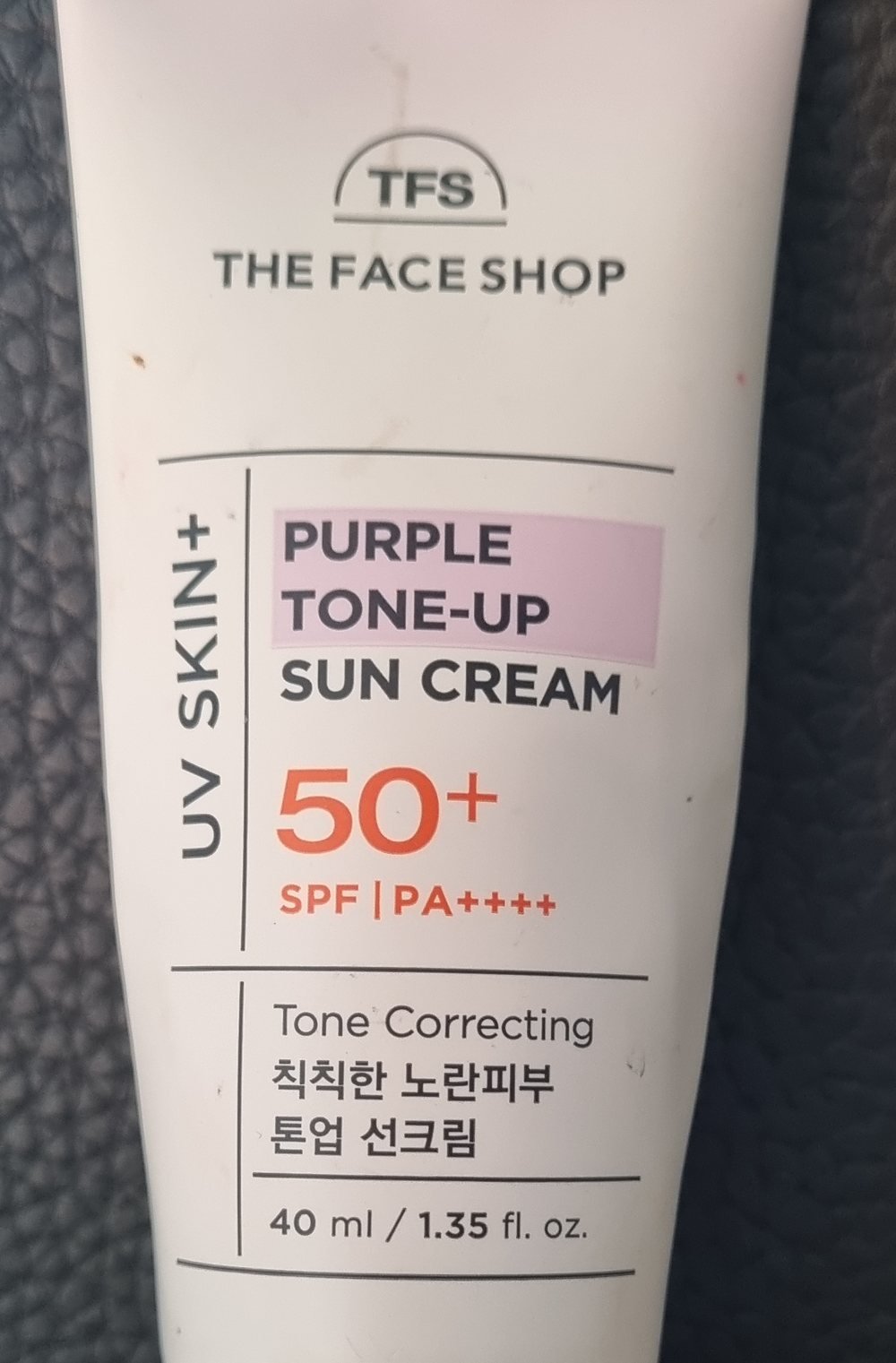
Now the bit that’s genuinely useful if you’re standing in a shop here, and that nobody explains to visitors: Korean sunscreen labels carry two numbers, not one. SPF you already know — it’s the UVB measure, the burning rays. The second one is PA, written as plus signs, and it’s the UVA measure. Korea’s Ministry of Food and Drug Safety, which regulates this, describes SPF as blocking “the UVB that turns skin red” and PA as the grade for “the UVA that turns skin dark”, with the grades set by a UVA protection factor: PA+ covers 2 up to 4, PA++ covers 4 up to 8, PA+++ covers 8 up to 16, and PA++++ is 16 and above. The top grade has existed since the end of 2016.
Read that against the first section of this post and the whole habit clicks into place. Photoaging — the pigment, the dullness, the patches — is a UVA problem, and PA is the number that speaks to it. A tube with a big SPF and a single PA+ is built for not getting burned. A tube marked PA++++ is built for the thing Koreans are actually worried about. The regulator’s own everyday guidance splits it the same way: something around SPF15–30 with PA+ or PA++ for indoor days and short errands, SPF50+ with PA+++ or PA++++ for hours outside in strong sun.
And here’s the single most practical sentence I can give a visitor: you don’t need to read Korean to buy the right one. Everything else on that tube may be in Hangul, but “SPF50+ PA++++” is printed in Roman letters and Arabic numerals on the front of the box. Find those two things and you can ignore the rest of the packaging entirely.
The other distinction people here make out loud is 무기자차 versus 화학자차 — mineral versus chemical filters. Mineral ones use zinc oxide or titanium dioxide and sit on top of the skin; they tend to feel thicker, can leave a faint cast, and are what people reach for when their skin is irritable or they’re putting it on a child. Chemical ones absorb UV instead and are the ones that disappear on the skin, which is why most of the very light, watery formulas belong to that camp; the trade-off is that some of them sting if they migrate into your eyes on a hot day. There are hybrids marked 혼합자차 too. None of this is a prescription and I’m not the person to give you one — it’s just that shoppers here compare those two words the way you might compare matte and dewy, so it helps to know what’s being argued about.
One structural reason the labels are so consistent: sunscreen isn’t sold as ordinary cosmetics in Korea. It falls under the 기능성화장품 category — functional cosmetics — and the protection claims go through the Ministry of Food and Drug Safety’s review regulation. That’s why every tube from every brand carries the same two figures in the same format, and why the numbers are comparable across a shelf instead of being marketing invention. (Checked against the ministry’s own guidance on 11 September 2026.)
Where to buy: Olive Young has the widest range and runs constant one-plus-one promotions, which is how most people here end up with three tubes of the same thing; expect roughly 10,000 to 20,000 won for a mainstream one, less when the promotion is on. Daiso sells perfectly usable small ones for a few thousand won, which is the sensible move if you just want to try the habit for a week. And every convenience store has a small stand of them near the sunscreen-adjacent items in summer, at a markup, for the day you left yours at the hotel.
Winter doesn’t get you off the hook
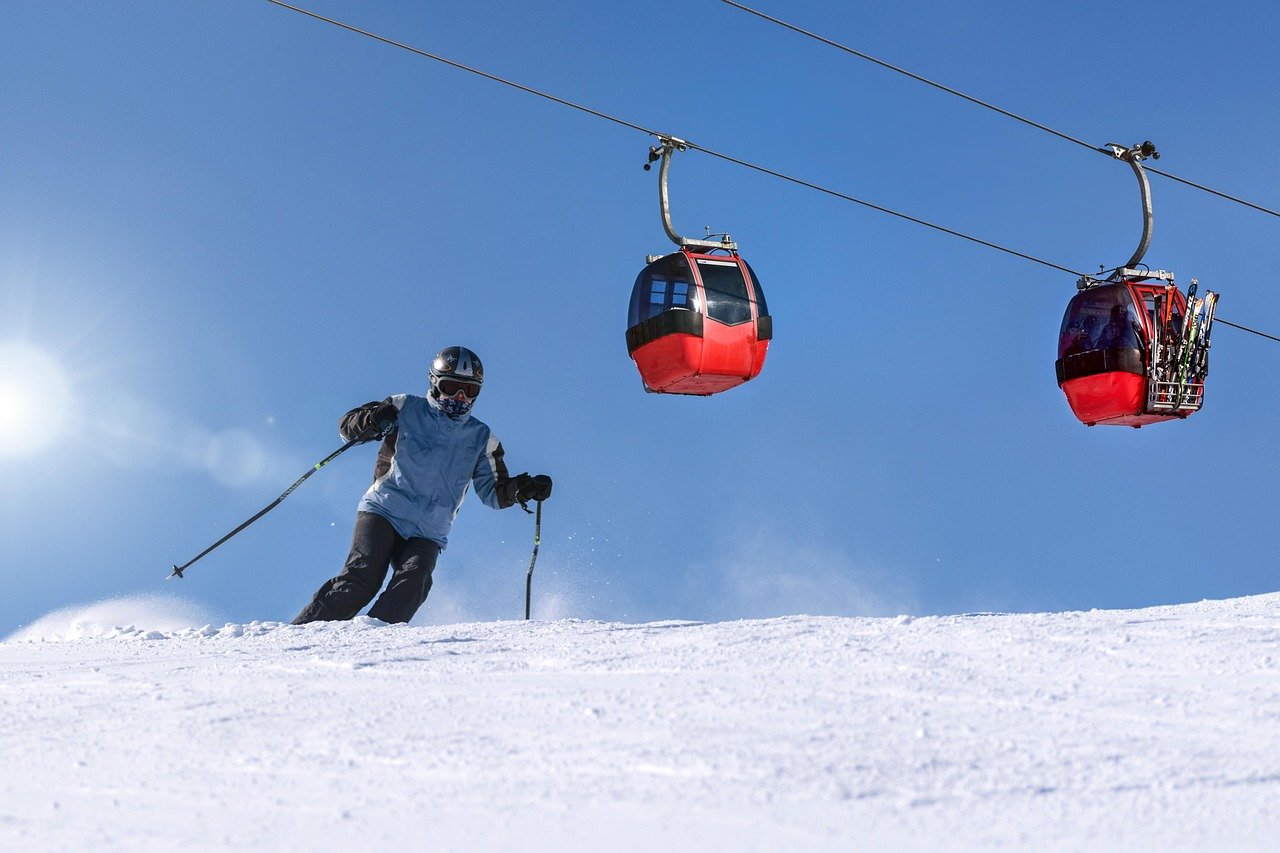
The other thing people find surprising: cold weather doesn’t mean lower UV exposure. UV index tracks with the sun’s angle and how much cloud or pollution is blocking it, not with the temperature. Add in that snow reflects a decent amount of UV back up at your face, and a bright winter day skiing or just walking around can expose skin to more reflected UV than people assume. I still see people layering sunscreen under a scarf and coat, which used to look excessive to me and now just looks like Tuesday.
The ski resorts are where this gets visible. Spend a February Saturday on a slope in Gangwon-do and you’ll notice people applying sunscreen in the gondola queue, in the lodge, on the lift — and you’ll notice the goggle tan, a pale mask across the eyes with a distinctly redder face around it, which is the local shorthand for someone who had a great season and no cream. Between the reflected light bouncing off the snow, the altitude and five or six hours facing open sky, a ski day delivers more UV to a face than most summer afternoons in the city. If you’re going up for a day trip, that’s the one winter occasion where even people who don’t otherwise bother will put something on.
If you’re visiting and want to try the habit
You really don’t need to overthink it. Pick a lightweight, no-white-cast sunscreen — that’s most of what’s on shelves here anyway — apply it as the last step before makeup or sunscreen-with-SPF cushion, and if you’re outside for hours, a compact stick for reapplying over makeup is worth the small cost. I wouldn’t say you need to match the daily-indoors-in-January level of commitment right away. But if you’re already going to be walking around a lot on a trip here, in humidity or glare off pavement or reflected light near the water, it’s one of those small habits that’s easy to pick up and mildly addictive once your skin gets used to it. I didn’t expect to become one of those people who panics slightly at an empty sunscreen tube, and yet here we are.
Buy it here rather than at home, though, and not only for the price. Korean sunscreens sold abroad are frequently a generation behind what’s on the shelf in Seoul, sitting in a warehouse somewhere at two or three times the local price, and the formulas people rave about online are often reformulated or renamed by the time they reach an overseas retailer. The lightweight textures exist because they were built for a summer that runs at ninety percent humidity, and the shop you’re standing in has the current version.
On the label, you’re looking for exactly two things: the SPF number and how many plus signs follow PA. Everything else — the brand, the flowery name, the claims — is preference. And if you’re also picking up a cushion compact while you’re in Olive Young, know that many of them carry their own SPF and PA rating on the case, which is why reapplying makeup here doubles as reapplying sun protection; the shade numbering on those, which confuses absolutely everyone, is unpicked in our cushion foundation post.
Read next
- Korean Cushion Foundation Shades: What 21 and 23 Actually Mean — What the shade numbers on the cushion mean.
- Why Tourists Are Getting Glasses in Korea: The Same-Day Optical Shop Trend — Another Korean thing done same-day and cheap.
- Korean won converter — What those prices come to in your currency.