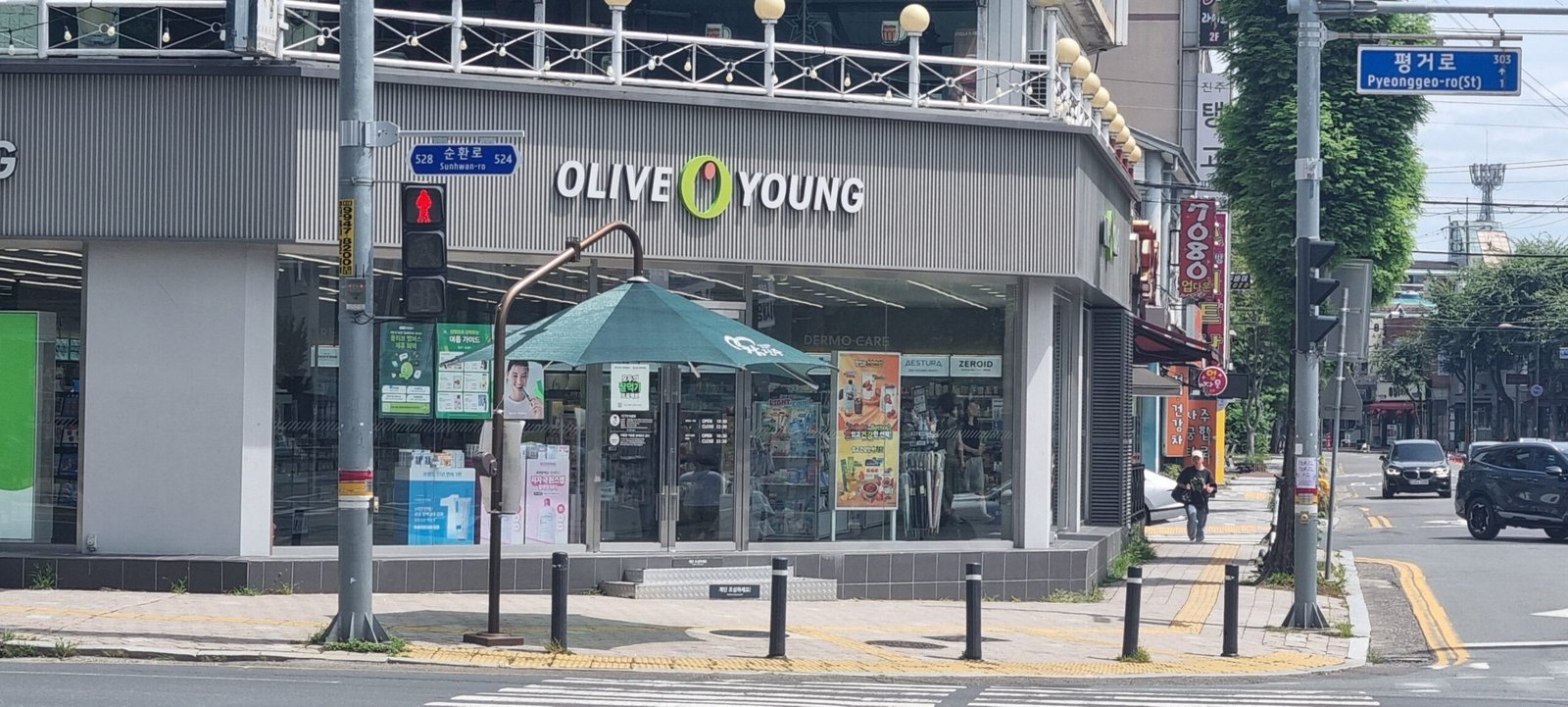
Stand in front of the base makeup wall at any Olive Young and you’ll notice something odd if you’re used to buying foundation anywhere else. There are no names. No Warm Sand, no Golden Praline, no helpful little strip of printed swatches running left to right. Just small compacts with a two-digit number stamped on the box, and a lot of them say 21.
That numbering system trips up almost every visitor I’ve watched try to buy a cushion here. It’s not complicated once someone explains it, but nobody does, and the staff don’t always have the English for it. So here’s the whole thing.
The numbers are a scale, and they run light to dark
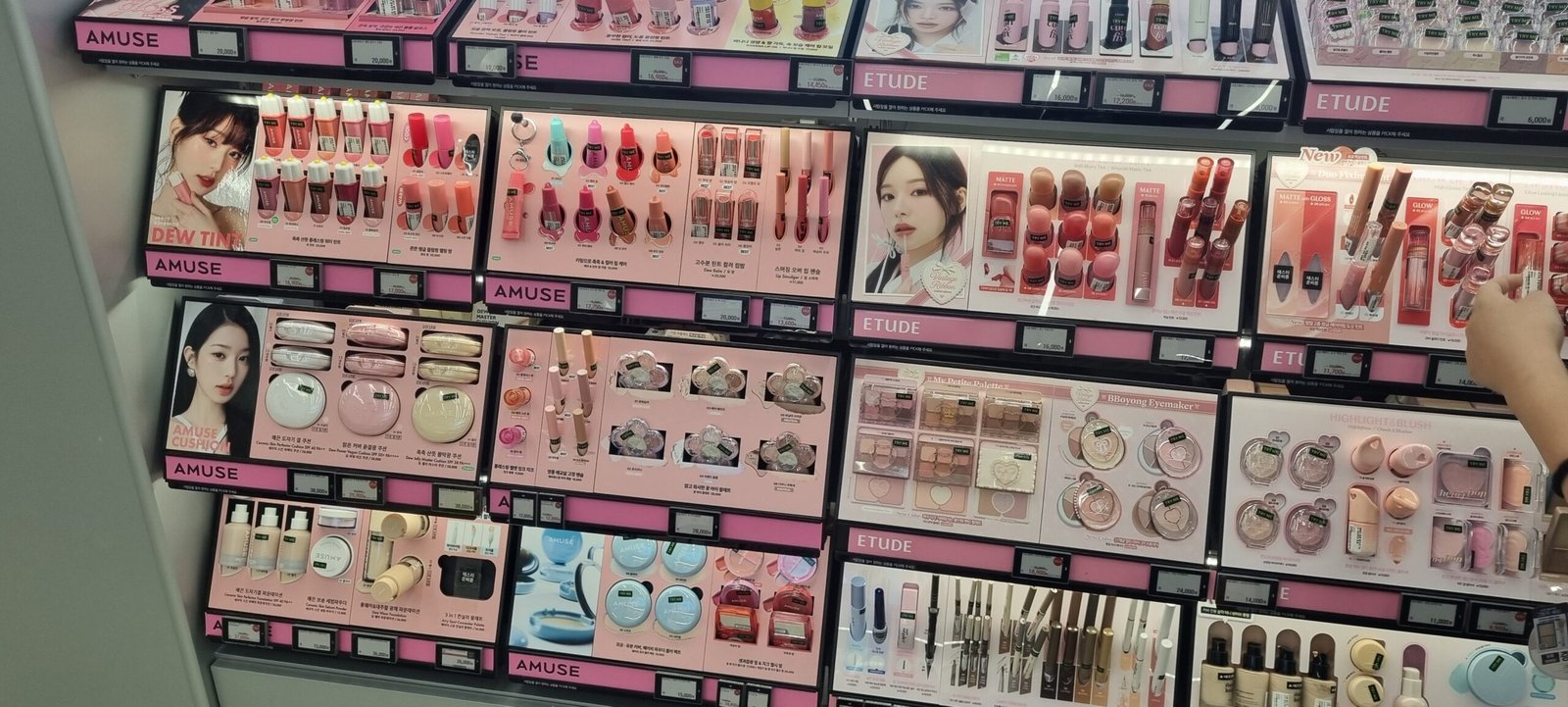
Lower number, lighter shade. That’s the entire logic. The sequence you’ll see most is 13, 17, 21, 23, and occasionally 25 or 27 — odd numbers, uneven gaps, no obvious reason for either. It’s a convention inherited from the Korean cosmetics industry decades ago and it just stuck.
In practice, two of those numbers do almost all the work. 21 is the light shade. 23 is the one labeled as normal or natural. If a brand only makes two shades, and plenty still do, those are the two. 13 and 17 exist for genuinely pale skin and are usually online-only or limited-run. 25 and above have historically been rare enough that spotting one on a shelf felt like a small event.
Here’s the part that matters for anyone shopping from outside Korea: these numbers are calibrated to a fairly narrow slice of skin tones. A 23 is not a Western “medium.” It’s closer to a light-to-light-medium in most Western ranges. If you normally reach for the middle of a 40-shade lineup at home, the darkest shade on a typical Korean shelf may still be too light for you. Not always, but often enough that you should walk in expecting it.
The letters after the number are the useful part
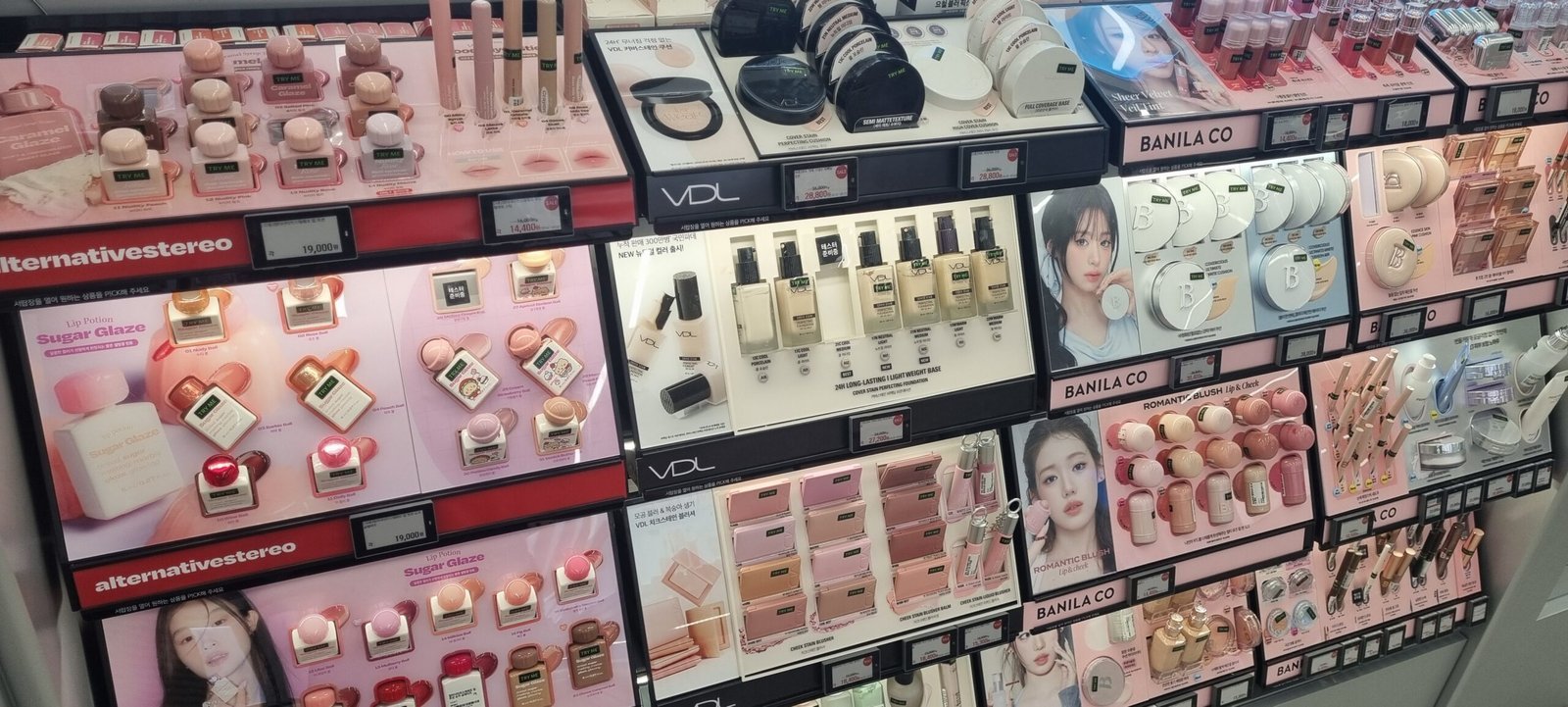
Newer lines add a letter, and this is where the system actually gets good. N is neutral, C is cool (pink-leaning), W is warm (yellow or golden-leaning). So 21N, 21C, 23W, and so on. Some brands stack a digit on top of that — 21N1, 21N2 — where the extra number is a small step within the same tone family.
Undertone is genuinely the thing that makes a base look wrong, more than depth does. A shade that’s slightly too light but matched on undertone reads as a bright complexion. A shade that’s perfectly matched on depth but pink when your skin is olive reads as a mask. If you have any choice at all, prioritize the letter over the number.
Older or more traditional lines skip letters and use words instead: Ivory, Vanilla, Sand, Natural Beige, Linen, Ginger. There’s no cross-brand standard for these either. Ivory is usually around a 21, Sand usually around a 23, but that’s a pattern rather than a rule.
Which raises the question the labels never answer: how do you know your own undertone. The quickest check in a store is jewelry. If gold sits better against your skin than silver, you lean warm; if silver looks cleaner and gold goes slightly yellow against you, cool; if both look fine, neutral, which is a lot of people and the reason N exists at all. The second check is the swatch itself — a cool shade on warm skin goes faintly grey at the edges as it blends, and a warm shade on cool skin goes faintly orange. You will see it before you can name it.
A 21 in one brand is not a 21 in another
Nobody governs this. The numbers are a shared vocabulary, not a shared measurement, so a 21 from one company can land noticeably lighter or pinker than a 21 from the company next to it on the same shelf. Two things make that worse.
First, tone-up. A lot of Korean cushions are formulated to sit slightly brighter than your actual skin on purpose, because that brightened look is the aesthetic being sold. It means a “correctly matched” shade can still finish lighter than your face, especially in flash photos.
Second, oxidation. Cushion formulas can deepen a little over the first few hours on skin. It’s less dramatic than it used to be, but it’s real, and it’s why swatching one stripe and deciding in ten seconds is a bad method.
How to actually test one in the store
Every cushion on display has a tester, and you’re expected to use it. Nobody will hover.
Swatch along your jawline, not on the back of your hand — hand skin is a different color from face skin on basically everyone, and it’s the single most common mistake I see. Put two candidate shades side by side, blend both, then walk toward the front of the store where there’s daylight from the windows. Store lighting is bright, warm, and extremely flattering, which is on purpose and useless to you. Give it a few minutes before deciding, so oxidation has a chance to show up.
One more practical thing: most cushions come with a refill compact tucked inside the box, so the price you’re seeing usually covers two. Refills sold separately later run cheaper than the full kit. At Olive Young, expect somewhere in the range of ₩20,000–35,000 for the popular ones. Department store brands like Hera sit much higher, ₩60,000 and up.
Two small things make testing easier than it sounds. There are cotton pads and remover at the tester counter, so you can wipe a wrong shade off your jaw and start over instead of walking around wearing it. And the staff will fetch things — point at a compact and hold up two fingers and you will get the shades either side of it to compare. Nobody follows you around trying to close the sale afterward, which is the part visitors brace for and never get.
If you’re looking for deeper shades
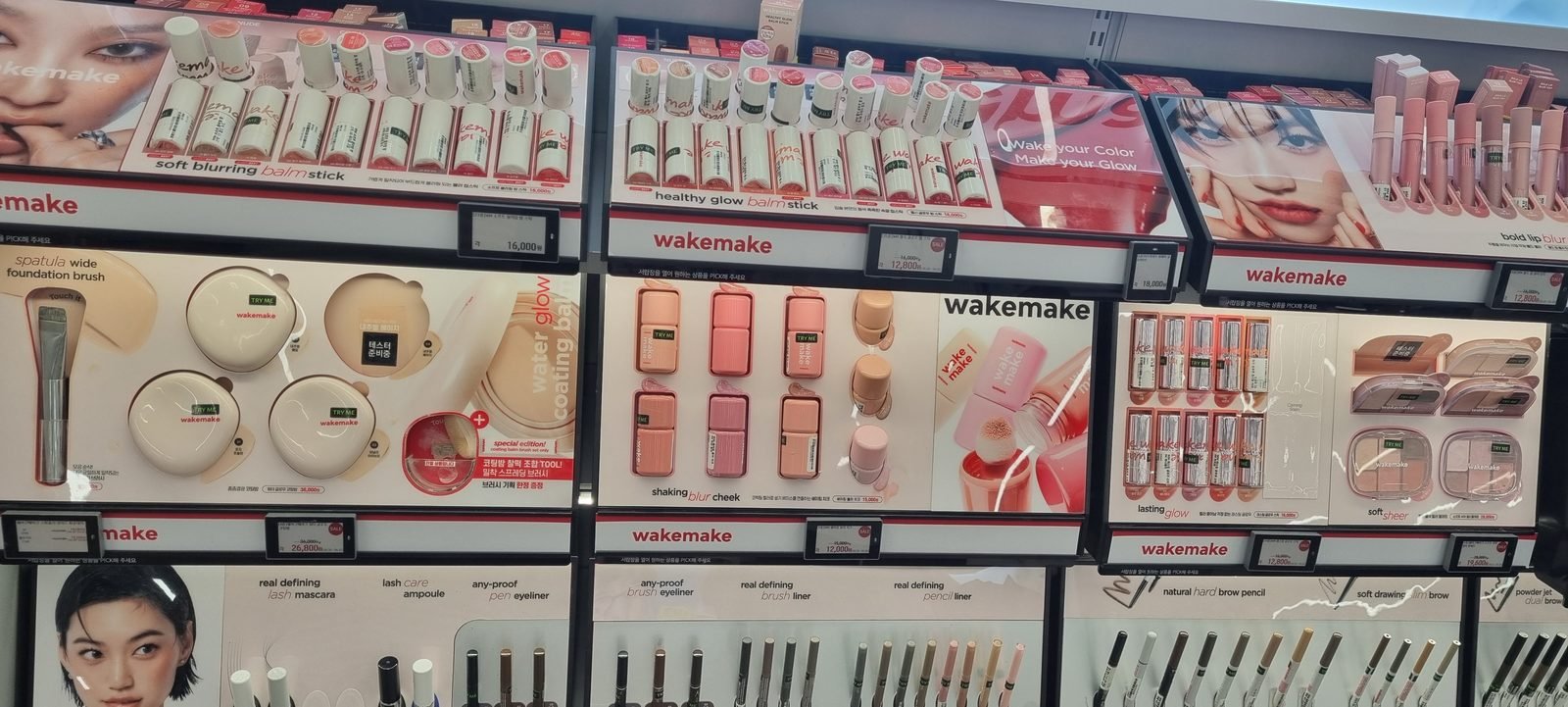
The honest answer is that the range depends heavily on which brand you’re standing in front of, and the gap between the legacy names and the newer ones is enormous.
TIRTIR is the one to know. Their Mask Fit Red Cushion is the reason this whole conversation changed — the line expanded to dozens of shades after enough people online pointed out that “universal” Korean bases were nothing of the kind, and it now covers a genuinely wide span including deep and olive tones. It rolled out to around 148 Olive Young locations in mid-2025, so you can find it in physical stores rather than only online.
Clio (the Kill Cover family) and Espoir both run wider than the old standard, though not as wide as TIRTIR. They’re solid options if you’re a shade or two past what the legacy brands offer.
The traditional department-store names — Hera, Sulwhasoo, IOPE, Laneige — make lovely formulas and still mostly stop around 23, sometimes 25. If you need deeper than that, they’re likely not your shopping trip, however good the reviews are.
The store-versus-online gap nobody warns you about
This is the trap. A brand can advertise thirty-plus shades and the shelf in front of you carries a subset of them, skewed light, because that’s what sells locally. The full lineup lives on the brand’s own site or on Olive Young’s international store. I’ve seen people fly in specifically to buy a shade they’d seen listed, and find the physical shop stocking maybe half the range.
So if you’re set on a particular shade that’s outside the usual 21/23 band, check availability before you build a shopping day around it, or plan on ordering it. And if the shade you want simply isn’t there: buy the closest one that’s slightly too light and warm it down with a bronzer or a darker powder. That works better than going too dark, which never blends convincingly at the jaw.
One more thing specific to how these stores are laid out: in a district like Myeongdong or Hongdae there isn’t one Olive Young, there are several within a few blocks, and they do not carry the same stock. The flagship carries the widest range. The small branch by the station carries what moves fastest, which means the light end of it. If the shade you want isn’t on the shelf in front of you, the answer is sometimes two streets away rather than online.
Shade lineups also move fast in this market — brands add and quietly discontinue shades within a year. What I’ve described here is where things stood as of September 2026, and TIRTIR’s expansion in particular is recent enough that the shelf keeps changing. Worth a quick check before you go.
None of this makes Korean base makeup a bad buy. The formulas are genuinely excellent, the finishes are hard to find elsewhere at the price, and the packaging is absurdly convenient for touch-ups. You just have to read the numbers, and now you can.
Clothes are their own version of the same problem, incidentally. Korean tags use 55, 66 and 77 instead of S, M and L, and those numbers are not measurements either — here is what Korean clothing sizes actually mean.
Read next
- Why Koreans Wear Sunscreen Every Single Day, Even Indoors and in Winter — The habit the whole routine is built around.
- Why Tourists Are Getting Glasses in Korea: The Same-Day Optical Shop Trend — Another Korean counter worth twenty minutes.
- Why You’re Suddenly an XXL in Korea (And Where to Actually Find Your Size) — Sizing, in the shop next door.