Every so often someone messages me in a slight panic because they’ve got a fever, a twisted ankle, or a stomach that’s given up on them, and they have no idea what to do about it in a country where they can’t read the pharmacy signs. I get why it’s scary. But honestly, out of everywhere I’d want to deal with a health scare while traveling, Korea is near the top of the list. The system is fast, it’s cheap, and more foreigners are using it every year — over two million overseas patients came to Korea for medical care in 2025 alone, a jump of more than 70 percent from the year before. That’s not tourists getting stitches, mostly, but it tells you something about how the healthcare here is regarded internationally.
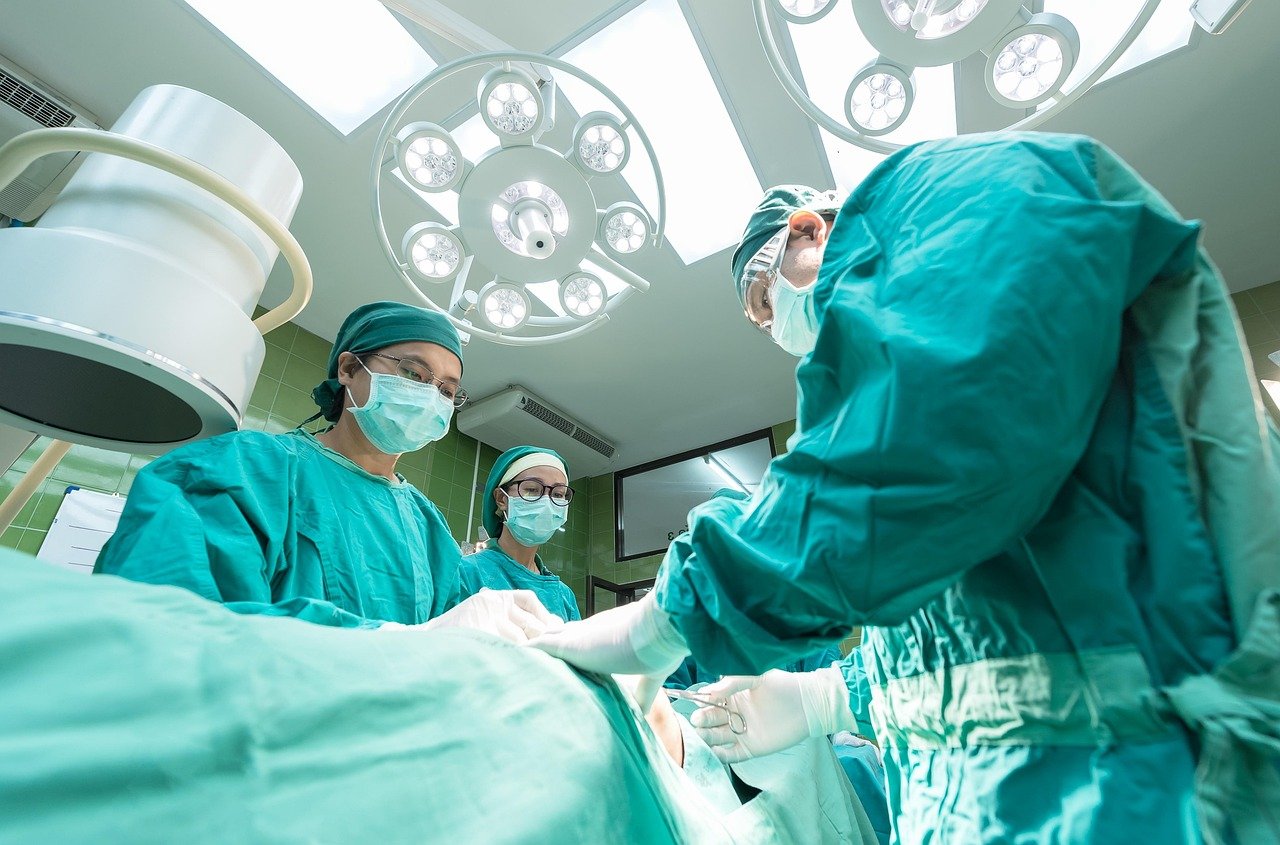
Emergency room or night clinic? Know the difference before you need it
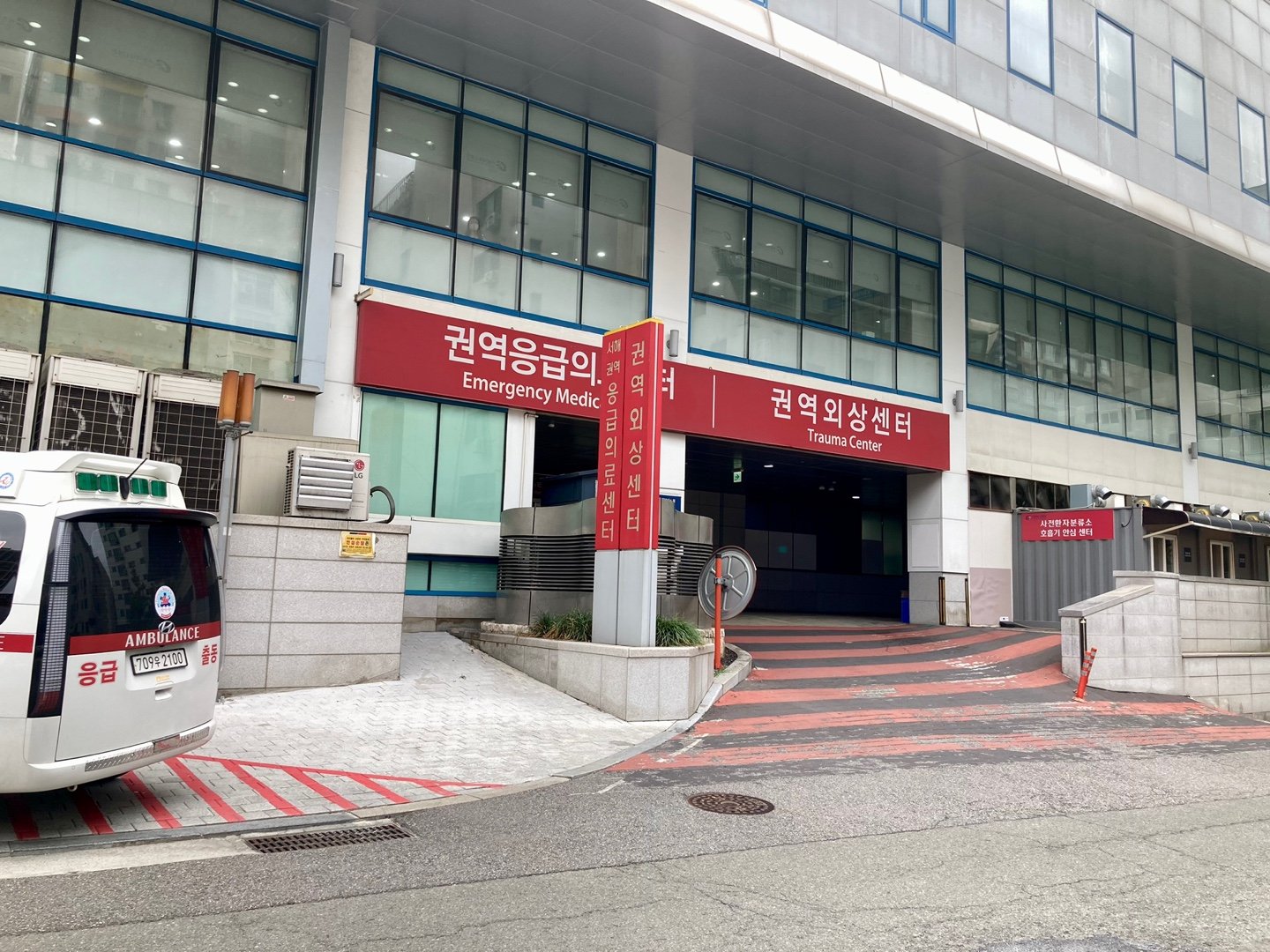
The hospital ER (응급실, eungeupsil) is for the real stuff: chest pain, serious injuries, high fever that won’t break, anything where waiting until morning feels risky. Big general hospitals run their ERs 24/7, and you don’t need an appointment, a referral, or Korean insurance to walk in.
For the in-between stuff — an ear infection at 9pm, a bad cough, food poisoning that isn’t life-threatening — look for a 야간진료 (night clinic) instead. Plenty of clinics in bigger neighborhoods stay open late or run weekend hours, and they’re faster and considerably cheaper than an ER visit for something that isn’t actually an emergency. If you’re not sure which one you need, that’s fine, that’s what the resources below are for.
There is a tier below both of those that visitors skip entirely: the pharmacy. For a cold, a headache, mild food poisoning or a blister that has turned angry, the 약국 is the first stop rather than the last. Pharmacists here expect to be asked. Describe the symptom and you will walk out with something appropriate in a few minutes and for very little money. Clinics and pharmacies travel in pairs in Korea, so if you do end up at a clinic, look at the ground floor of the building on your way out.
119 is free. Say that again for the Americans in the back
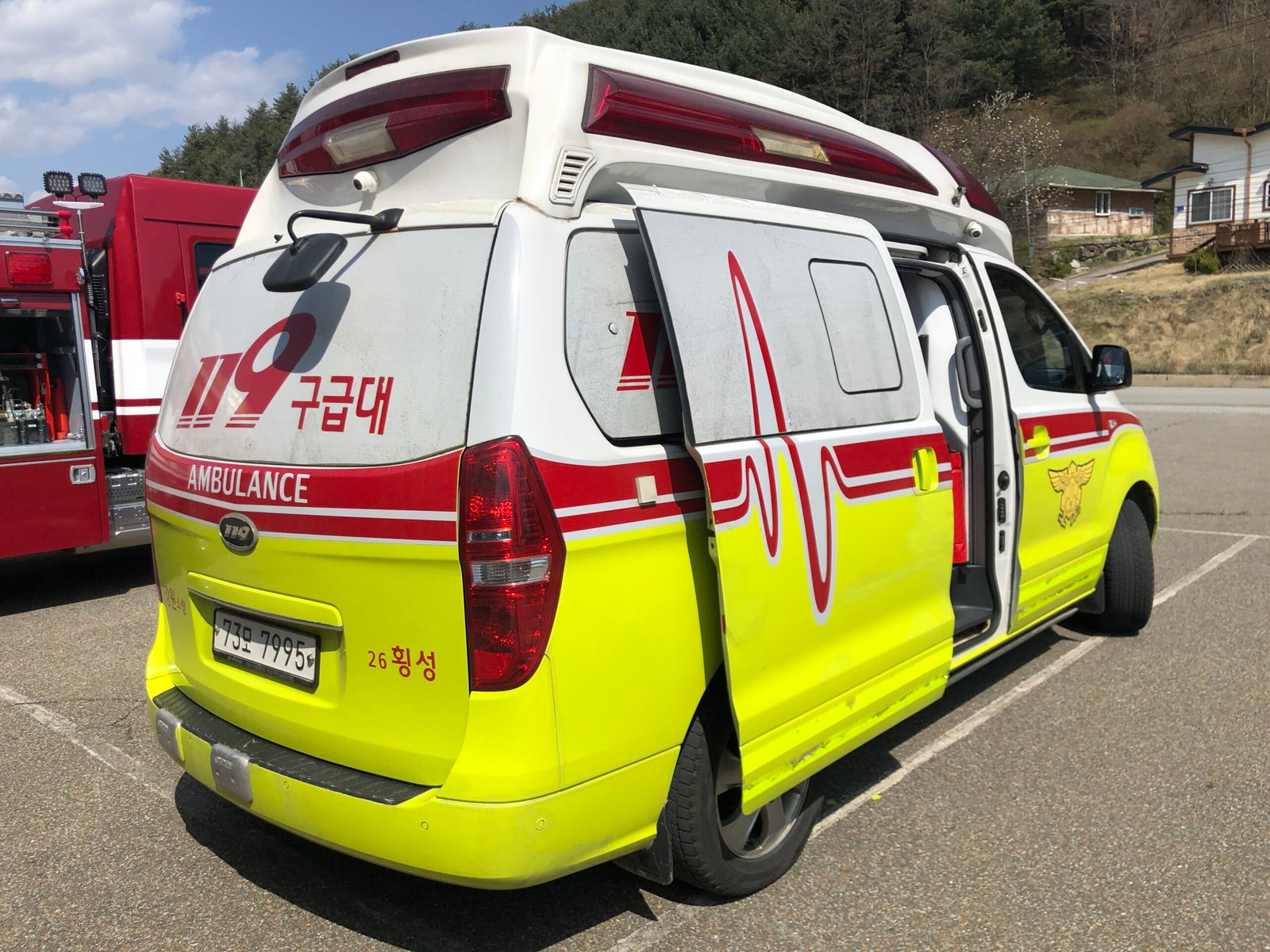
If it’s genuinely urgent, dial 119. That’s Korea’s fire and ambulance line, and it works from any phone, no SIM card or local number required. Operators increasingly have English support, and if there’s a language gap, most dispatch centers can loop in a translator on the call.
Here’s the part that surprises people every time: the ambulance ride itself is free. Not subsidized, not discounted — free, regardless of your nationality or insurance status. Compare that to the US, where an ambulance ride can run anywhere from a few hundred dollars to well over two thousand, depending on the city and the distance, before you’ve even walked into a building. Canada isn’t much better for anyone without provincial coverage — ambulance fees there are often billed separately and can hit several hundred dollars per trip. In Korea, you call, they come, and the bill for the ride is zero. The treatment once you arrive is a separate cost, but the getting-there part isn’t something you need to think twice about.
If you ever have to make that call, lead with where you are, not what is wrong. Dispatch needs an address before anything else, and a visitor rarely has one. The nearest subway station and exit number works. So does the name of your hotel, or a big chain store on the corner. And if you are standing there unsure whether the situation really warrants an ambulance, call anyway — deciding that is their job, not yours, and they would far rather talk you down than arrive late.
No, you don’t need to speak Korean to get treated
This is the thing I really want to get across: every hospital in Korea will treat a foreigner. There’s no separate system, no special clinic you have to track down because you don’t hold a Korean ID. Walk into any ER with a passport and a problem, and they’ll see you.
That said, a few resources make the experience smoother if you’re worried about the language barrier:
- e-gen.or.kr — the government’s emergency medical information portal. It’ll show you nearby ERs and clinics in real time, including which ones currently have open beds, which matters more than you’d think during flu season.
- 1339 — a long-running medical information line originally set up to help people, including non-Korean speakers, figure out where to go and what to do in a medical situation. Coverage and routing has shifted over the years as it’s been folded into the broader 119 system, so if 1339 doesn’t connect the way you expect, 119 is always the reliable fallback.
- International Healthcare Centers (IHC) — the big university hospitals in Seoul (Severance, Samsung Medical Center, Asan, Seoul National University Hospital, and others) run dedicated international clinics with English-speaking staff and coordinators who’ll walk you through the whole visit, billing included.
None of this is stuff you need to memorize before your trip. Honestly, in the moment, showing up and pointing at where it hurts works fine too. Korean medical staff deal with confused, non-Korean-speaking patients often enough that it’s not the ordeal you’re picturing.
Two small frictions worth knowing about in advance. The intake form asks for a local address and phone number, and your hotel covers both — have the booking confirmation open rather than trying to recall it while holding a clipboard. And type your symptoms into a translation app before you hand the form back, not after; a screen showing three plain sentences moves things along faster than trying to act out what hurts. Nobody minds the phone. It is how half the counter conversations in this country already happen.
So what does it actually cost?
This is where people’s jaws tend to drop a little. A basic clinic visit for something like a cold runs around 10,000 to 20,000 won — call it eight to fifteen dollars — and that’s often before any insurance discount. Medication from the pharmacy afterward is typically another 3,000 to 5,000 won. I’ve had prescriptions in Korea that cost less than a coffee back home.
Compare that to the US or much of Europe, where a walk-in visit for the same cold can run into the hundreds of dollars once you count the office fee, and that’s assuming you’re insured. Without insurance it’s worse. It’s not a small gap — it’s a different universe of pricing.
A few honest caveats, though. If you’re not enrolled in Korea’s National Health Insurance (which almost no short-term visitor is), you’re typically billed at the uninsured rate, which is higher than what a Korean resident pays but still low by American or Western European standards. ER visits cost more than clinic visits, obviously, and anything involving imaging, an overnight stay, or a specialist consult adds up fast — just less fast than you’re used to. If you’re traveling with travel insurance, keep every receipt and ask the hospital for an English-language Medical Certificate before you leave; most international-patient desks will print one on request, and without it your insurer back home may reject the claim outright.
One document detail that saves an argument with your insurer later: ask for the itemized statement, 진료비 세부내역서, not just the card slip. It lists what was done and what each line cost, which is the form claims departments actually want. The pharmacy gives you a separate receipt for the medication, so you leave with two pieces of paper rather than one. Both are printed on request at the counter in about a minute, and neither is something anyone will offer you unprompted.
A few things worth doing before you actually need any of this
- Save 119 in your phone before you need it, not while you’re mid-panic trying to type it in.
- If you’re staying somewhere with WiFi-only access, know that 119 calls typically require an actual phone signal — check whether your travel SIM or eSIM covers calls, not just data.
- Bookmark e-gen.or.kr on your phone. It’s not pretty, but it works, and it’ll save you from wandering around looking for an open pharmacy at 11pm.
- Get travel insurance. It won’t change what you’re charged in Korea, but it changes what you’re stuck paying out of pocket.
I won’t pretend getting sick on a trip is fun anywhere. But if it has to happen somewhere, Korea makes the logistics about as painless as they can be — quick to access, straightforward to navigate even without the language, and priced in a way that won’t wreck the rest of your trip.
Two things to put in your phone before the trip, which take a minute and stay useless right up until they are not: your accommodation’s address written in Korean, copied straight from the booking, and the generic names of any medication you take. Brand names do not travel — the same drug sits on a Korean shelf under a different word — but the generic name is the same everywhere, and a pharmacist will recognise it on sight.
Read next
- ATMs in Korea That Accept Foreign Cards: Where to Find Them and What They Cost — Where to get cash before you need it.
- Kakao T: How Korea’s Taxi App Actually Works for Foreigners — Getting there when you can’t explain the address.
- Is Korea Actually Safe to Walk Around at Night? A Local’s Honest Take — The broader question of how safe this is.