Every list of “top things to do in Seoul” has N Seoul Tower on it, usually with a photo of the city lit up in gold below the tower needle. What those lists don’t tell you is that half your visit will probably be spent standing in a cable car queue, and whether that’s worth it depends a lot on how you get up there in the first place.
Cable Car vs. Walking: Pick One Before You Go
There are basically three ways up Namsan Mountain, and people default to the cable car without realizing there are better options depending on the night. The cable car (Namsan Cablecar) runs from near Myeong-dong station and costs around 15,000 won round trip for adults. On a clear Saturday evening, expect to wait — sometimes 30 to 40 minutes just for the car itself, not counting the ticket line before it.
The alternative nobody mentions enough is walking up. There’s a paved trail from Myeong-dong side that takes about 30-40 minutes at a normal pace, and honestly it’s not a bad walk — a few short escalators partway up help, and there are quiet spots along the way to catch your breath and look at the city without a crowd around you. If you’re reasonably fit and it’s not raining, I’d skip the cable car entirely on a busy night. You save the wait and you actually get to see the mountain instead of just the inside of a gondola.
There’s also a shuttle bus (Bus 02) that loops up from near Chungmuro station, which is the move if you don’t want to walk but also don’t want the cable car line.
Worth flagging that the bus numbering has changed since: Seoul’s official Namsan park page now lists the green circular buses 01A and 01B, boarding at Myeong-dong, Chungmuro, Dongguk University station and the Yejang Park transfer centre. From Dongguk University station it’s Exit 6, and the stop is behind the exit. Checked 11 September 2026 — route numbers here get reshuffled every few years, so read the sign at the stop rather than trusting any blog, this one included.
The thing almost nobody tells first-timers, though, is the Namsan Oreumi. It’s a free inclined elevator — a glass box that climbs the slope on rails — running from near Myeong-dong Station Exit 4 up to the cable car ticket office. It covers about 70 metres of hillside in roughly two minutes, it has been there since 2009, and it costs nothing. Every evening you can watch people grind up that same slope on foot, red-faced, fifty metres from a free lift. One caveat from the city’s own page: it takes you to the cable car station, not to the summit. From the top of the Oreumi you either get in the cable car, walk the remaining thirty minutes, or take the bus.
Now the part that actually matters if you’re planning to walk up and ride down. Seoul’s park page lists the cable car’s hours as 10:00 to 23:00, with extended running on Fridays, Saturdays and holidays depending on conditions, and one-way tickets at 12,000 won for adults against the 15,000 round trip. Check the last car before you commit to walking up at nine at night, because the queue at the top does not care that you have a plan.
Three routes up, and they’re genuinely different walks. The Myeong-dong side is the shortest, steepest and busiest, and it’s where the Oreumi and the cable car are. The Hoehyeon / Namsan Library side — Hoehyeon Station Exit 4, about eight minutes on foot to Baekbeom Plaza — is longer but gentler, a proper park walk past the old city wall with a fraction of the people. The Dongguk University / National Theater side on the northeast is the longest and the most wooded, and it’s the one locals use when the walk is the point rather than the tower.
Walking after dark is completely normal, by the way. The park is lit — Seoul’s own facility list counts over a thousand park lamps plus several hundred lights on the fortress wall — and on any decent evening you’ll be sharing the path with joggers and couples the whole way. It’s one of the few mountains in the world where the night walk is busier than the morning one.
What You’re Actually Paying For
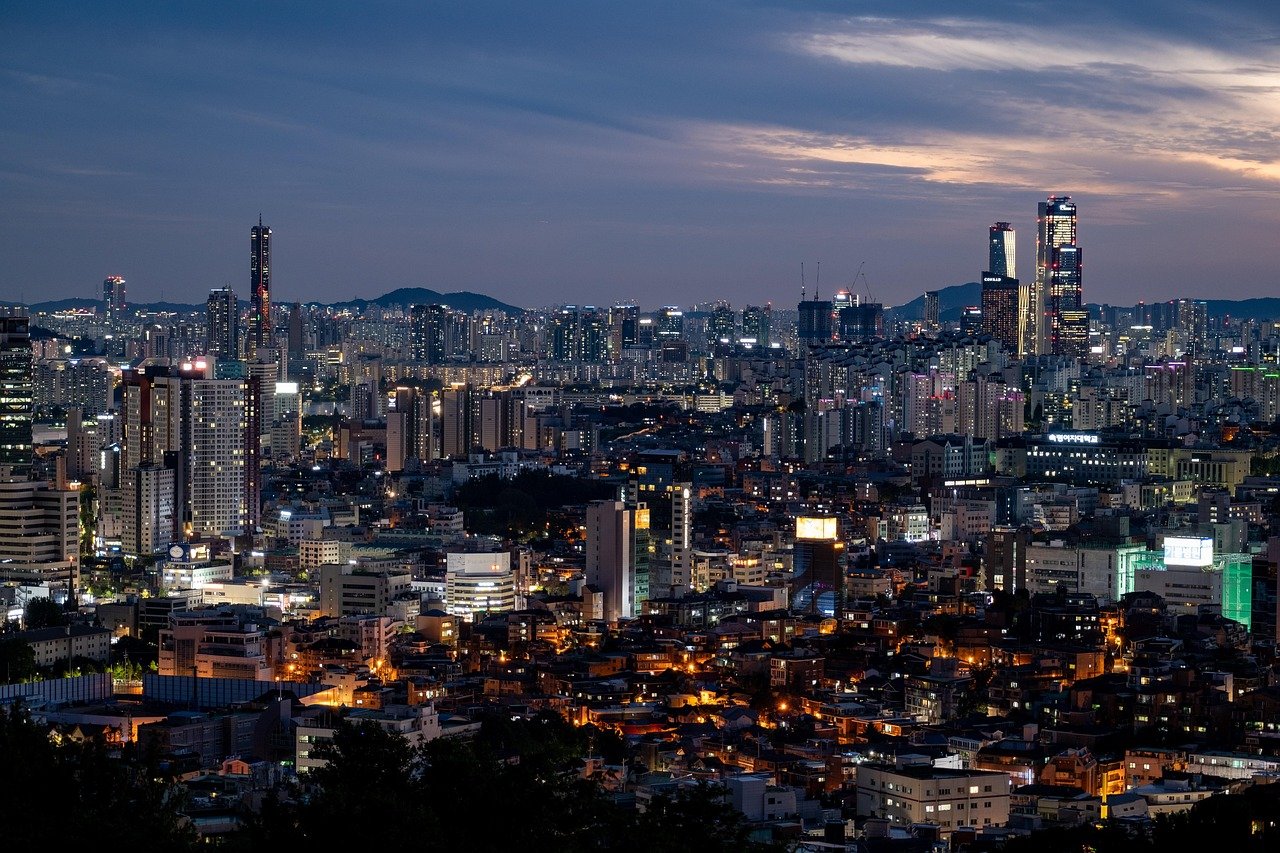
Here’s where people get confused. Getting up the mountain doesn’t require a ticket at all if you walk or take the bus — the observation deck area at the base of the tower and the love locks terrace are free and open to anyone. What costs money is going up inside the tower itself to the actual observatory floor, which runs about 21,000-31,000 won depending on the season and whether you book online in advance (online is usually a bit cheaper and skips a line).
Honestly, unless it’s an unusually clear night, I don’t think the observatory deck adds that much over the free viewing area right outside the tower. The view from ground level around the tower base is already excellent, and Seoul’s air isn’t always transparent enough to make the extra elevation worth the ticket price. Save the observatory money for a trip when the forecast says clear skies, or skip it and put that money toward dinner instead.
For the record, what the ticket buys is the lift up to the observatory floors, with restaurants on the tower’s upper levels if you want to spend considerably more, and — the detail everyone ends up telling their friends about — a toilet with a window, where you stand there looking out over half of Seoul while doing something extremely ordinary. It is the single most photographed bathroom in the country and I’m not going to pretend it isn’t funny. Seoul’s park page gives the observatory as 10:30–22:00 on weekdays and 10:00–23:00 at weekends and holidays, with the adult ticket at 21,000 won at the gate.
And if the whole point of your evening is the night view rather than the tower specifically, know that Seoul gives several of them away. Naksan Park, up on the old city wall above Dongdaemun, has the same city-under-you effect from a hillside you can walk onto at any hour for nothing. Eungbongsan, a small hill on the north bank of the Han, is the one Korean photographers use for the classic shot of the river with the bridges lit. Neither has a queue, a ticket booth or a gondola. They’re worse for a first-time postcard and better for an actual evening.
The Love Locks Are Corny and You Should Still Go Look
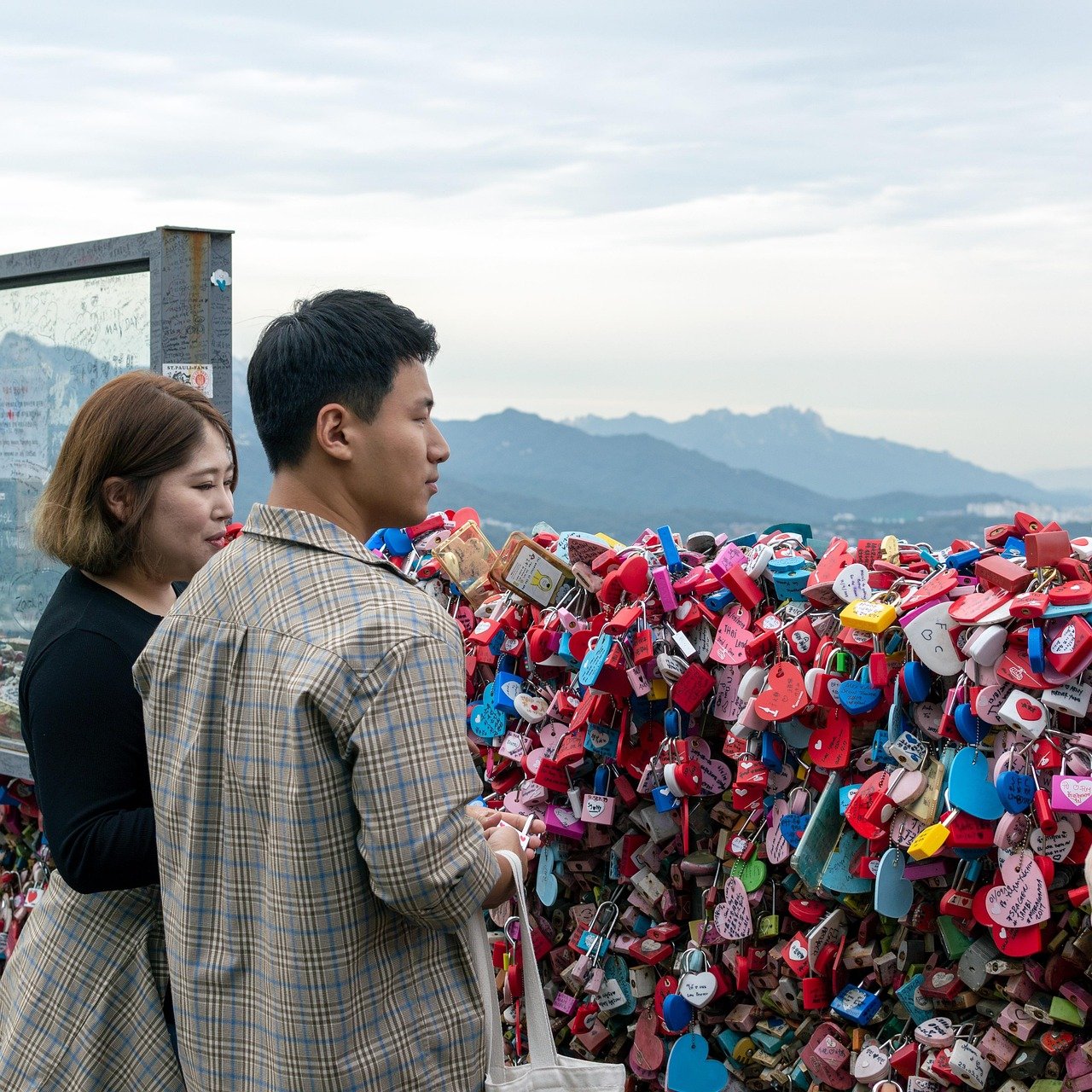
The fences and metal trees near the tower base are covered — genuinely covered, thousands of them — in padlocks that couples have written names and dates on and locked in place. It’s touristy in the most obvious way possible, and I still think it’s worth a walk-through even if you’re traveling solo or just don’t care about the romantic angle. Some of the messages are in half a dozen languages, some are clearly inside jokes nobody else will ever understand, and there’s something kind of nice about wandering through it at night with the city lights behind everything. You can buy a lock on-site if you want to add your own, though the novelty ones shaped like hearts get marked up more than a plain padlock would cost you.
Practically: it’s on the terrace between the cable car exit and the foot of the tower, so you walk through it whether you meant to or not, and it costs nothing to be there. The locks nearest the walkway are the newest ones — the displays don’t hold every lock ever hung, since several tonnes of steel on a fence is a maintenance problem rather than a romantic gesture, and the older layers get cleared in a way nobody advertises. If you want yours to survive a while, go for a plain sturdy padlock over the cartoon-shaped kind, and put it somewhere that isn’t already four locks deep.
Best Time to Actually Go
Sunset is when everyone shows up, which means it’s also when the lines are worst. If you can manage it, aim to arrive right as the sun is going down and stay through full darkness — you get the transition from golden hour to city lights without having climbed the mountain twice. Weeknights are noticeably calmer than weekends. Winter nights are colder obviously, but the air tends to be clearer and the crowd thinner, so a January visit can actually beat a hazy August one for visibility even with the wind chill working against you.
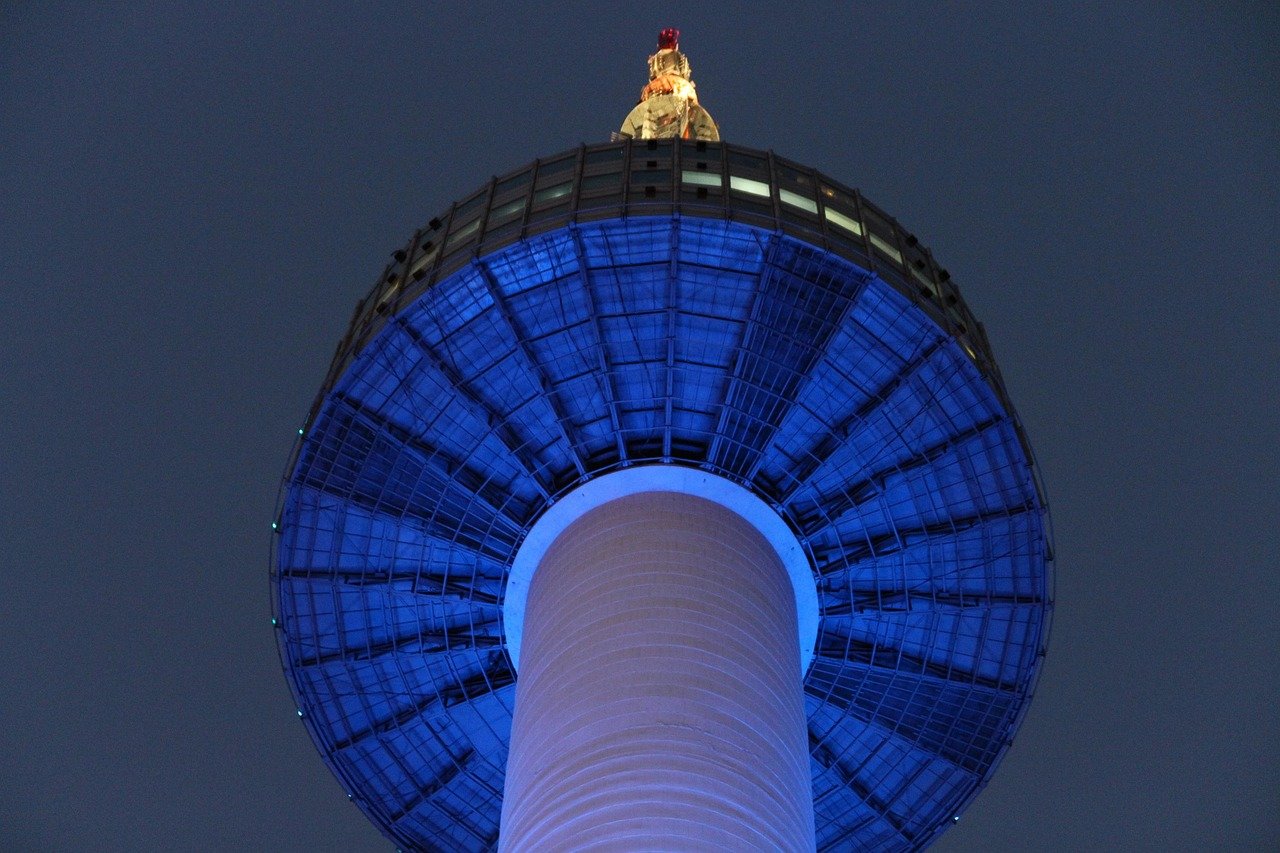
Which brings me to the single most useful thing in this post, and the reason you don’t have to guess about “an unusually clear night” at all. The tower tells you. The lighting on the shaft is colour-coded to the day’s fine dust reading, and you can see it from most of central Seoul. Blue means the air is good, and the colour moves through green and yellow to red as the reading climbs. The tower’s own page puts blue at 0–15 µg/m³ of PM2.5 and red at 76 and above; Seoul city’s environment desk quotes the same four colours against slightly wider bands, which is a good reason to read the colour rather than reverse-engineer a number from it. Seoul says the lighting is set twice an evening, at 18:00 and 21:00. Checked 11 September 2026.
So the move is: look at the tower from street level before you commit. Blue tower, buy the observatory ticket — that’s the night the view is worth the money. Yellow or red, stay on the free terrace, or skip the mountain entirely and get dinner, because you’ll be paying 21,000 won to look at grey soup from a greater height.
Time your arrival around the season, too, because Korean sunset swings further than visitors expect. In mid-December the sun is gone by around 5:15pm, which makes a full night visit easy to fit before dinner; in late June it hangs on until nearly 8pm, so the same plan starts three hours later and you’ll be coming down close to the last cable car. And if you have any flexibility at all, avoid Saturday evenings and public holidays. That’s when the queue is at its absolute worst and the terrace is shoulder to shoulder — a Tuesday in the same week is a different mountain.
Bring a jacket regardless of season. It’s genuinely windier up there than it is at street level, and I’ve seen more than one visitor underestimate that in October and end up shivering through what should’ve been a nice hour outside.
Getting There
The simplest route is Myeong-dong Station (Line 4), Exit 3, then either the short walk to the cable car station or straight onto the walking trail if you’re skipping the gondola. If you’re coming from the Chungmuro side for the shuttle bus, Chungmuro Station (Lines 3 and 4), Exit 2, has the bus stop nearby.
Two other approaches are worth knowing. Hoehyeon Station (Line 4), Exit 4 is about eight minutes on foot to the Baekbeom Plaza entrance, which puts you on the gentler library-side path — the better choice if you’d rather walk up than queue, and it’s quieter than the Myeong-dong approach at every hour. Dongguk University Station (Line 3), Exit 6 is the northeast entrance, with the circular bus stop behind the exit and the wooded north path starting from there.
Don’t skip planning the way down, because that’s what actually goes wrong. People arrive by cable car, lose track of time on the terrace, and find the queue for the last car down is longer than the one they stood in on the way up. The cable car’s published hours end at 23:00, the buses stop earlier than the tower does, and the walk down the Myeong-dong path takes roughly half an hour on lit paths — which is a perfectly pleasant end to the evening if you chose it, and a grim one if it was forced on you at ten to eleven.
And the taxi question, since everyone asks: a taxi cannot take you to the top. Private cars and taxis have been banned from the Namsan circular road since 2005, with tour buses added to the ban in 2021, so a taxi drops you at the bottom — the cable car station, Baekbeom Plaza or the National Theater — and you go up by cable car, bus or foot like everyone else. The only exceptions are vehicles carrying a disability card. Coming down late, the same applies in reverse: get yourself to the bottom of the hill first, then hail. The circular buses take a transit card like any other city bus — if you haven’t got one yet, the T-money post covers where to buy one and how to get the deposit back.
Worth It?
The view itself, yes — Seoul spread out under you with the Han River cutting through it is a genuinely good sight, especially the first time. Just don’t assume the cable car and the observatory ticket are mandatory parts of the experience. Walk up if you can, stick to the free viewing terrace unless the sky is unusually clear, and you’ll get most of what people are actually coming here for without the worst of the waiting.
Read next
- Four Seoul Neighborhoods, and the Right Hour for Each — All four Seoul neighborhoods, and the hour each one is worth walking.
- Outdoors in Seoul: A Stream, a Park and a Mountain, All on the Subway — A stream, a park and a mountain, ordered by how much of the day they take.