Somebody asked me last month whether they even needed a physical T-money card if they had an iPhone, and that question opens up a whole can of worms I didn’t expect to be explaining to a stranger at a bus stop. Short answer: yes, almost certainly, you need the plastic card. Long answer is basically this whole post.
T-money is the rechargeable transit card that runs on Korea’s subways, city buses, and most taxis, in Seoul and in pretty much every other city that has a bus system worth mentioning. It’s not a train pass, it’s not a discount card, it’s just a prepaid balance you tap and it gets deducted, similar to an Oyster card or a Suica if you’ve used either of those. The confusing part for a lot of visitors is that there isn’t one single official way to get one, and the options aren’t equally good.
Where to actually buy the card
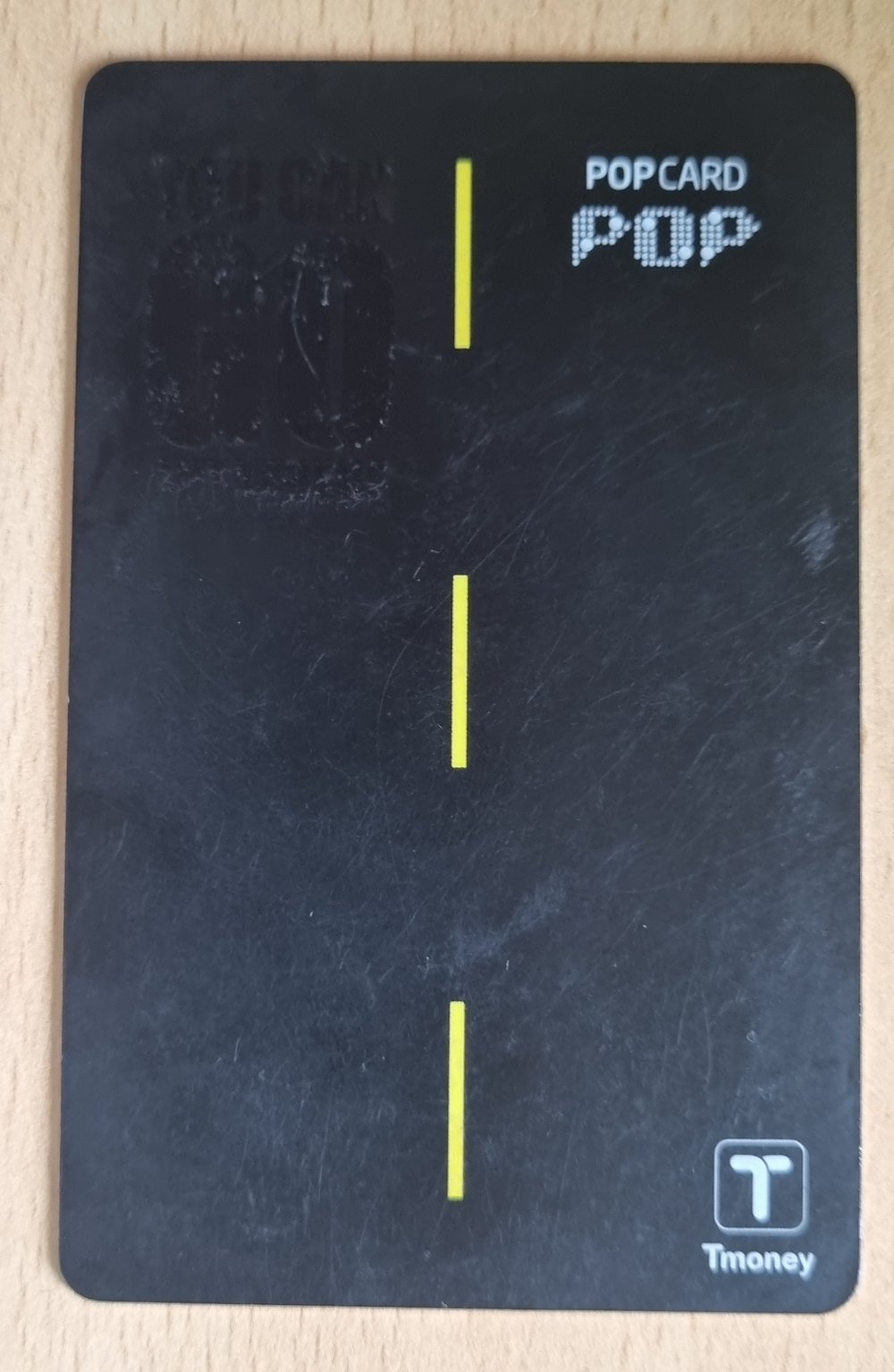
The easiest source is any convenience store — CU, GS25, 7-Eleven, or Emart24, all of which sell them at the counter for somewhere around ₩3,000 to ₩4,000 for the plain card itself, with zero balance loaded. You’ll need to ask, since they’re usually kept behind the register rather than out on a shelf, and the cashier will just hand one over and then ask how much you want to charge onto it separately. There isn’t a special “tourist” version sold at stores — it’s the exact same card used by locals for their daily commute.
Incheon and Gimpo airports both have machines in the arrivals area that sell them too, which is honestly the least stressful option if you’re landing exhausted and don’t want to hunt for a convenience store before finding your bus or train into the city. Some subway stations have ticket machines that sell them as well, though not all of them do, so I wouldn’t count on that as your only plan — buy one before you’re already standing at a turnstile trying to figure it out.
Ask for it by name and the transaction takes ten seconds: “T-money juseyo.” The cashier pulls one from behind the counter, then asks how much you want on it, which is a separate step people don’t expect — the card arrives empty. Load something on the spot rather than walking out with a blank card, because the next place you’ll discover the problem is at a turnstile with a line behind you. You’ll also see character cards on the counter display, cartoon faces and K-pop tie-ins. They cost a little more and behave exactly the same.
About the Apple Wallet thing
Here’s where the confusion usually starts. Korean iPhones can add T-money directly into Apple Wallet and tap like a native feature, because they ship with a specific NFC chip variant sold only in the Korean market. An iPhone bought in the US, UK, or basically anywhere outside Korea does not have that chip, and Apple Wallet won’t let you add a T-money card to it no matter how many forum threads insist there’s a workaround. If you’re traveling with a phone bought outside Korea, save yourself the frustration and just carry the physical card. It genuinely is not a downgrade — tapping a card takes exactly as long as tapping a phone.
One thing worth clearing up, because it comes up every time: a Korean SIM does not fix this. The limitation is in the hardware, not the line, so putting a local number into a foreign handset changes nothing about what Apple Wallet will accept. The same goes for Android — Korean-market phones handle it natively, phones bought elsewhere don’t. Nobody should be shopping for a second phone over a transit card.
Loading money onto it
Charging, or “chungjeon” as you’ll see it written at machines, works two ways: cash at a convenience store counter, where you hand over bills and the cashier adds it to your balance instantly, or at the orange or green top-up machines inside subway stations, which take cash and sometimes domestic cards but are hit-or-miss with foreign-issued cards. I’ve had foreign credit cards get rejected at these machines more often than not, so keep cash on hand for this specifically, even if you’re using cards for everything else on the trip.
Load more than feels necessary. Topping up is only mildly annoying on its own, but it is always annoying at the exact moment you need it, which is when you are trying to get somewhere. The machines show your remaining balance the moment you tap, and so does the small display at the subway gate as you walk through, so you never have to guess where you stand. If you’d rather not do the math in a station, hand the card and a bill to a convenience store cashier and say the amount — that transaction is the same in any store in the country.
Using it
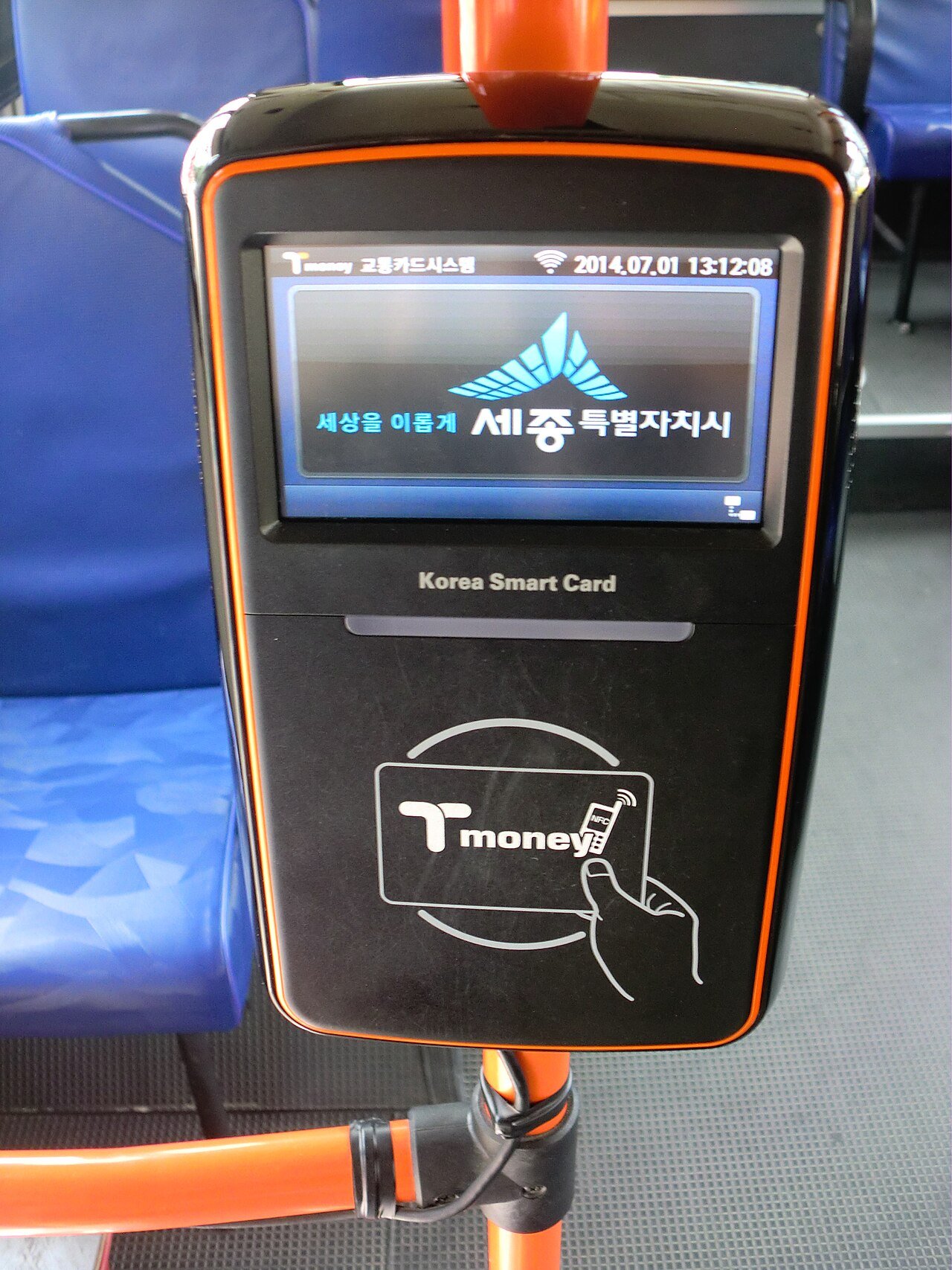
Tap the card on the reader at the subway turnstile going in, and on lines where fare depends on distance, tap again on the way out so the system can calculate the difference. Buses work the same way — tap when you board, and tap again when you get off if it’s an intercity or express bus that charges by distance, though city buses in Seoul are usually flat-rate and only need the one tap. Transfers between subway and bus within 30 minutes are discounted or free depending on the route, which locals rely on constantly and tourists almost never realize is happening in their favor.
Taxis take it too. There’s a small reader near the meter, usually right by where the driver sits, and you tap on the way out just like you would exiting a bus. Not every taxi has one working reliably, especially older cabs, so it’s worth having cash as a backup for that specific situation rather than holding up the driver while you both stare at a reader that isn’t beeping.
The mistake visitors actually make is forgetting to tap on the way out. The gate will let you walk off, but the system now has no idea where your trip ended, and you find out about it later as a deduction that looks bigger than the ride should have been. It also kills the transfer discount, since the free window only starts counting from a completed trip. Tapping out is a two-second habit that costs nothing and saves you from wondering why your balance drained faster than everyone else’s.
Getting your money back before you leave
This is the part almost nobody plans for and then ends up standing at an airport counter with twenty minutes before boarding. If your remaining balance is under ₩50,000, any CU, GS25, or 7-Eleven can refund it directly at the counter, though they’ll usually deduct a small handling fee, something like ₩500. If your balance is higher than that, convenience stores generally can’t process it, and you’d need to find a dedicated T-money service counter, which are not common and definitely not in most airports.
The cleanest option, if you’re flying out of Incheon, is the T-money refund machine in the departure hall, which gives a full refund with no fee, cash only, and takes about thirty seconds. I’d genuinely just plan for this rather than trying to spend down your balance perfectly on your last day, which never works out as neatly as you think it will.
Worth knowing what a refund does and doesn’t cover: you get the remaining balance back, not the few thousand won you paid for the card itself. That is the fee for the plastic, and it stays paid. Which is an argument for simply keeping the card. The balance doesn’t go stale sitting in a drawer, so if there is any chance you’ll come back, a card with a bit of money still on it is one less errand on your first afternoon next time.
One more thing worth knowing: there are combo products aimed specifically at tourists, like WOWPASS or the Korea Tour Card, which bundle T-money functionality with currency exchange and sometimes small discounts at partner stores. They’re not bad, but for a short trip they add a layer of setup — usually a kiosk registration process — that a plain T-money card from a convenience store skips entirely. Unless you’re specifically trying to avoid carrying cash for currency exchange, I’d just get the regular card and not overthink it.
One last thing if you’re traveling as a group: buy one card per person. A subway turnstile takes one tap for one body, no exceptions, so a family sharing a single card gets exactly one person through and a jam behind them. Buses are the opposite — you can pay for several passengers on one card by telling the driver how many of you there are as you tap. Visitors tend to learn that in the wrong order, on a subway platform, in a hurry.
Read next
- Kakao T: How Korea’s Taxi App Actually Works for Foreigners — The app for when the card won’t help.
- SIM Card or eSIM in Korea? Airport Pickup vs. Telecom Store, Compared Honestly — Data, which you’ll want first.
- ATMs in Korea That Accept Foreign Cards: Where to Find Them and What They Cost — Topping up needs cash.