The first thing you notice inside a Korean convenience store isn’t the aisles — it’s the smell. Reheated ramen, eggs turning slowly under a heat lamp, and that faint metallic tang from a freezer that never quite stops running. If you’ve spent more than two days in this country, you’ve probably already eaten dinner from one of these places, whether you planned to or not.
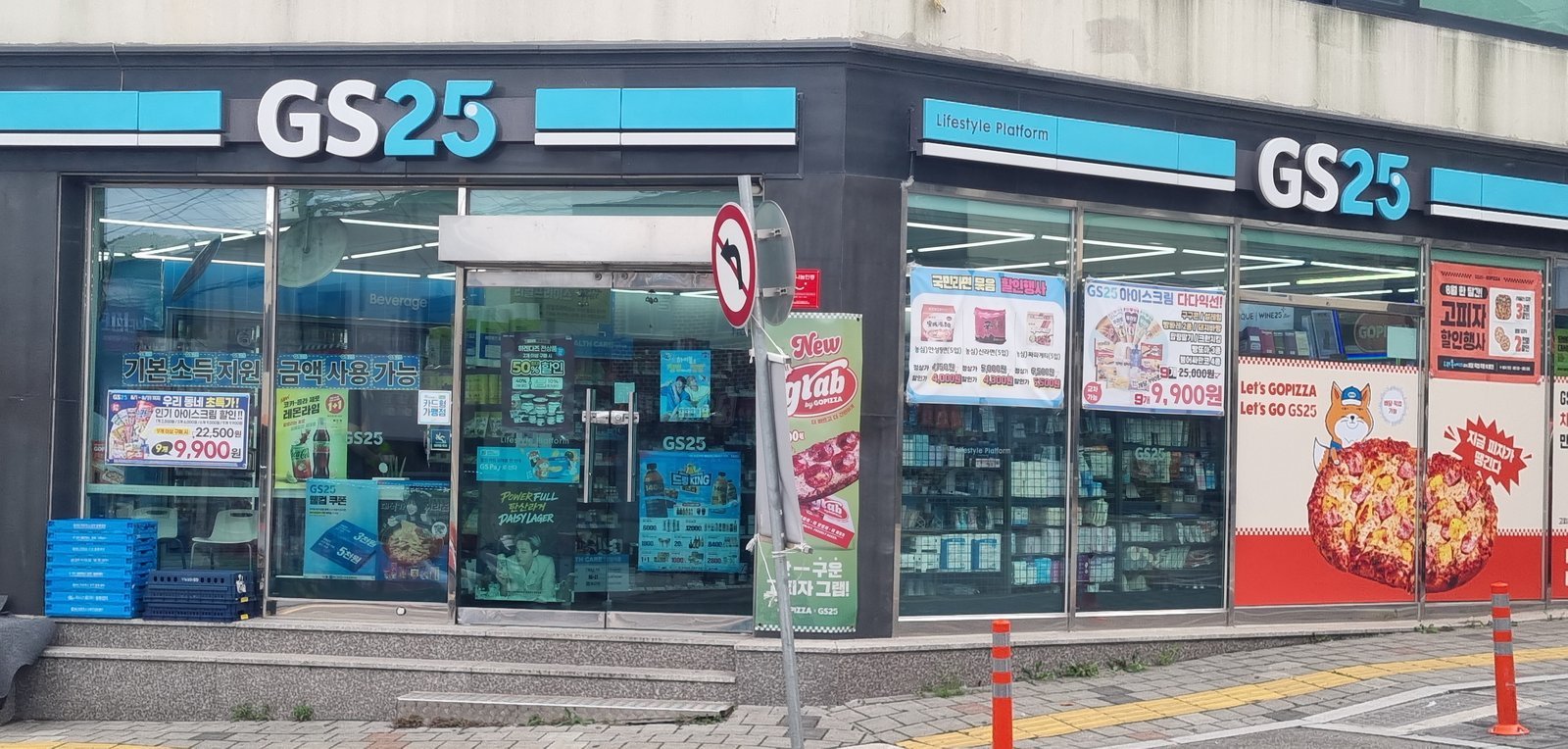
There are three chains you’ll run into constantly: CU, GS25, and 7-Eleven, with Emart24 showing up a bit less but still everywhere in bigger cities. They’re mostly interchangeable in terms of what’s on the shelves, though regulars tend to have loyalties they can’t fully explain. I lean CU, mostly because the ones I end up at usually have better lighting and a working microwave, which is an embarrassingly small reason to pick a convenience store and yet here we are.
Prices move around a little depending on the neighborhood, but this is roughly what you’re looking at at the register:
| Item | Typical price |
|---|---|
| Samgak kimbap (triangle rice snack) | ₩1,300–1,800 |
| Rolled gimbap, a whole roll rather than the triangle | ₩2,500–4,000 |
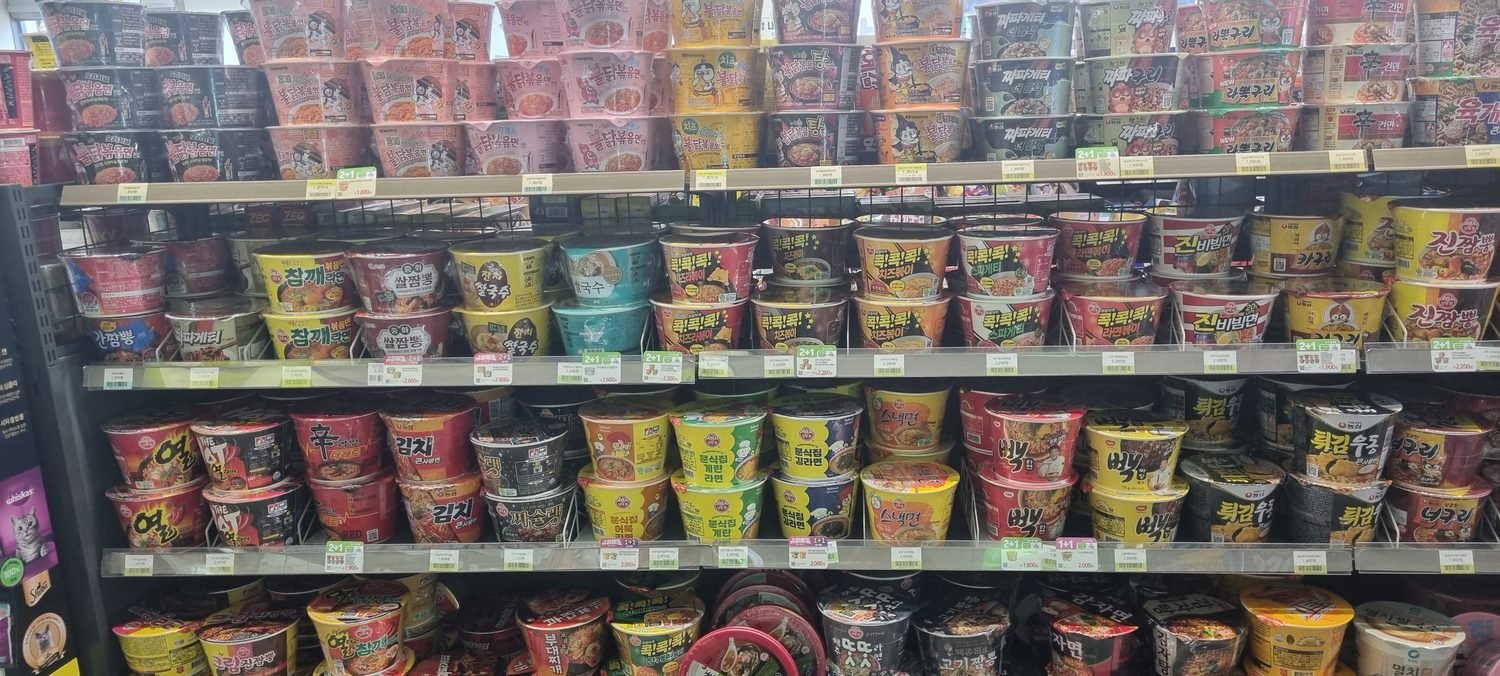
| Cup ramen, the good stuff like Buldak or Chapagetti cup | ₩1,700–2,500 |
| Dosirak, a full lunch box meal | ₩4,500–6,500 |
| Instant rice bowl, the microwave kind | ₩1,800–2,500 |
| Canned coffee | ₩1,400–2,800 |
| Banana milk, the little pot-shaped bottle | ₩1,500–2,000 |
| Cut fruit cup | ₩3,000–5,000 |
| Domestic beer, single can | ₩2,300–2,800 |
| Soju, single bottle | ₩1,800–2,500 |
| Corn dogs from the hot case by the register | ₩2,000–3,000 |
| Ice cream bars | ₩1,500–3,500 |
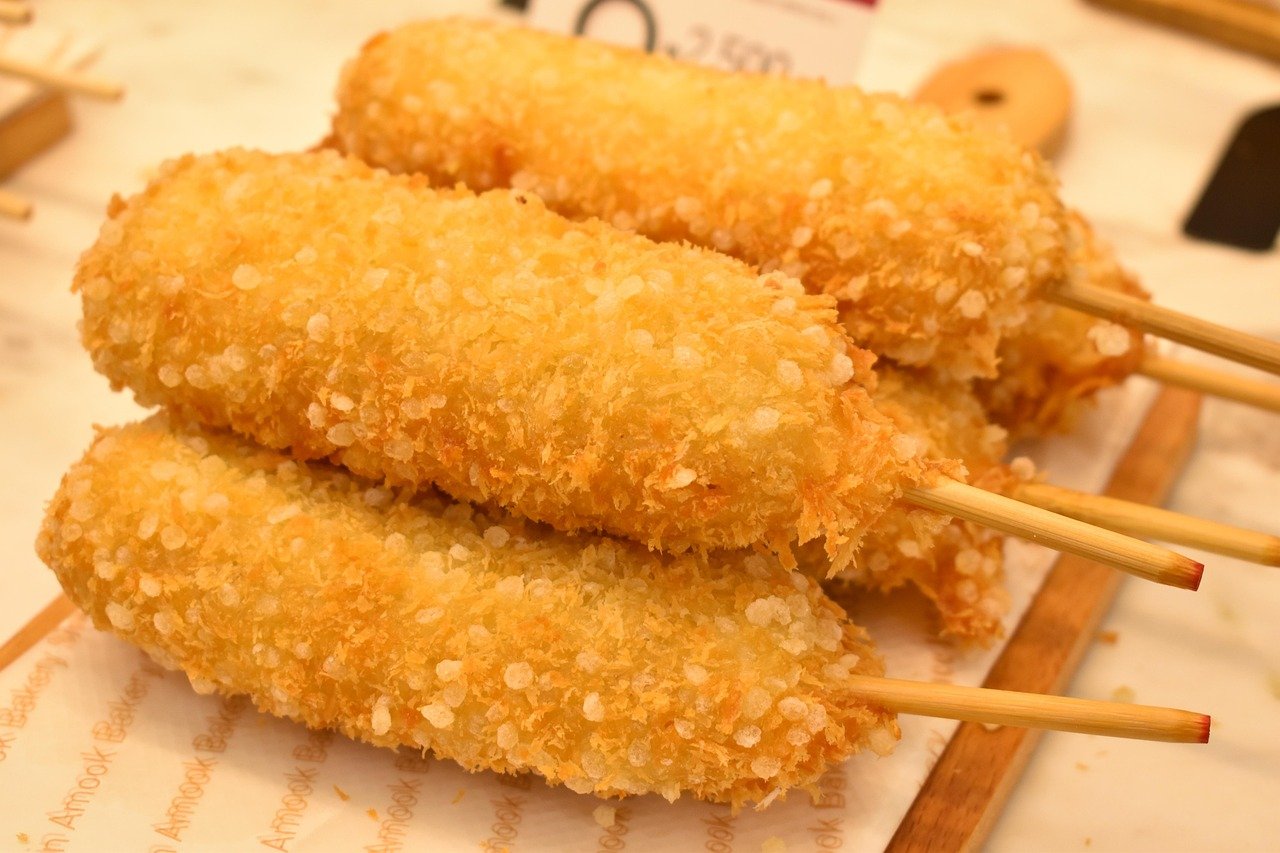
None of that is going to bankrupt anyone, which is sort of the whole point. A convenience store dinner here runs somewhere between five and eight dollars if you go all out, and that includes a drink.
The stuff nobody tells you until you’ve already done it wrong
Every store has a microwave, and it’s self-service — you don’t hand your food to the cashier and ask nicely, you just walk over, open the door, and heat it yourself. There’s usually a sticker chart on the wall telling you how many seconds different items need. Ignore it at your own risk; I’ve melted a dosirak lid more than once by guessing.
Hot water dispensers sit near the ramen shelf, and they’re free. Buy a cup noodle, peel the lid back, fill it, wait three minutes. Most stores also have a small counter with stools by the window for exactly this purpose, though don’t expect much elbow room during lunch rush near office buildings.
The real move, and this took me embarrassingly long to learn, is combining two cheap cup noodles into something better. Locals call it “chapaguri” when you mix a black bean noodle cup with a spicy seafood one — yes, it’s the dish from the movie Parasite, and yes, people really do make it from convenience store cups at 11pm. Add a slice of the processed cheese sold right next to the noodles and it stops being a joke.
The biggest thing visitors get wrong, though, is thinking the store is a shop you buy from and then leave. You’re meant to eat there. Most branches have a counter along the window with stools, and plenty have proper tables, sometimes a whole second floor of them. Sitting down with a lunch box and a beer at 9pm is completely ordinary behaviour, nobody is waiting for your seat, and staff will not come near you. A lot of Koreans eat a full meal in a convenience store several times a month. If you’ve been standing awkwardly outside eating over a bin, you’ve been doing it the hard way.
Cutlery doesn’t come with the food. Chopsticks, spoons, forks and straws sit in a small rack or drawer beside the register or over by the hot water dispenser, and you take what you need yourself — the cashier won’t hand you any and isn’t being rude. Same for napkins. Grab them before you sit down rather than getting up mid-meal.
Then the bins, which is where foreigners most reliably slip up. The bin station next to the eating counter is split into several openings: general waste, plastics, cans and bottles, and — the one nobody expects — a separate drain for leftover soup, usually a round hole with a grate. You pour the ramen broth in there, then put the empty cup in the plastic side. Tipping soup into the general bin is the move that gets you a look. The staff sort this later if you get it wrong, which is exactly why getting it right takes fifteen seconds and is worth doing.
Some branches have a ramen cooker — a small countertop machine that actually boils a packet of noodles rather than just dispensing hot water, so you can buy the bagged ramen instead of the cup version and get closer to the real thing. They’re common in busy student and office areas and absent elsewhere; if the store has one, you’ll see it next to the hot water.
Not every store is open 24 hours, either. The assumption holds in central Seoul and around any university, but in smaller cities, residential streets and especially outside the capital, plenty of branches shut overnight or run reduced hours. The sign on the door tells you; the chain name doesn’t.
Payment is the easy part. Card works for a ₩1,000 purchase and nobody blinks — there’s no minimum, no sighing, no cash-only counter. Your transit card works here too: the same T-money card you tap on the subway pays at the register, which is genuinely useful on the last day when you’re trying to drain the balance. The T-money post covers topping up and getting the deposit back.
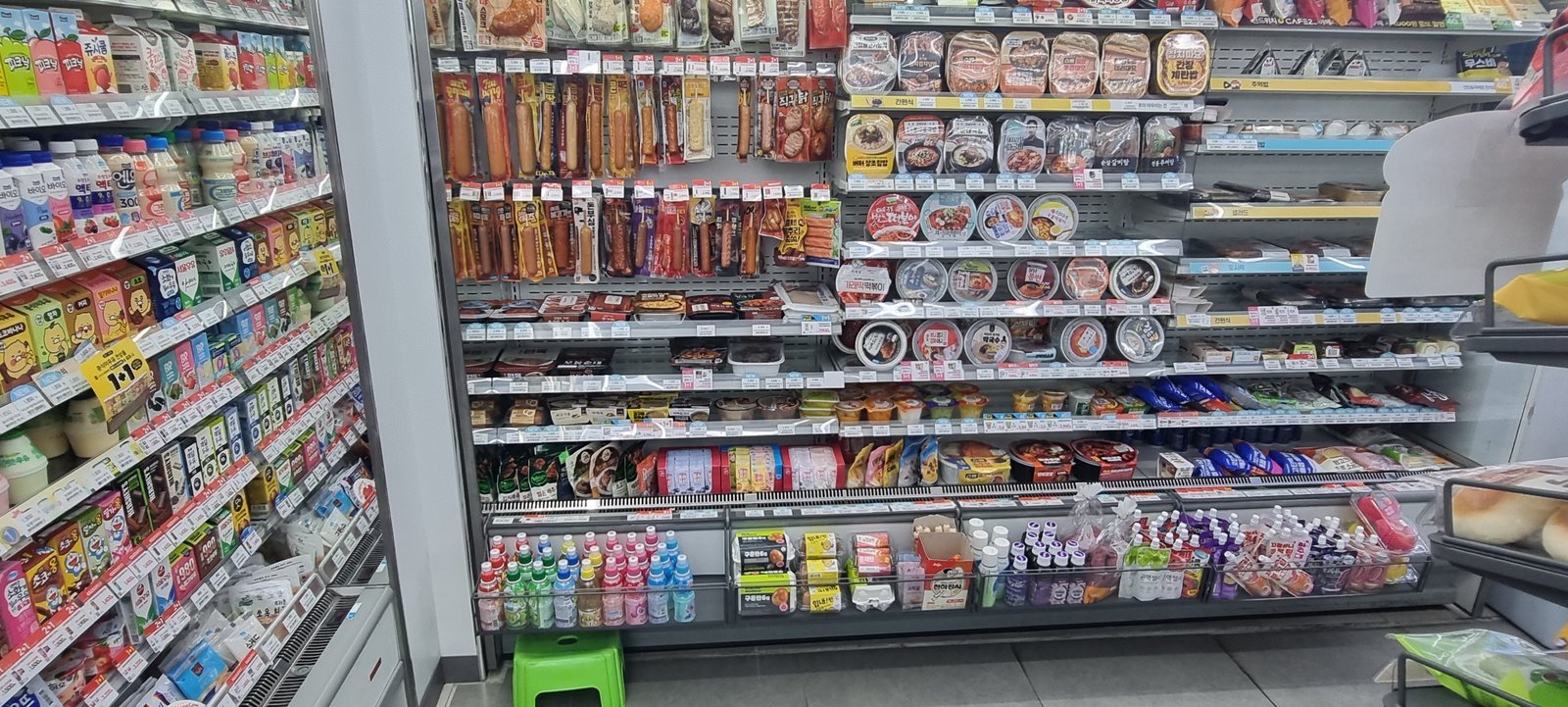
Deals worth knowing about
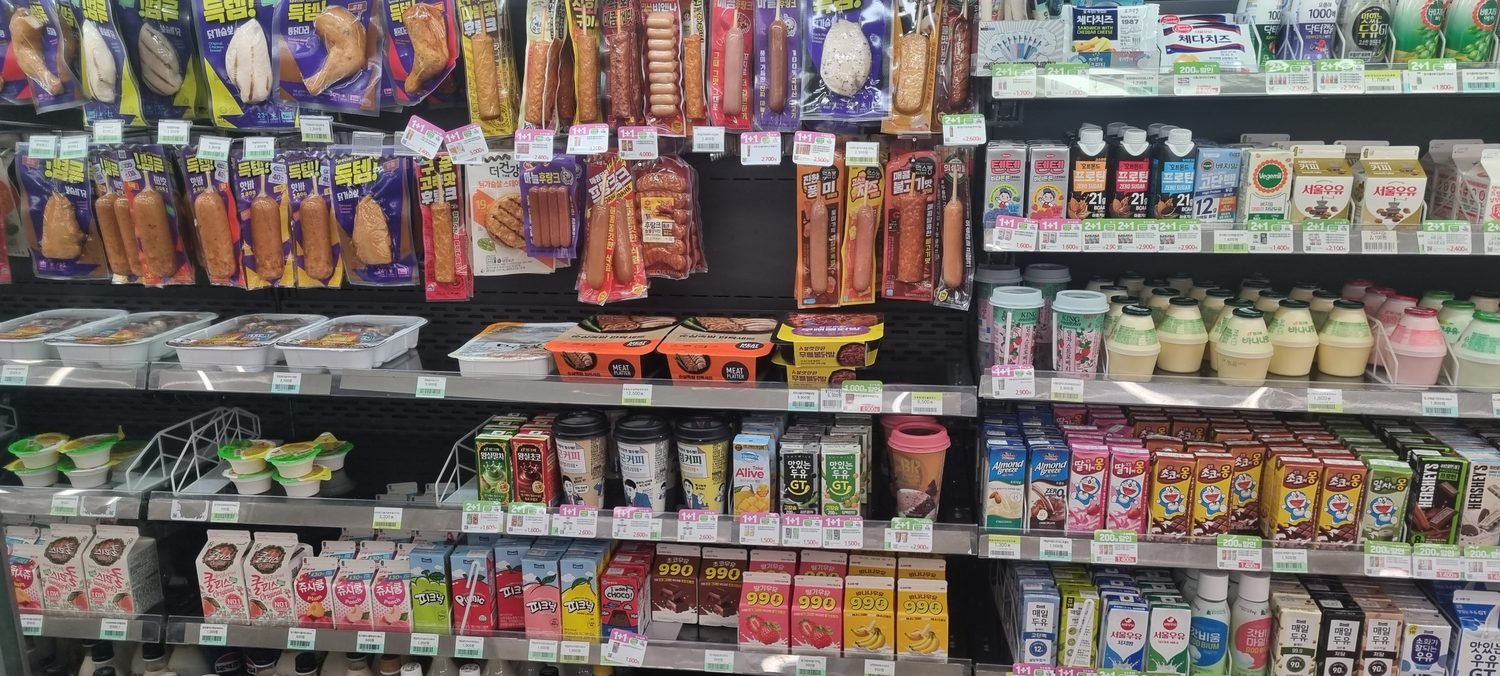
Watch for small colored stickers on the shelf edge — yellow or orange usually means “1+1” (buy one, get one free) or “2+1” (buy two, get a third). These rotate constantly and aren’t always obvious unless you’re scanning the shelf tags, which most tourists walk straight past. Downloading the CU or GS25 app isn’t really worth it for a short trip, but if you’re staying more than a week or two, the point stacking adds up faster than you’d expect.
Store-brand snacks, the ones with plain packaging and no character mascot on the front, are usually just as good as the branded version and noticeably cheaper. I’ve had arguments with visiting friends over whether the private-label chocolate stick cookies are better than the famous name-brand ones. They are. That’s not really up for debate in my house.
Two more worth knowing. First, the lunch boxes get marked down as they approach their sell-by time, which is stamped on the label in hours rather than days — wander past the chilled ready-meal shelf late in the evening and you’ll find discount stickers on dosirak and sandwiches that were full price at lunch. It’s the same food, hours from its deadline, and locals absolutely plan around it.
Second, and this one surprises people: on the big chains’ apps you don’t have to carry the free item away with you. Buy a 1+1 and the second one can be stored on your account and collected on another visit, at another branch, when you actually want it — so you’re not stuck hauling two litres of drink because the deal was good. It’s the kind of small convenience Korean retail is quietly excellent at.
And the thing genuinely nobody tells visitors: convenience stores are parcel offices. You can send a box from the counter to any address in the country, or store-to-store for less, filling the form out on the terminal by the register with staff help. For a traveller this is more useful than it sounds — shipping a suitcase ahead to your next city, posting souvenirs home to a friend’s address, or sending the winter coat you stopped needing down to Busan. It costs a few thousand won and takes about two minutes.
What’s actually worth trying
Skip the sandwiches — they’re fine, but you can get better sandwiches anywhere in the world. What you can’t easily get anywhere else is the seasonal snack shelf, which changes constantly and occasionally includes collaborations that sell out within a day of restocking. If you see a themed snack that looks slightly unhinged, buy it immediately; it probably won’t be there next week.
The tuna mayo samgak kimbap is the one people mention most, and it deserves the reputation, but I’d actually point first-timers toward the spicy pork version instead. It holds up better after sitting in a bag for an hour, which matters if you’re eating it on a bench somewhere rather than right at the store.
One genuinely underrated item: the canned iced Americano. It sounds like it shouldn’t work, and the first one I tried a few years back was genuinely bad, but the quality across most chains has quietly improved a lot. At under two dollars it beats waiting in line at an actual cafe when you just need caffeine and nothing else.
Bring cash or a card that works internationally — most locations still don’t love foreign cards that lack a chip-and-PIN setup, though this has gotten better. And don’t expect a trash can right outside; Korea’s public bin situation is famously sparse, so plan to eat where you buy or carry your wrapper a while longer than feels normal.
A few more things I’d put in a first-timer’s basket. Banana milk in the squat plastic pot is the single most Korean drink in the fridge — sweet, faintly artificial, beloved by everyone here since childhood, and the thing most visitors end up buying twice. The hangover drinks in the small glass bottles by the register are worth trying on principle: they’re a whole product category here, taken before or after drinking rather than the morning after, and they taste like sweet medicinal tea. And if you want the samgak kimbap everyone argues about, start with tuna mayo, then work outward.
One small trick that makes eating standing up much easier: peel the cup ramen lid off cleanly and use it as a plate. It holds the sausage, the triangle kimbap you unwrapped, or the cheese slice you’re about to melt into the noodles, and it means you’re not balancing three packets on your knee. Everyone here does it; nobody explains it.
The other thing to understand is that the limited-edition shelf isn’t a gimmick, it’s the whole business model. The chains put out collaborations constantly — snacks tied to a drama, a cartoon character, a soju brand, a bakery, a pop group — in runs that are deliberately small, and Koreans genuinely chase them. A hit dessert can empty every branch in a district within days and turn up on resale sites at three times the price, and the chains compete on who launched the thing everyone is talking about this month. So the odd-looking themed item on the end cap has a small, real chance of being the thing your Korean friends are jealous you tried. That’s why the advice above is to buy it now rather than next week.
Budget-wise, the whole category makes more sense once you convert it into working hours rather than dollars: one hour at the current minimum wage buys a full lunch box with change, which is the calculation I laid out in the minimum wage post. That’s the real reason these stores are where a lot of Korea actually eats.
Read next
- Is Coffee Actually Cheap in Korea? A Local Price Breakdown — The coffee that costs four times as much.
- Gwangjang Market: What to Actually Eat at Seoul’s Oldest Food Market — Real food, one subway stop away.
- Sungsimdang in Daejeon: Is Korea’s Most Famous Bakery Actually Worth the Line? — Worth breaking the budget for.