Three names come up when people plan a Busan trip, and they get treated as a choice: Haeundae, Gwangalli, Marine City. Pick one.
They’re about three kilometres apart. You can walk between all three in an afternoon, and most people who live here don’t think of them as alternatives at all. They think of them as different times of day.
Haeundae is where you go while the sun is up. Gwangalli is where you go after dark. Marine City is the thing you’re looking at from both, and worth twenty minutes of standing in it. Framed that way the question stops being which one and becomes what order.
The short version
- Swimming, sand, a proper beach day — Haeundae. It’s the bigger beach and it’s set up for it.
- One evening free and you want the good one — Gwangalli, without hesitating.
- Photographs of a skyline that doesn’t look Korean — Marine City, in the half hour after sunset.
- Raw fish, done properly — Millak, at the eastern end of Gwangalli.
- Cheap food — a block inland from either beach, never the front row.
Haeundae — the daytime one
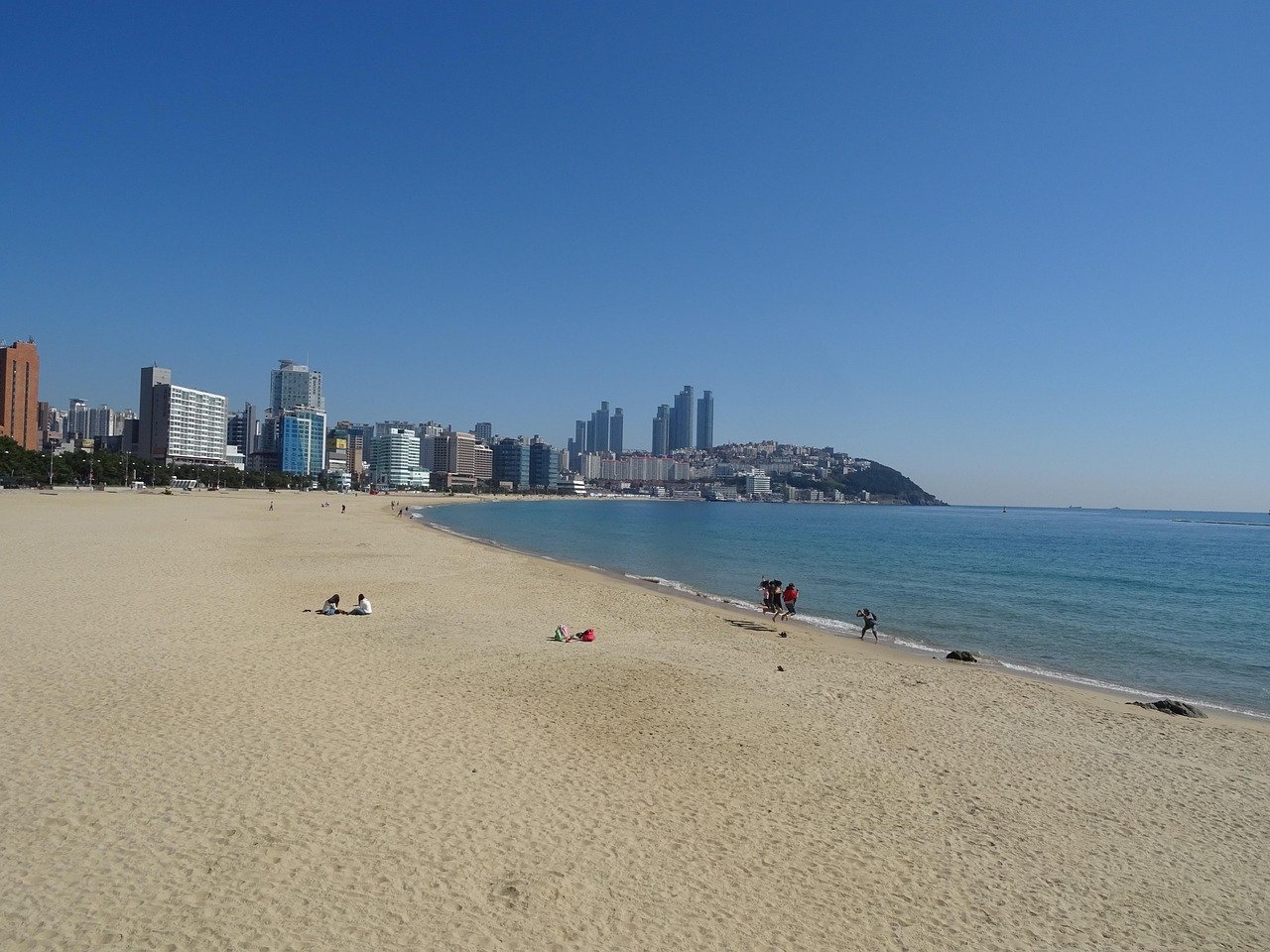
Everyone who has spent five minutes researching Busan already has Haeundae on the list. So let me be upfront: it’s a good beach in a genuinely impressive setting, and on a Saturday in August it’s absurdly crowded. Both are true at once.
It’s a 1.5-kilometre stretch of sand backed by a wall of high-rise apartments and hotels, which gives it a skyline-meets-seaside look you don’t get at most beaches. Standing in the water looking back, you see towers stacked behind towers. Some people find that ugly. I find it fascinating — it isn’t trying to be a quiet nature escape and it doesn’t pretend to be one.
The sand is fine and pale, imported and topped up periodically because the natural sand kept eroding. Soft underfoot, and by mid-afternoon in summer hot enough that you’ll be doing the barefoot hop toward the water.
When to go
Avoid late July through mid-August if you can. That’s when the beach turns into something closer to a festival crowd — umbrellas packed tight enough that you can barely see sand between them, and swimming that feels more like wading through people. I’ve stood on the boardwalk in peak season and genuinely couldn’t spot open sand.
Late May to mid-June is a much better window. The water is still cold for swimming, but the light is good, the crowds are manageable, and you can hear the waves instead of a hundred conversations. September works too, once the summer crowd clears and before it gets too cold to sit by the water.
Winter is its own thing — quiet, a bit bleak in a way some people love, with a polar bear swim in January that draws a specific kind of brave.
Eating around Haeundae
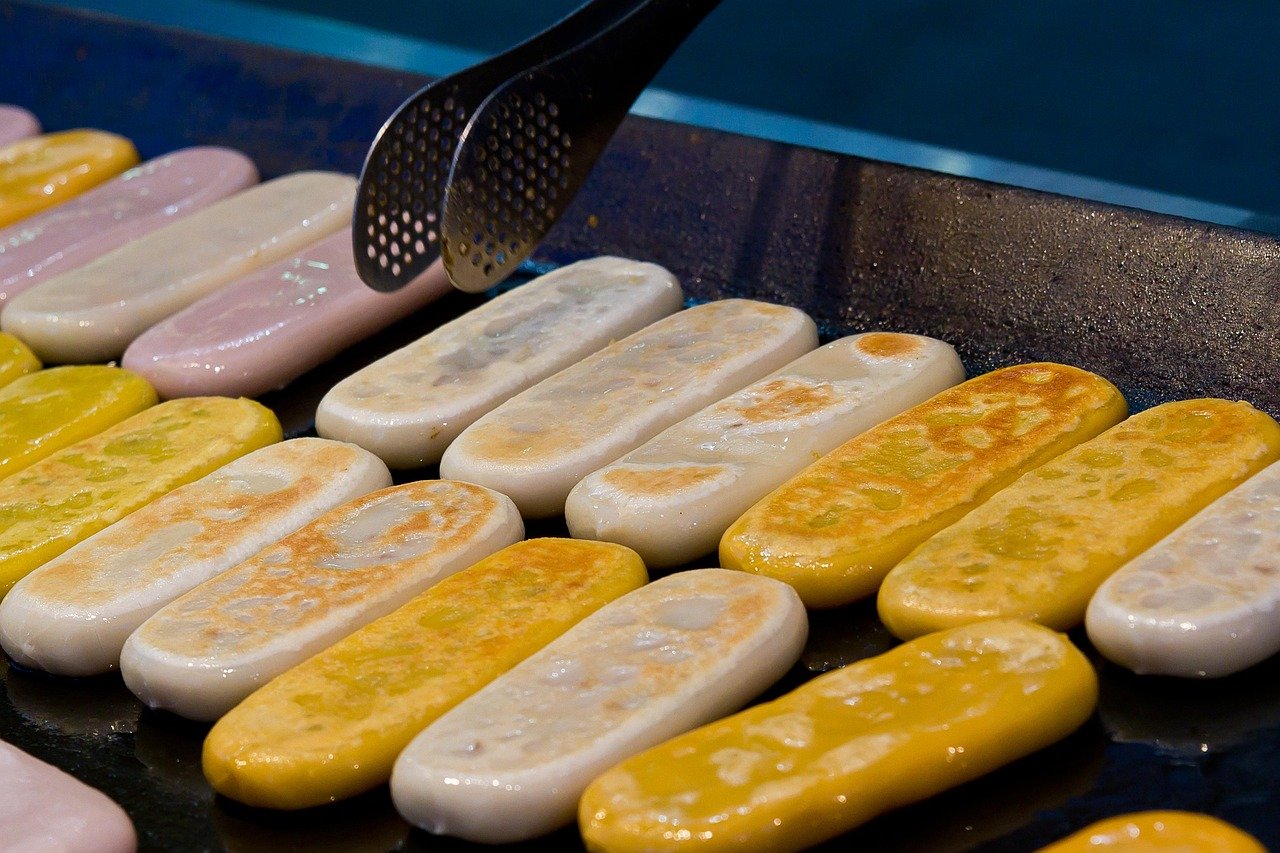
The street food here isn’t as strong as Gwangalli’s, but you’re never more than a couple of minutes from something decent. Look for the hotteok stalls near the main entrance — the seed-filled version, not the plain syrupy one, if you get a choice.
There’s also a run of convenience stores where you can buy cheap beer and snacks and sit on the sand with them. Completely normal here; nobody will look twice.
For a real meal, walk a block or two back from the front. Prices drop noticeably the moment you’re off the row facing the water, and the food isn’t worse for it. Haeundae Market, a few minutes inland, is a much better bet than anything on the beach — less polished, more plastic stools and grills, prices that haven’t been adjusted for tourist traffic.
Beyond the sand
Dongbaek Island — not actually an island any more, more of a headland — sits at the western end and has a walking loop with good ocean views. Worth twenty minutes if you want a break from the sand. APEC House is out there too, left over from the 2005 summit, mildly interesting if you’re walking past anyway.
Gwangalli — the one after dark
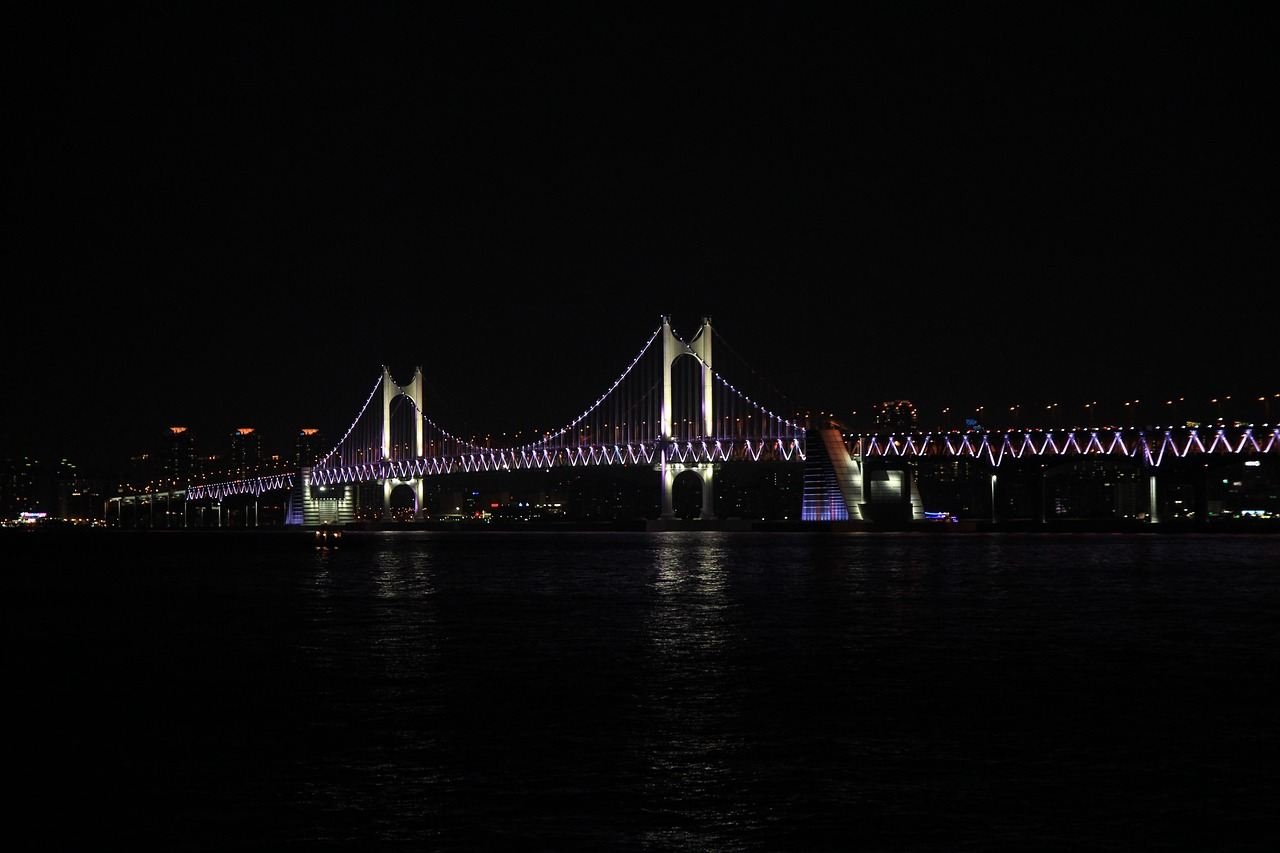
If someone sends you to Gwangalli for the swimming, they’ve sent you to the wrong beach. The sand is fine and the water is fine, and that isn’t why this place has a fanbase. Everything about it — the cafes, the bridge, the crowd that arrives around seven and doesn’t thin until midnight — is built around the fact that it looks better lit up than under a noon sun.
The bridge is the whole point
Gwangan Bridge — the Diamond Bridge, locally — crosses the bay in full view of the beach, and after dark it runs a rotating LED show that changes colour every so often. It isn’t subtle and isn’t trying to be. On weekend nights the promenade fills with people standing there with a drink, not doing much else, which is the correct way to experience it.
One practical note, since I’ve watched a lot of people get this wrong: don’t photograph it from directly underneath. Back up thirty or forty metres and let the whole span fit in frame.
There’s a fireworks and drone show most years in October — the Busan Fireworks Festival. If you’re around for it the beach packs shoulder to shoulder hours in advance. Worth it once. I wouldn’t fight that crowd twice.
Daytime, and surfing
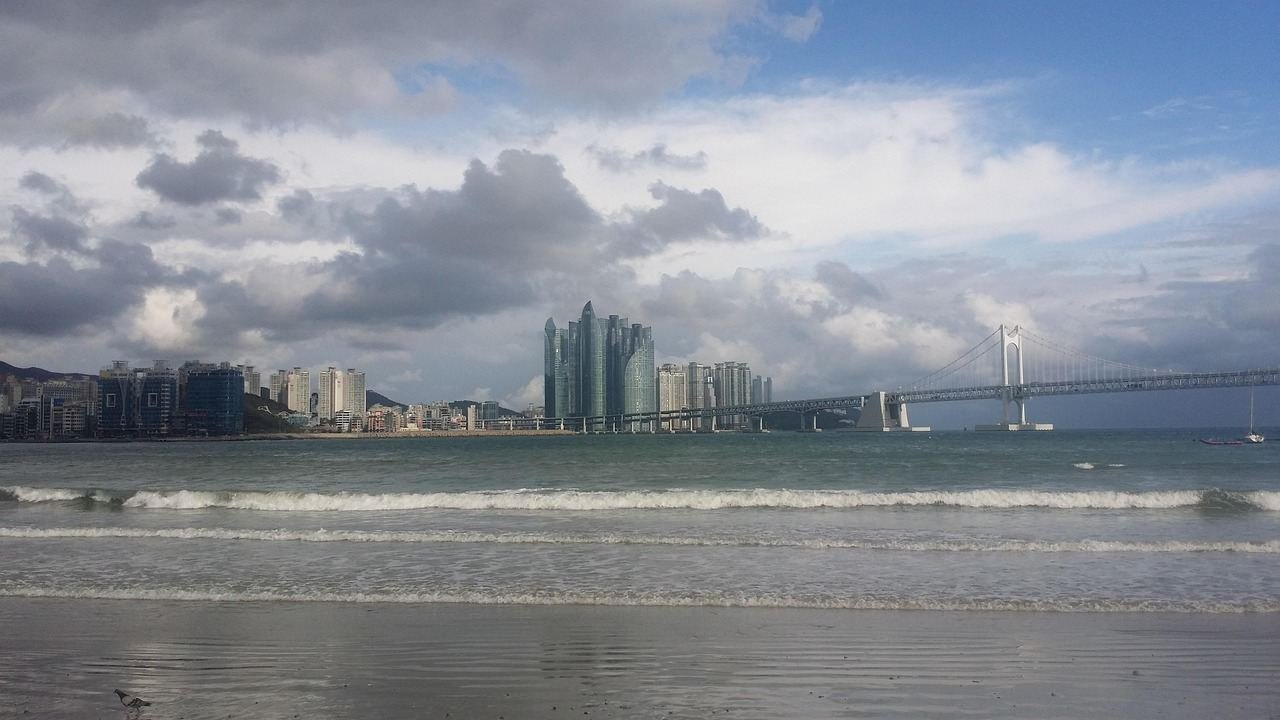
By day Gwangalli is quieter and more low-key than the photos suggest. Families put up beach tents, kids run around, nothing dramatic.
Where it gets interesting is the surfing. This is one of the few spots in Busan where you’ll regularly see people on boards, mostly toward the eastern end near the rental shacks. The waves aren’t Hawaii, but they’re consistent enough that a small local surf culture has taken root, complete with surf-themed cafes leaning hard into it. Board and wetsuit rental runs somewhere around ₩30,000–40,000 for a couple of hours depending on the shop, no reservation needed most weekdays.
Millak, and skipping the cafe strip
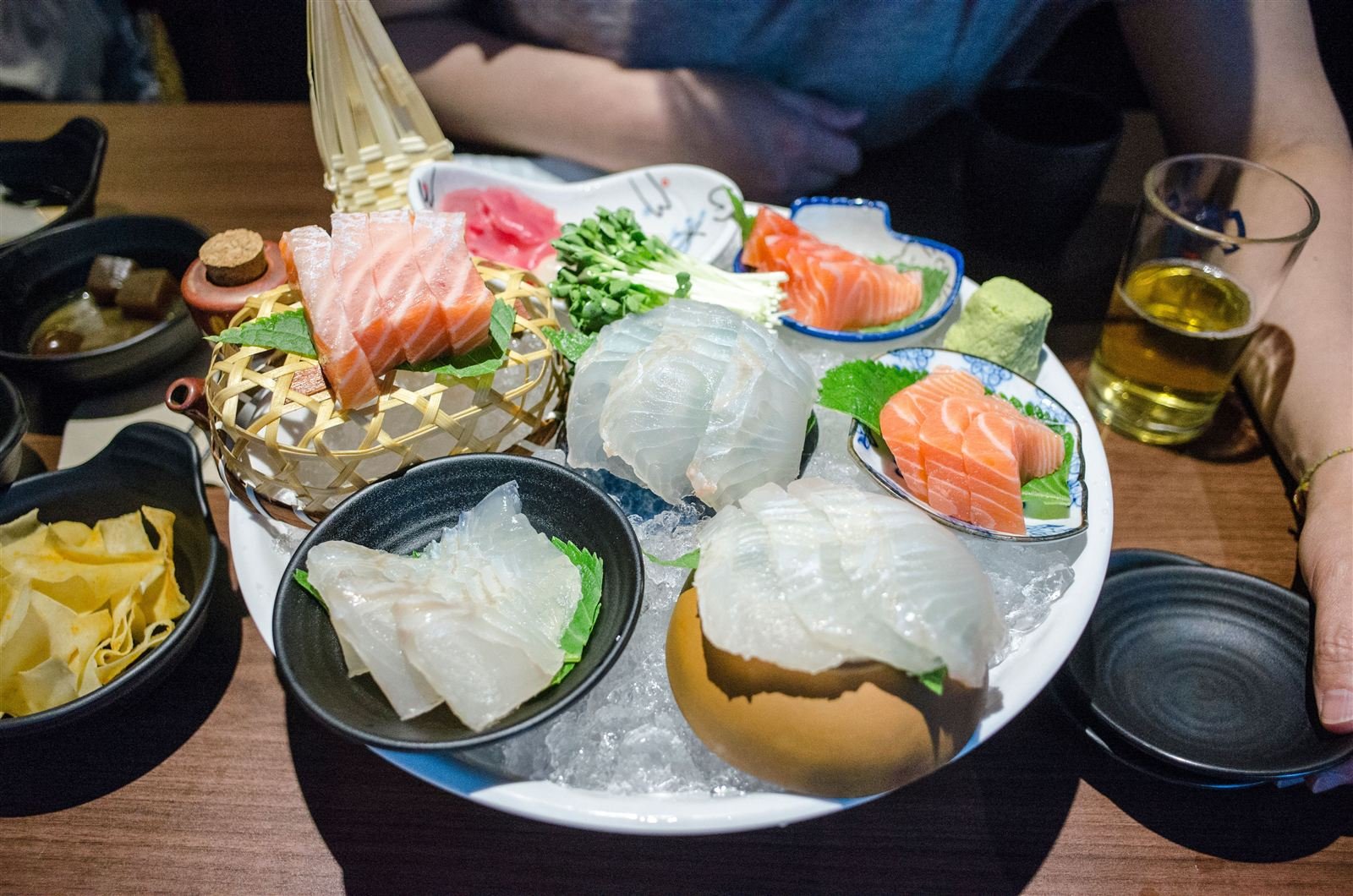
The cafe strip across from the sand is fine for a coffee and priced like every other view-facing strip in Korea. What you actually want is a ten-minute walk east to Millak Raw Fish Town — a multi-storey building with fish tanks on the ground floor and hoe restaurants above. You choose your fish downstairs, they send it up, and a restaurant on the upper floors prepares it while you take a table facing the water.
It’s touristy in the sense that everyone knows about it, and the fish is genuinely fresh. Expect somewhere in the ₩30,000–60,000 range per person depending on what you order and how many are splitting. Go with at least one other person — portions are built for sharing, and eating hoe alone at a table set for four is a bleak way to spend an evening.
Marine City — the skyline in the photos
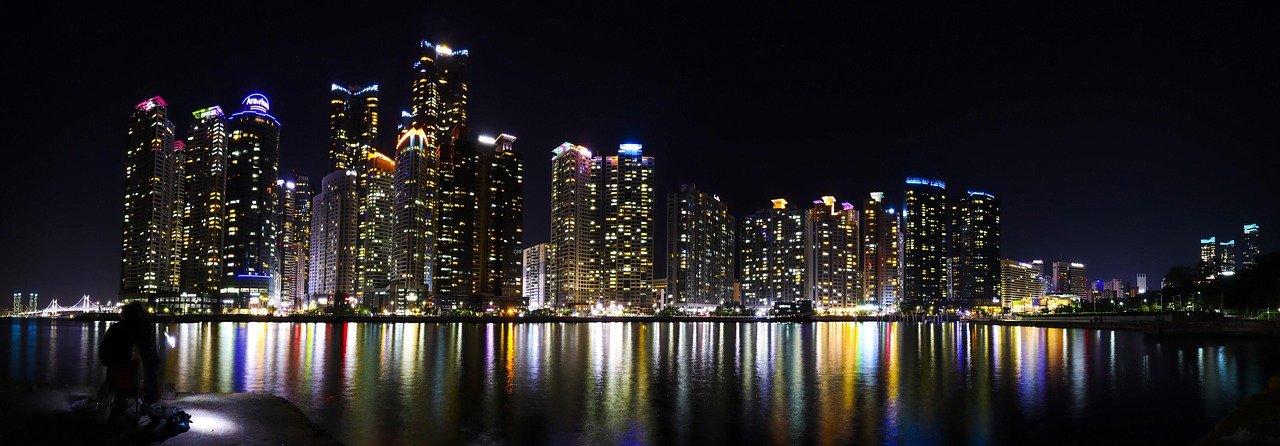
Every few months a photo of Busan circulates that doesn’t look like Busan at all — a wall of glass towers curving around a marina, boats out front, the whole thing lit purple and blue after sunset. That’s Marine City. It isn’t a filter or a rendering, and it’s a fifteen-minute walk from Haeundae Beach.
It’s reclaimed land built up over the last couple of decades, mostly residential high-rises. The tallest, LCT Landmark Tower, passes 400 metres and is among the tallest buildings in the country. It isn’t a “sight” the way a temple or a market is — it’s mostly very expensive, very tall apartments with a marina and a strip of cafes wedged in at ground level. People come for the skyline, not for a landmark.
The half hour that matters
The window you want is after sunset, while the sky still has colour in it — the towers are lit and the sky hasn’t gone black. It doesn’t last long, so don’t arrive exactly at sunset expecting the best of it. Wait it out.
Coffee runs about ₩6,000–7,000 and a beer ₩7,000–9,000, steeper than a normal cafe but not outrageous for the view. Most places don’t take reservations, so a Tuesday evening beats a Saturday if you want to sit outside.
An hour or two is plenty. Walk the marina, get the photo, have a drink, move on. A few dessert cafes near the water grow long weekend queues for fairly average cake — I wouldn’t join one. And it’s windier along the water here than it is walking over from Haeundae, more than you’d expect, so bring a layer.
Doing all three in one day
This is the part the separate guides never say, and it’s the reason to treat them as one place.
Start at Haeundae in the late afternoon, once the day-trippers begin to clear. Sand, a swim if it’s the season, hotteok from the stalls. Walk fifteen minutes west to Marine City and time it so you arrive shortly before sunset — drink at the marina, photos in the coloured half-hour after the sun goes. Then take the metro or a short taxi to Gwangalli for dinner at Millak and the bridge afterwards.
That sequence follows the light. Doing it in reverse means seeing the two things that are best at night in daylight, which is how people end up unimpressed by all three.
Getting there and between
- Haeundae — Busan Metro Line 2 to Haeundae Station, exit 3 or 5, then about ten minutes on foot toward the water. Following the crowd works just as well once you’re above ground.
- Gwangalli — Line 2 to Gwangan Station, exit 3 or 5, then ten to fifteen minutes down toward the sea. Take the walk rather than the bus; you start seeing the bridge lights before you reach the sand.
- Marine City — no station of its own. Walk from Haeundae Beach, about fifteen minutes, or take a short taxi.
- Between Haeundae and Gwangalli — three stops on Line 2, or a taxi that costs less than you’d expect. A T-money card covers the metro and the bus.
Prices here are what things cost when this was written and they move. The won figures are a guide, not a quote — the converter will tell you what they come to in your currency today.
Read next
- Jagalchi Market street food — the city’s other great fish place, and older.
- Kakao T — how to get a taxi back when the metro has stopped.
- Convenience store food — what to buy for a beer on the sand.