Gyeongbokgung turns up in eight out of ten Seoul recommendations. The National Museum of Korea turns up in almost none, which is strange, because it’s free, it’s enormous, and it’s ten minutes from a subway exit.
They belong together. The palace is the building the Joseon dynasty kept rebuilding every time somebody burned it down. The museum is nearly everything else that survived — the centuries before Joseon and the objects that outlived the buildings. Seen back to back, they’re the same history told twice, once in architecture and once in what people left behind.
And there’s a purely practical reason to plan them as a pair, which nobody mentions because nobody writes about them together: the palace closes on Tuesdays and the museum closes on Mondays. Whichever day you’ve got, one of them is open.
Gyeongbokgung — the building that keeps being rebuilt
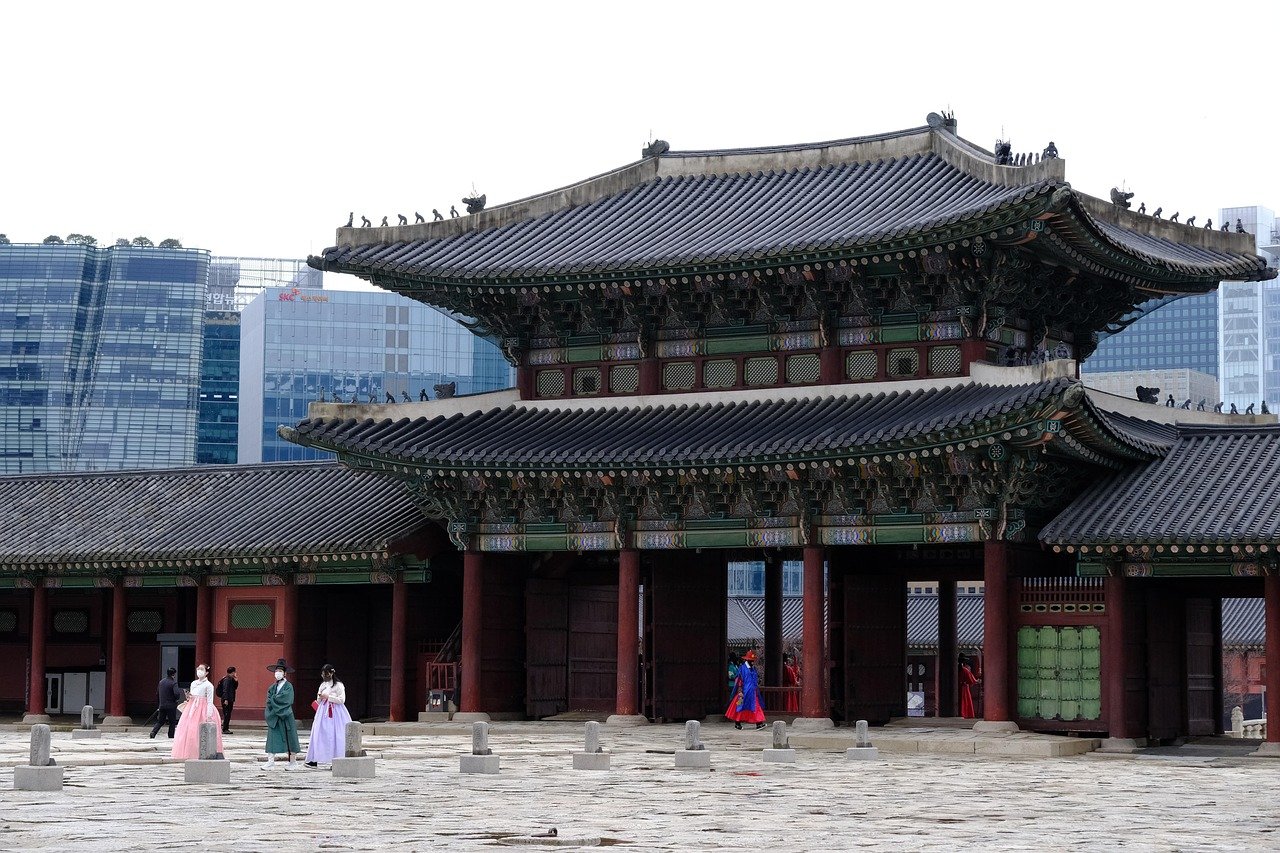
The palace dates to 1395, built as the main seat of the Joseon dynasty. It did not have an easy few centuries. Japanese invasions in the 1590s left it in ashes and it stayed that way for roughly 300 years before anyone rebuilt it in the 1860s. Then the colonial period took another bite.
So what you walk through now is less a 600-year-old original than a site people keep deciding is worth rebuilding. I find that more interesting than something untouched behind glass.
Time it around the guard ceremony
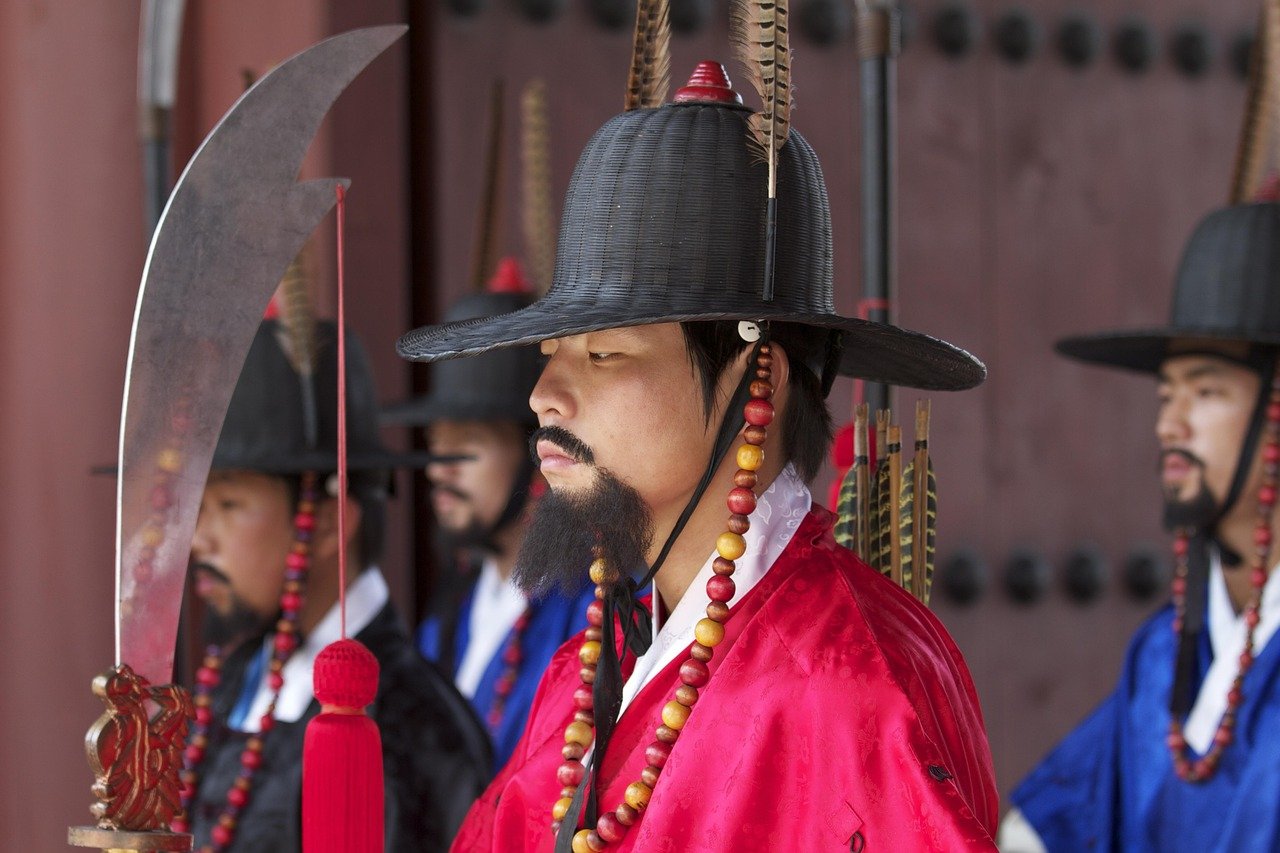
The changing of the guard in front of Gwanghwamun runs roughly twice a day, around 10am and 2pm. Check before you go — the schedule shifts, and it doesn’t run at all on Tuesdays, the palace’s closed day. Performers in Joseon-era military dress, drums and all.
Arrive ten or fifteen minutes early and stand near the centre of the gate rather than off to one side. The ceremony moves around a fair amount, and the middle is where it plays out in front of you instead of past you.
Wear a hanbok and skip the ticket
This is the detail that changes the visit: rent a hanbok and you get in free. Rental shops line the streets outside the palace walls, from plain everyday styles to elaborate sets with hairpieces included. Most rentals cover a few hours to a full day, which is plenty.
It isn’t only a tourist thing either — plenty of Korean visitors do the same, especially at weekends when the light is good.
What to see if time is short
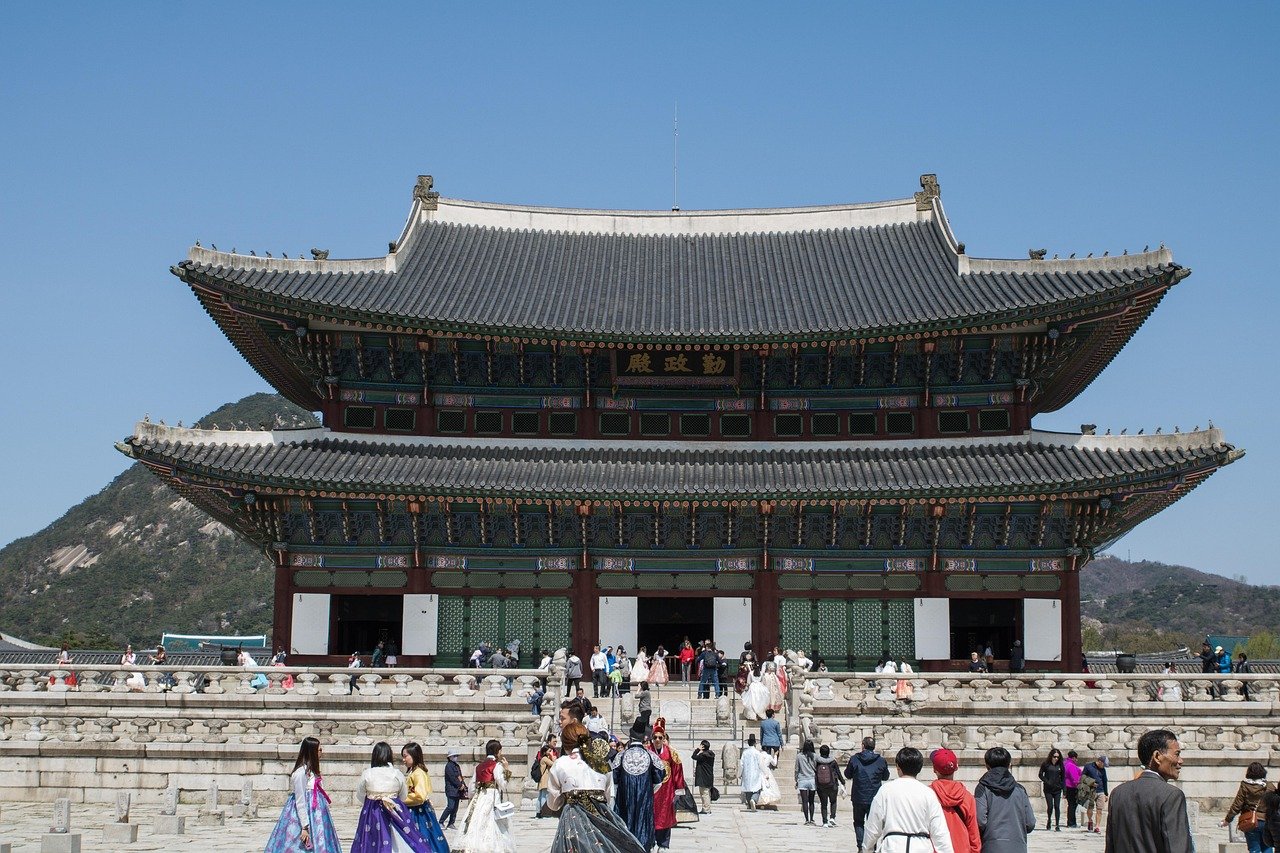
- Geunjeongjeon — the main throne hall, and the most photographed building on the grounds.
- Gyeonghoeru Pavilion — built out over a lake, beautiful, and only open to the public on selected dates, so don’t count on getting inside.
- The National Folk Museum of Korea — inside the palace grounds, free, and a solid fallback if the weather turns.
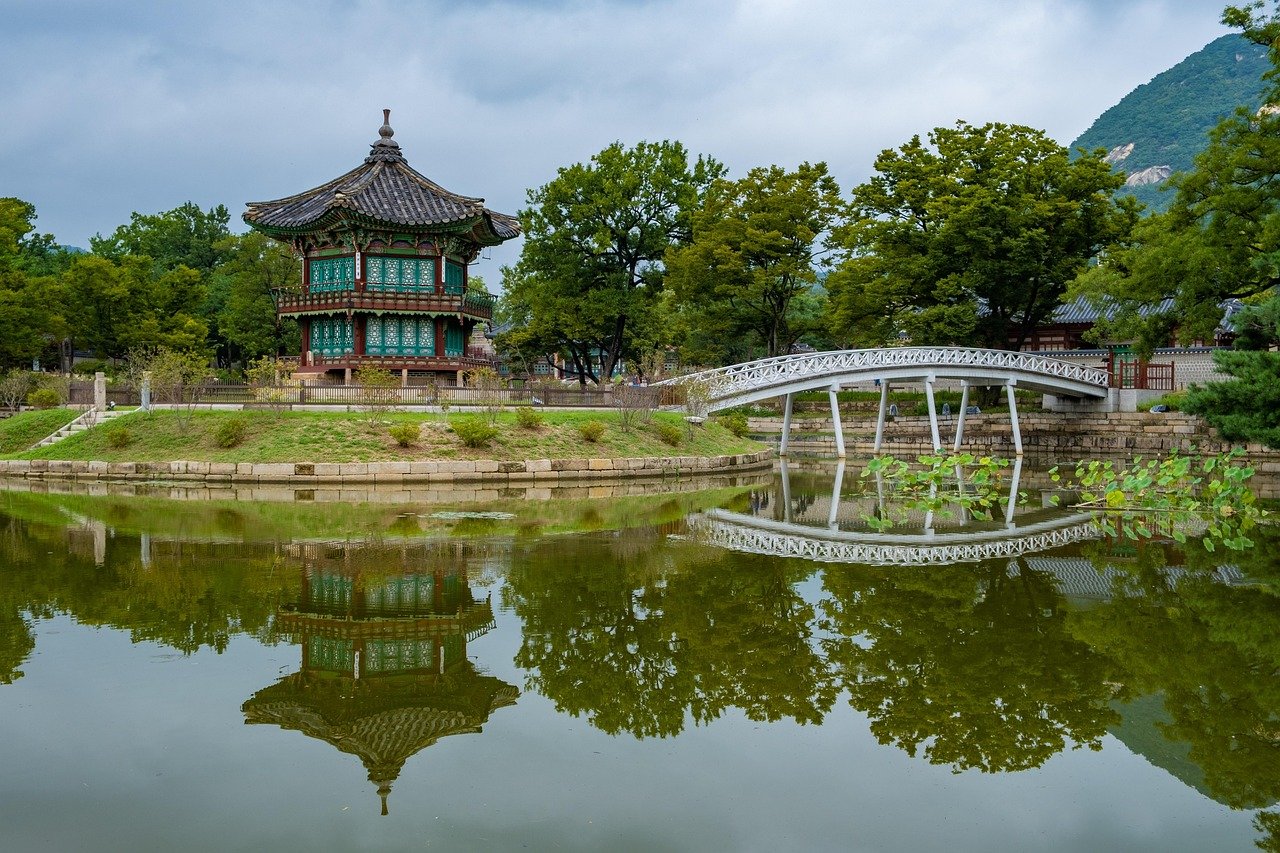
My actual advice: don’t make straight for the throne hall. The quietest and honestly prettiest part of the place is toward the back near Hyangwonjeong Pond, where almost nobody walks. That’s the corner I’d return for.
Go early. By mid-morning the plaza in front of Gwanghwamun fills with tour groups and stays that way. Gyeongbokgung Station, Line 3, Exit 5, two minutes to the gate. Hours roughly 9am to 6pm, later in summer, closed Tuesdays. A few thousand won for adults, free in hanbok and on certain holidays such as Hangeul Day. Budget an hour and a half at minimum.
One thing the photographs never convey: the palace is mostly open ground. The courtyards are wide, paved and almost entirely without shade, which in July means you will be looking for a roof within twenty minutes, and in January means the wind comes straight down the gaps between the halls. Dress for standing outside rather than for walking around a building. It is also worth stopping in the main courtyard and looking past the roof of Geunjeongjeon to the ridge of Bugaksan behind it. The mountain is not a backdrop that happened to be there — the site was chosen for it, and that view is the composition the whole place was built around.
The National Museum — everything that outlived the buildings
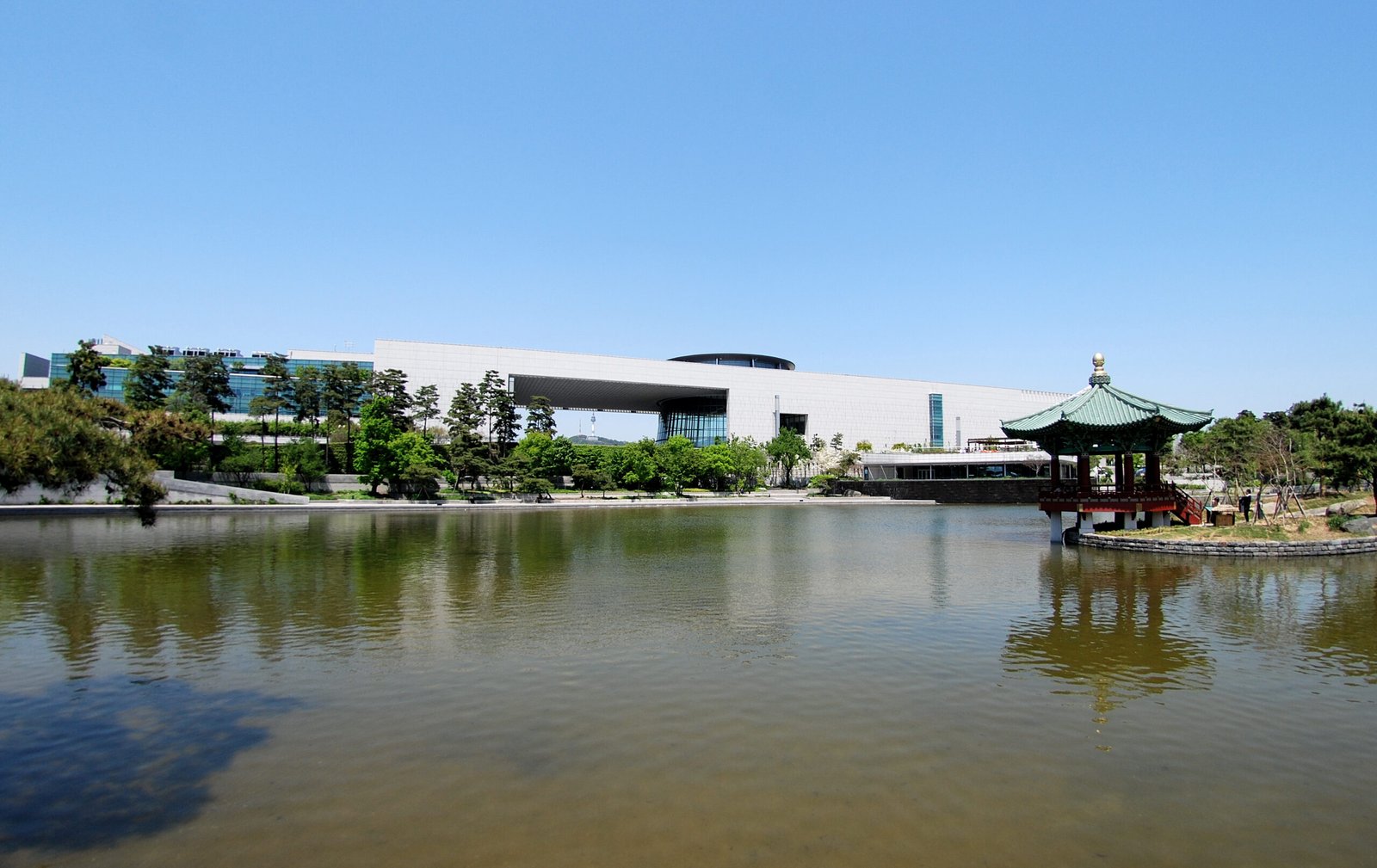
This is not a two-hour museum. It’s among the largest in the world by floor space, six permanent halls covering prehistoric pottery through Buddhist sculpture to Joseon calligraphy. Try to do the whole thing and you’ll burn out around hall three. Pick two or three sections and actually look at them.
The one piece everyone should see
Third floor, the Pensive Bodhisattva — Bangasayusang — displayed alone in a dim, quiet room built for it. A gilt-bronze figure from the 6th or 7th century, seated with one leg crossed, chin resting on a hand, caught mid-thought.
Photographs of it online do very little. In person, in that dark room with nothing competing for attention, it’s a different thing entirely. People sit on the bench and stay ten minutes.
The pagoda you walk into
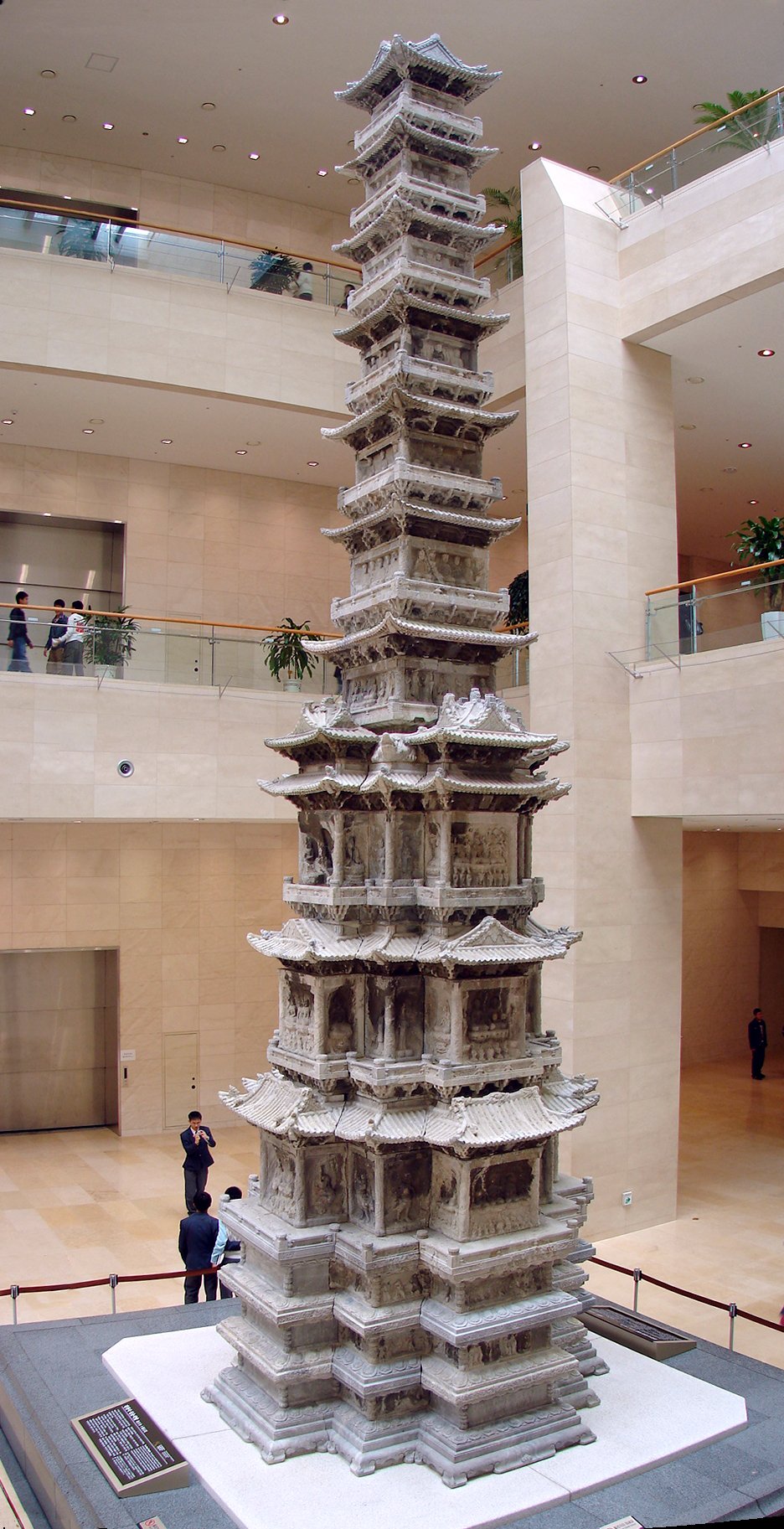
Come in the main entrance and the first thing over you is a ten-storey marble pagoda, more than 13 metres tall, originally from Gyeongcheonsa Temple and dated to 1348. It spent decades abroad after being taken out of the country during the colonial period, came back, and ended up as the centrepiece here. You can circle it from several floors on the way up, which breaks the walking nicely.
The Silla gold crowns
They get less attention internationally than they deserve. Thin gold, oddly delicate for royal headgear, with branch-and-antler shapes rising off the band. A reminder that Korean goldwork goes back well over a thousand years, long before anyone was saying K-anything.
The best photograph is outside
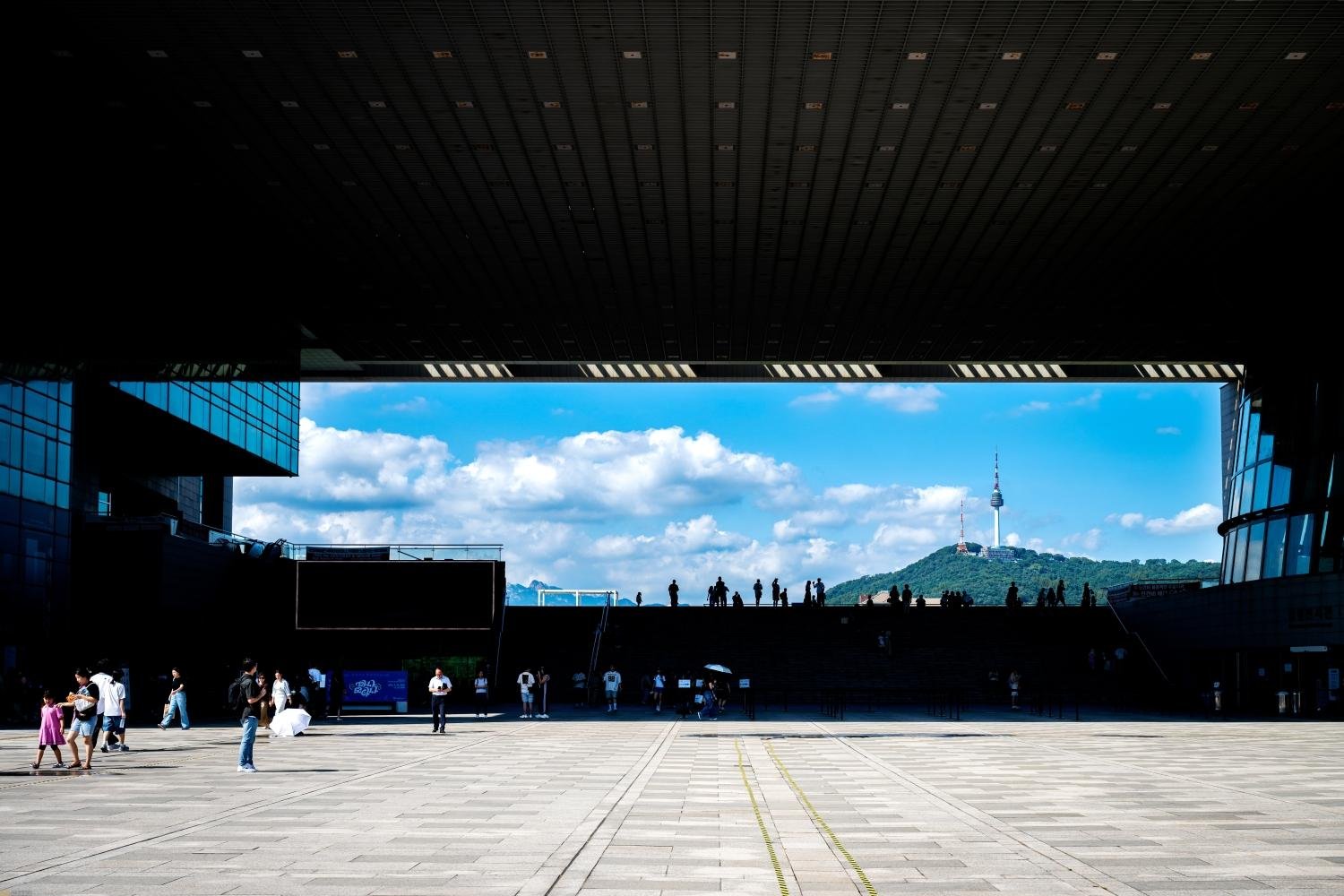
Most of the good pictures of this place aren’t of an artifact. Walk out to the terrace at the back and you get a wide view toward Namsan with N Seoul Tower on the ridge. Late afternoon, once the crowds thin and people are just sitting on the steps, is the time for it.
And don’t skip the park next door. Yongsan Family Park runs alongside the grounds and almost nobody who comes for the exhibits walks through it afterward. A pond with a fountain, willows leaning over the water, enough open lawn that it doesn’t feel like part of a museum complex. Ten minutes there resets you after a couple of hours of glass cases.
Ichon Station, Line 4 or the Jungang line, Exit 2, connects into the grounds through a covered walkway, so weather doesn’t touch you on the way in. Permanent exhibitions are free; special exhibitions charge separately. Hours 10am to 6pm, extended to 9pm on Wednesdays and Saturdays — the better slot, since it thins out considerably after five. Closed Mondays.
Two practical notes for the museum itself. The building is long — walking one floor end to end is a real distance, so decide your route before you start rather than working down a list and doubling back. And leave your coat and bag at the entrance instead of carrying them; two hours of galleries feels very different with your hands empty. There are benches in front of the bigger pieces, and they are there to be used, which is not something every museum manages.
Four things for a first visit
- Take the audio guide, or at minimum a floor map. The layout isn’t intuitive and it’s easy to miss whole wings.
- There’s a children’s museum on site, separate ticket, genuinely well done rather than an afterthought.
- The shop sells decent reproductions of the smaller artifacts. A better souvenir than another keychain.
- Photography is fine in most permanent galleries and not in the special exhibition rooms.
Doing both
They’re on opposite sides of the river’s north bank, about twenty-five minutes apart on the subway, and the order matters.
Palace first, museum second. Gyeongbokgung is outdoors and best early, before the plaza fills. The museum is indoors, open until nine twice a week, and better late when it empties out. Doing it the other way round means queuing at the palace at noon and racing the museum’s closing time.
If the weather turns, the swap is easy — the palace has the Folk Museum inside it, and the National Museum is the whole afternoon’s insurance policy.
Between the two, Bukchon sits ten minutes uphill from the palace, which is the natural third stop if you have the legs for it — though it rewards slowing down, and rushing it after a palace visit means you’ll see the one famous alley and leave.
Whichever order you take them in, the subway ride between the two is your lunch. The museum has food inside and it is convenient and forgettable. The better move is to eat before you leave the palace side: Seochon, the small grid of streets along the palace’s western wall, is a ten-minute walk from the gate and is where people who work in the area actually eat. Sit down there, then get on the train. Arriving at the museum already fed is what makes the second half of the day survivable.
Read next
- Four Seoul neighborhoods — Bukchon is a ten-minute walk from Gwanghwamun.
- Outdoors in Seoul — Cheonggyecheon starts beside the palace plaza.
- Survival Korean — enough to buy a ticket and order lunch afterward.