There’s one moment at a Korean BBQ table that gives everyone away. The pork belly hits the grill, it starts sizzling, and somebody reaches over with their own chopsticks to poke at it.
That’s the tell. Every time.
Nobody’s going to say anything to you about it. The staff have seen it a thousand times and will usually just nudge the tongs a little closer to your side of the table without making eye contact. But if you’d rather not spend the whole meal quietly wondering whether you’re doing something wrong, it helps to know how the table actually works.
So here’s the real version of Korean BBQ etiquette. Not the listicle version written by someone who has never sat on a low plastic stool with smoke in their face — the stuff that genuinely comes up.
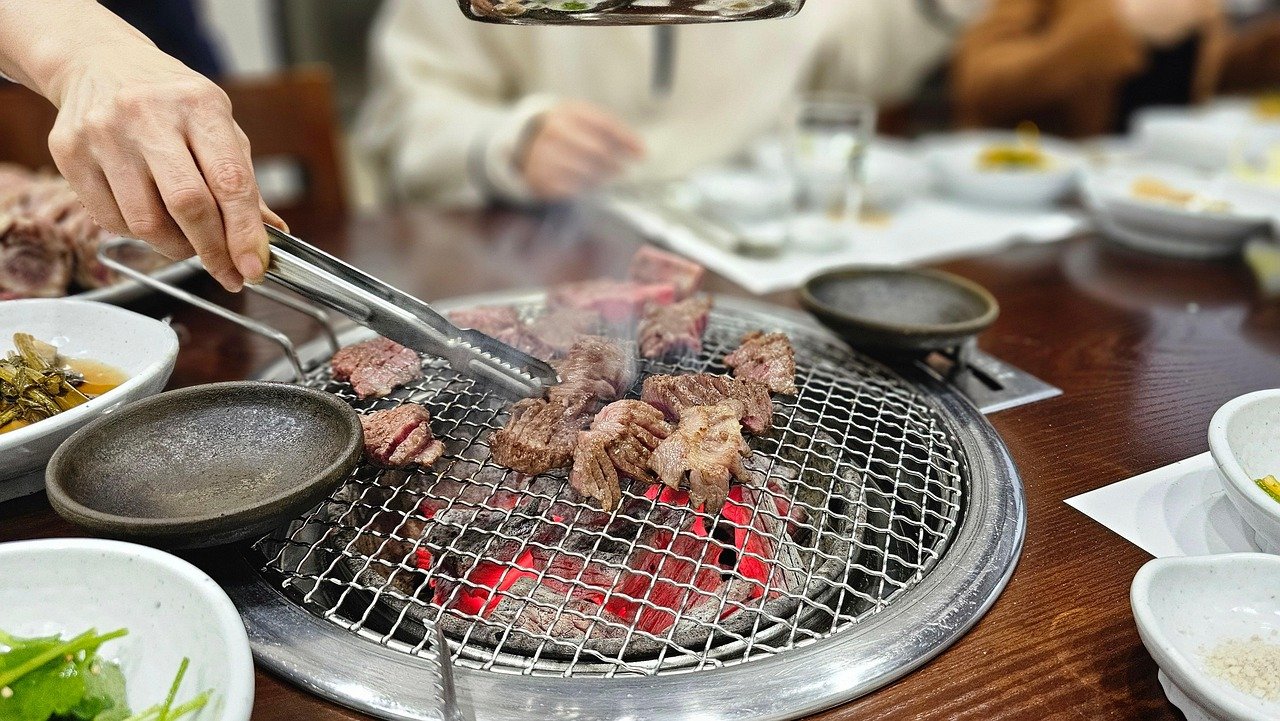
Somebody has to be the grill person
Korean BBQ is not a meal where everyone cooks their own piece. One person runs the grill for the whole table. That’s just how it goes.
Traditionally it falls to the youngest at the table, which is one of those hierarchy things that’s fading but hasn’t fully disappeared. In practice it’s usually whoever cares most about the meat not burning. If you’re eating with Korean friends, someone will pick up the tongs within about four seconds and you won’t have to decide anything.
At a lot of places — especially the ones grilling thick cuts or marinated galbi — a staff member comes over and does it for you. They’ll cut, flip, move pieces to the cooler edge of the grill, and tell you when it’s ready. Let them. Don’t fight them for the tongs. I’ve watched tourists politely try to take over and it just creates an awkward little standoff over a piece of pork.
The tongs and the scissors have one job
Every table gets a pair of long metal tongs and a pair of kitchen scissors. These touch raw meat. Your chopsticks do not.
This isn’t a mystical cultural rule, it’s just food safety, and Koreans are genuinely strict about it. You use the tongs to put meat on the grill, the scissors to cut it into bite-size pieces once it’s browning, the tongs again to flip. Only when a piece is fully cooked and sitting on your own plate do the chopsticks come out.
The scissors surprise a lot of visitors. Yes, you cut the meat directly on the grill, mid-cook, with scissors. It looks violent. It’s completely normal.
One more small thing: don’t rest the tongs in a sauce dish or use them to grab lettuce. Keep them on the grill’s edge or on the little rest they came with.
Stop flipping it
Pork belly needs to be flipped maybe twice. Two times. That’s it.
The instinct when you’re nervous is to keep turning everything over so nothing burns, and the result is grey, sad meat that never gets a proper crust. Put it down, leave it alone until the edges go golden and the fat starts to look glassy, flip it, wait again, then cut.
Marinated cuts like galbi burn faster because of the sugar in the marinade, so those need more attention and a cooler spot on the grill. Plain samgyeopsal is forgiving. Trust it.
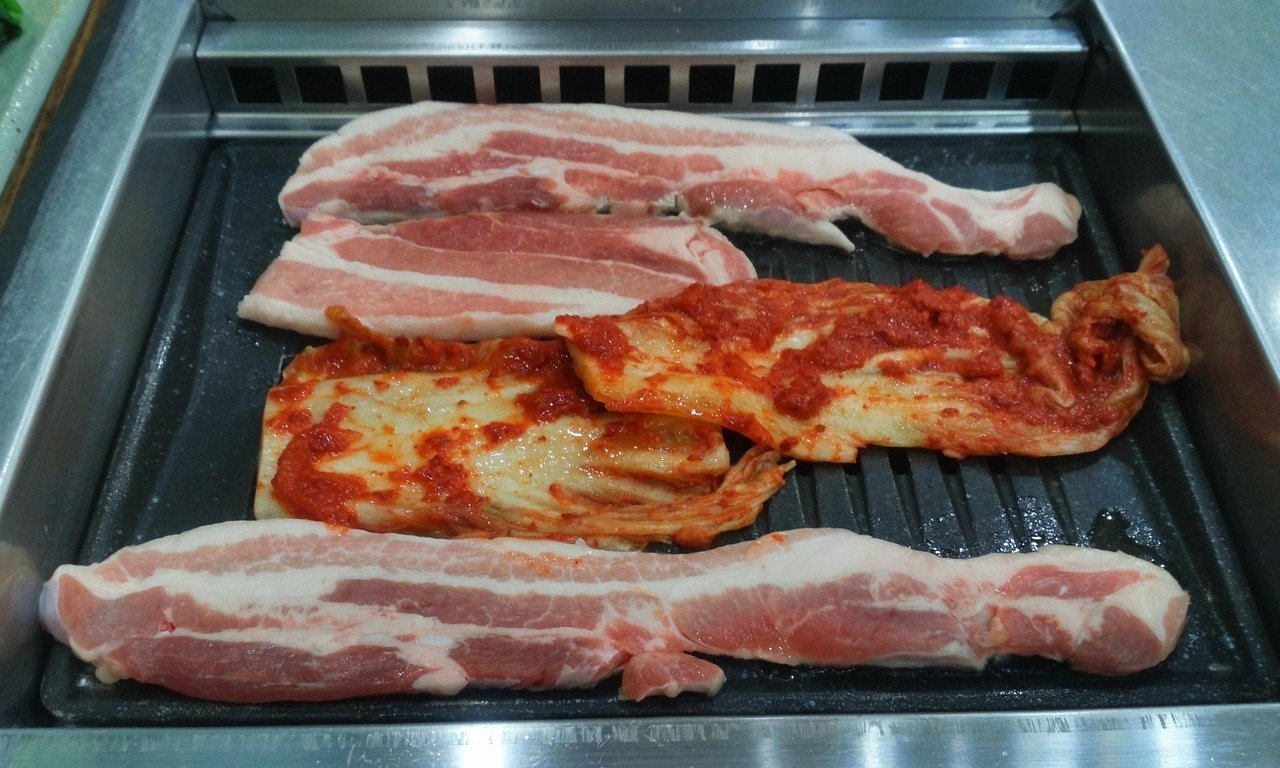
Ask for a new grill plate — seriously, just ask
After a while the plate gets covered in burnt bits and old fat, and everything you cook on it starts tasting scorched. This is not something you’re supposed to endure politely.
Raise a hand and say pan garara juseyo (판 갈아주세요) — “please change the plate.” Someone will show up with tongs and a fresh one within a minute. It’s free. It’s expected. Locals ask for this constantly and there is genuinely no version of this where you’re being demanding.
If you can’t get the words out, pointing at the blackened plate and looking mildly distressed works fine.
The two-serving minimum is real
Most BBQ places won’t take an order for a single portion of meat. The menu will say 1인분 (one serving, usually 150–200g) with a price next to it, but the kitchen wants at least two.
In Seoul in 2026, expect roughly ₩15,000–19,000 per serving for decent samgyeopsal, more for aged or premium cuts, less at the old-school neighborhood spots with the ventilation hoses hanging from the ceiling. Two people ordering two servings each is a normal meal. Two servings between two people is a light one, and you’ll probably order more.
This is also why solo Korean BBQ is awkward and why a small but growing number of places now do single-person grills. Those exist, they’re just not the default.
The side dishes are free, and so are the refills
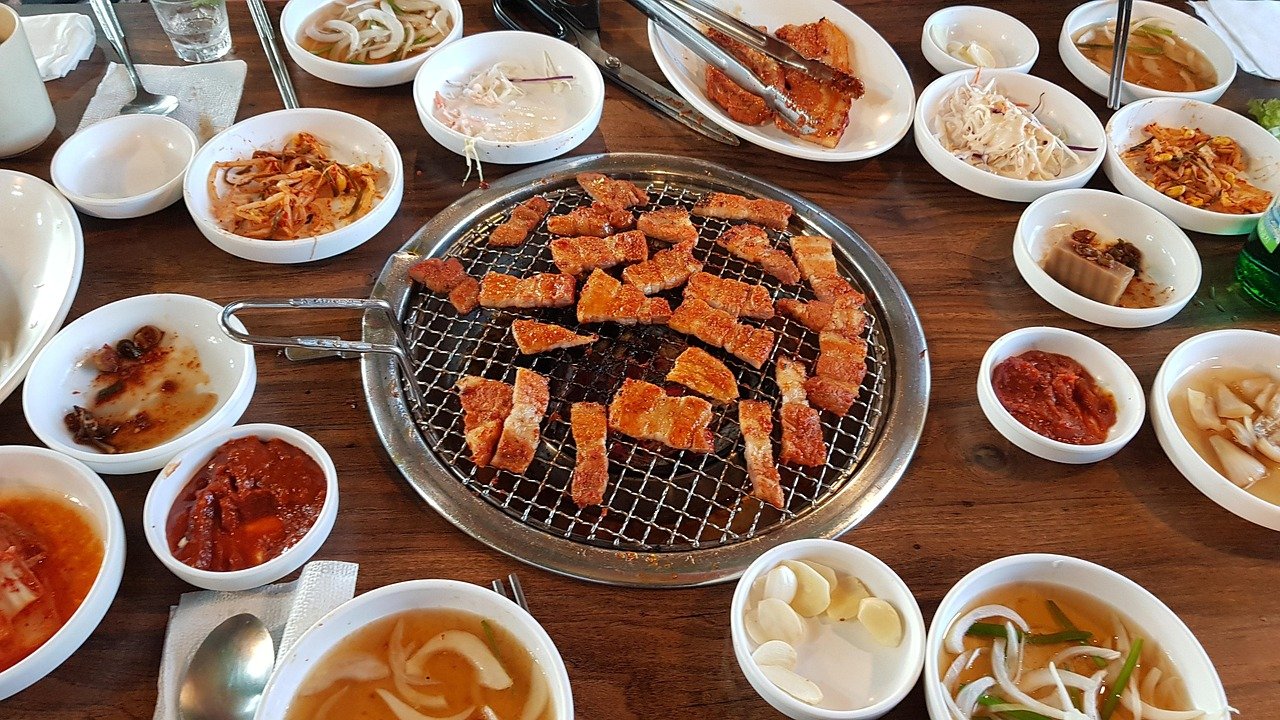
The little plates that arrive without you ordering them — kimchi, pickled radish, bean sprouts, raw garlic, sliced onion in soy sauce, maybe a scallion salad — are banchan. You don’t pay for them. You can ask for more of any of them, and nobody charges you for that either.
Plenty of places have a self-serve station along the wall where you go refill your own. Look for the stack of small dishes and the tubs. Take a normal amount. The one thing that actually bothers people is a table piling up refills they clearly aren’t going to eat.
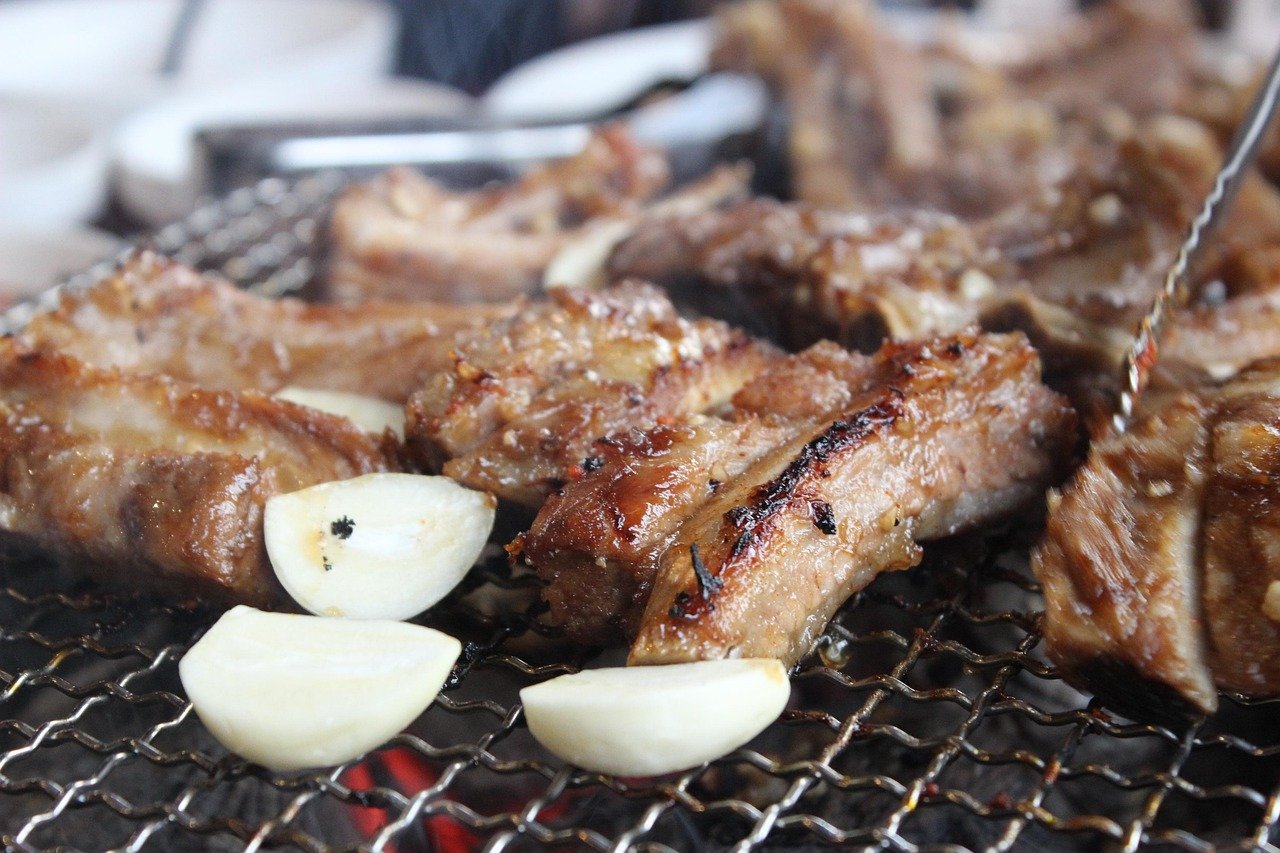
The raw garlic isn’t decoration, by the way. Throw the cloves on the grill, let them go soft and sweet, eat them with the pork. That’s half the point of the meal.
How to build a ssam without embarrassing yourself
The lettuce wrap — ssam — is the thing everyone overthinks.
Lay a leaf flat in your palm. Add one piece of meat. A dab of ssamjang, the thick reddish-brown paste in the tiny dish, and I mean a dab — it’s salty and it’ll bury the pork if you’re generous with it. Grilled garlic, a bit of the onion salad, some kimchi if you cooked it on the grill. Fold it up.
Then eat the whole thing in one bite. Not two. This is the only part of Korean BBQ etiquette that has an actual social edge to it: a half-eaten ssam put back down on your plate reads as a bit off, the way playing with your food does. It’s why people build small wraps rather than heroic ones.
Your cheeks will bulge. Everyone’s do. That’s just the meal.
The drinking rules, and why you get a pass on most of them
Soju shows up at BBQ tables more often than not, usually around ₩5,000–6,000 a bottle at the restaurant. There’s a whole grammar around pouring it.
You don’t pour your own glass. Someone else pours for you, you pour for them, and you keep an eye on whether anyone’s glass is empty. When you receive a drink from someone older, you hold your glass with both hands, or at least touch your free hand to your forearm. When you drink in front of someone significantly older, you turn your head slightly away from them.
Here’s the thing though: as a foreign visitor, almost nobody expects you to know any of this. Do the two-hands thing and pour for the person next to you and you’ll be well past the bar. The head-turn is the one Koreans themselves are getting looser about, and among friends of the same age it’s mostly gone.
If you don’t drink, say so early. “I don’t drink” lands fine. What’s genuinely awkward is accepting three pours and then abandoning full glasses all over the table.
Paying, and the thing you don’t do
You pay at the counter by the door on the way out, not at your table. Someone will bring the bill over or it’ll already be sitting on your table in a little tray — either way, it gets carried to the front.
Traditionally one person covers the whole thing and the balance evens out over future meals. That’s still common, though younger Koreans split constantly now and every card terminal handles it. Just say ttaro ttaro (따로따로) — “separately.”
And there’s no tipping. None. Don’t leave money on the table, don’t add anything to the card slip. It’s not stinginess, it’s just not a thing here, and leaving cash behind usually results in someone chasing you down the street to return it.
What actually bothers people vs. what doesn’t
Most of what tourists worry about doesn’t register at all. Nobody cares if you’re slow with the scissors, if your ssam falls apart, if you can’t pronounce the menu, or if you need to ask what something is. Curiosity goes over well.
The short list of things that do land badly: raw-meat chopsticks, wasting a mountain of banchan, and sitting on a table for two hours after you’ve finished eating while there’s a line outside. That last one is the real one, honestly. Korean BBQ places turn tables fast and everyone knows it.
One last warning about your clothes
You will smell like grilled pork. Not faintly. Your hair, your jacket, the inside of your bag.
Some restaurants hand out plastic bags or hooks with covers for your coat, and a few keep a deodorizing spray by the door — use it if it’s there, it helps more than you’d think. But plan around this. Don’t do Korean BBQ an hour before something where you need to look put together.
Honestly, that smell clinging to a jacket the next morning is one of my favorite things about living here. It means the night went well.
Read next
- Survival Korean: What to Say at Restaurants, Shops, Cafes, and in a Taxi — The six phrases that cover the whole meal.
- Do You Tip in Korea? What Actually Happens When You Try — What not to do when the bill comes.
- Gwangjang Market: What to Actually Eat at Seoul’s Oldest Food Market — The looser, louder version of the same food.