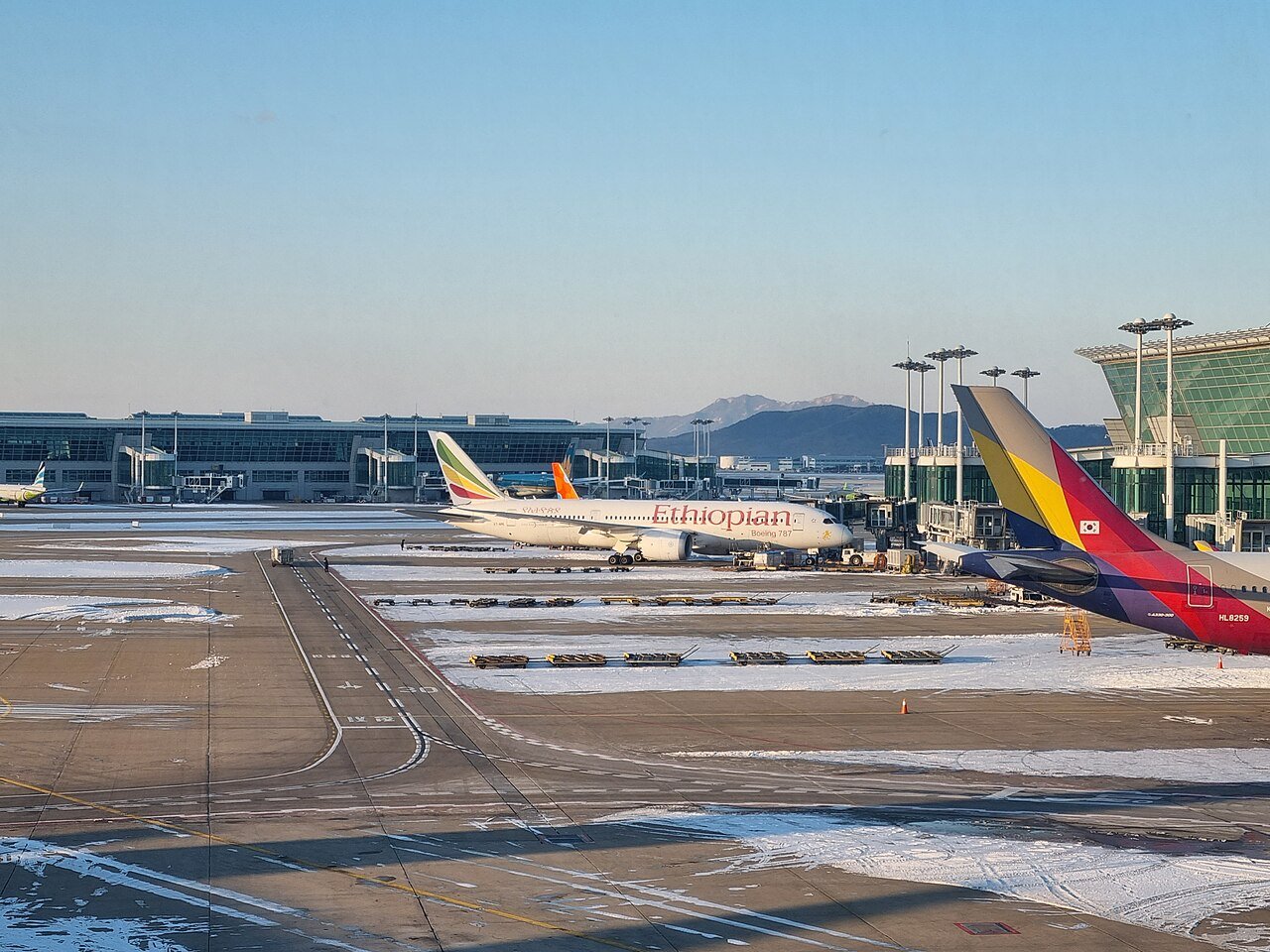
I have met enough people at Incheon to know the exact moment it goes wrong. It is not the flight and it is not immigration. It is the twenty minutes after you clear customs, standing between a train sign and a bus sign with a suitcase and no Korean money, making a decision you never researched because it felt like the easy part.
It is the easy part. But the options are not equally good, and the one most visitors default to — a taxi, because that is what you do at home — is the one I would pick last.
One thing to settle before any of it: Incheon has two passenger terminals and they are a long way apart. Terminal 2 serves Korean Air, Delta, Air France, KLM and a handful of others; everyone else lands at Terminal 1. Every number below differs between them, and the free shuttle between the two takes roughly twenty minutes. Check your boarding pass rather than assuming.
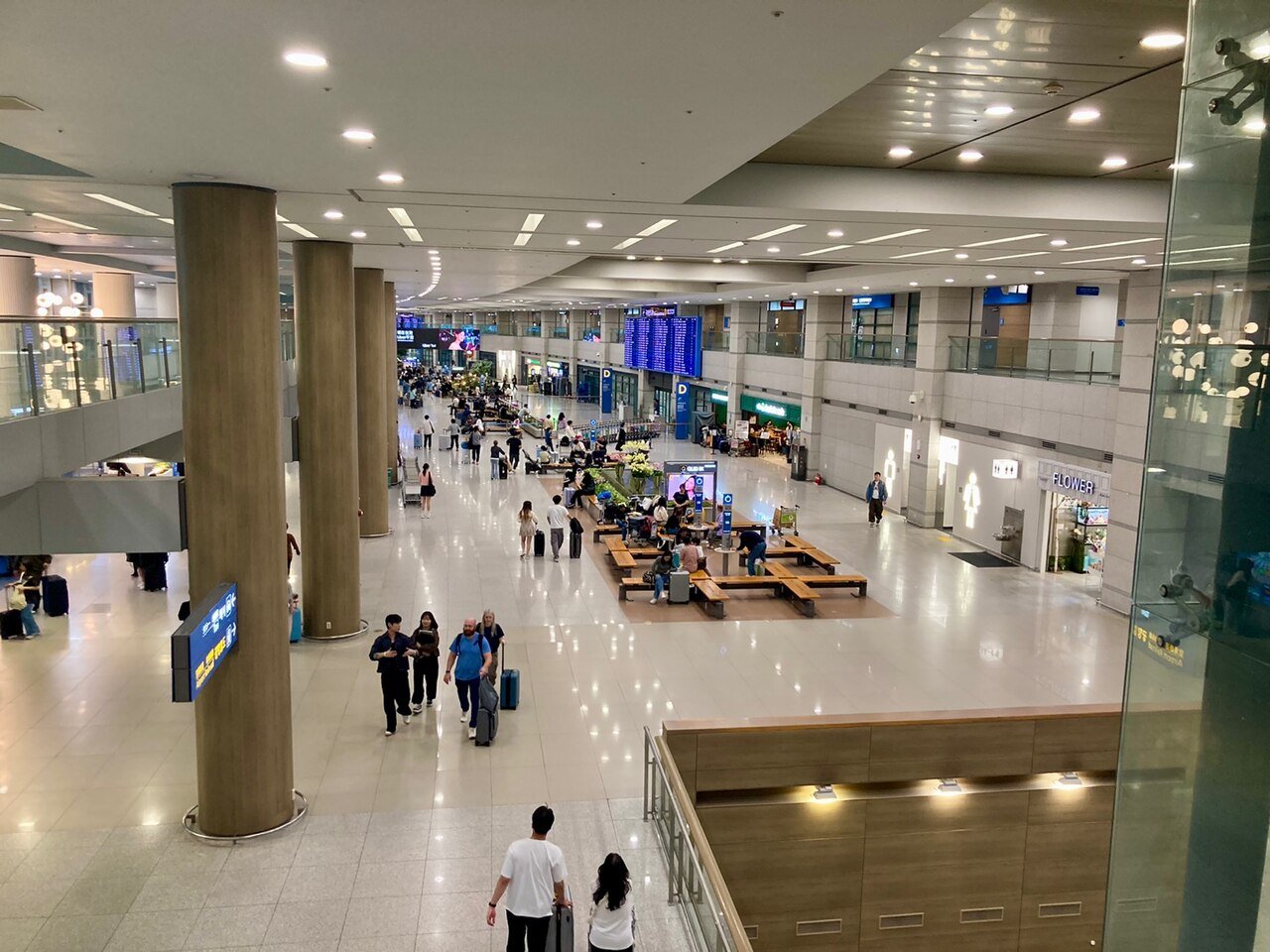
Before you pick anything: the ten minutes after customs
Three small things decide how smooth the next hour is, and all three are easier inside the terminal than outside it.
Get data first. Almost everything below — the train app, the taxi app, the map that tells you which exit your hotel is near — assumes you are online, and the airport is the last place where a counter staffed by someone whose job is explaining SIM cards is standing right in front of you. Sorting out a SIM or eSIM at the airport versus in town is worth five minutes of reading before you fly.
Then get a transit card. If you are taking the train you need one, and it is the same card you will use for every subway and bus for the rest of the trip. Where to buy a T-money card and how to get the balance back covers the part nobody plans for, which is the refund.
Then get a little cash. Not much — Korea runs on cards to a degree that surprises people — but the top-up machines are unreliable with foreign cards, and a few ten-thousand-won notes remove a whole category of problem.
The all-stop train, which is what most people should take
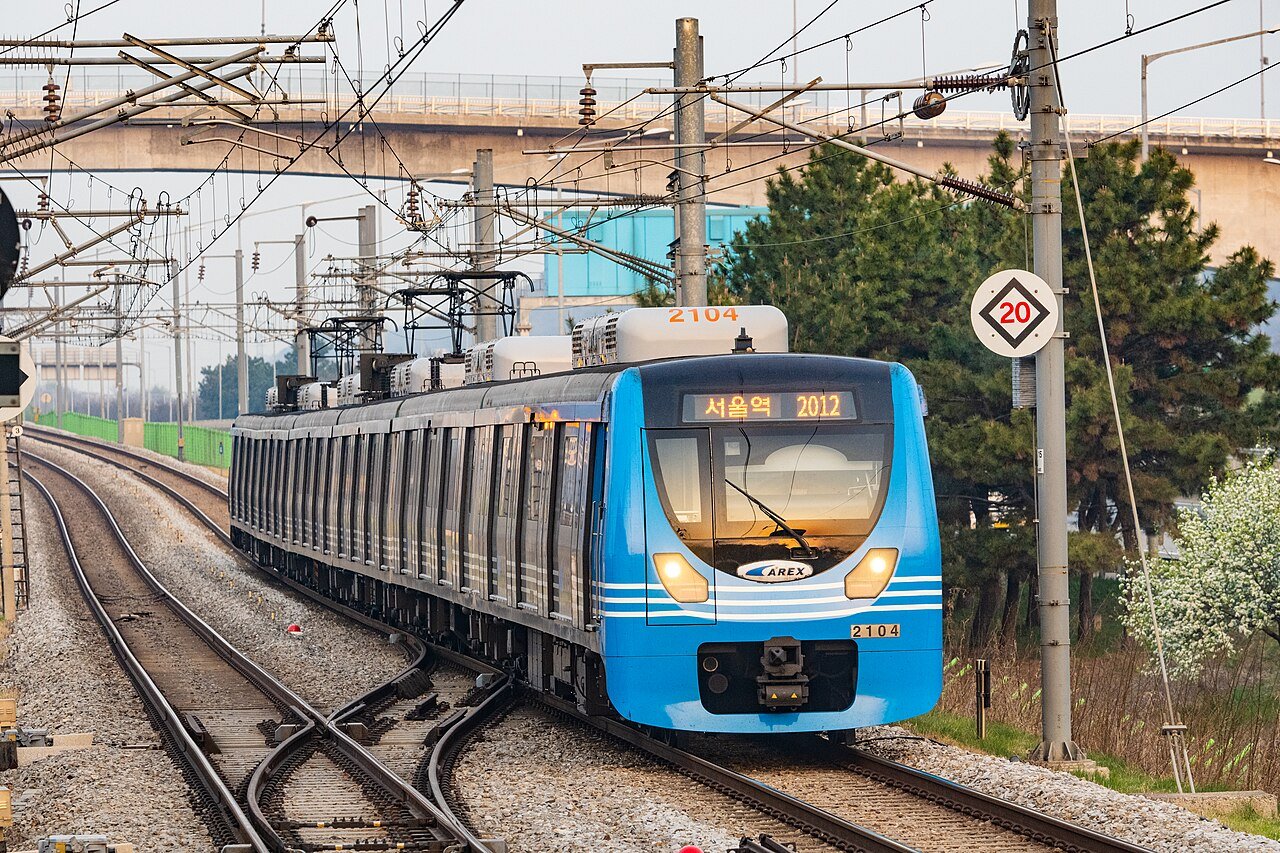
The Airport Railroad, AREX, runs two different services on the same track, and the difference between them is where most of the confusion lives. The one you probably want is the ordinary all-stop train — the blue one that behaves like a subway.
It leaves every five to ten minutes from around 5:30am to midnight, takes 59 minutes from Terminal 1 to Seoul Station and 66 from Terminal 2, and costs between ₩4,150 and ₩4,750 depending on how far you ride. That is the entire pitch. It is cheap, it comes constantly, and you do not have to plan your arrival around a timetable.
The part people miss is that it does not only go to Seoul Station. It calls at Gimpo Airport at about 44 minutes, Digital Media City at 54, Hongik University at 58, Gongdeok after that — and Hongdae is where a great many visitors are actually sleeping. Riding past your own neighbourhood to Seoul Station and then doubling back on the subway is a standard first-day mistake, and it costs you half an hour and a transfer with luggage. Look up which station your accommodation is near before you buy anything.
The honest downside is luggage. It is a commuter train with commuter-sized aisles, and at 8am on a weekday you will be standing with your case between your knees alongside everyone going to work. Outside rush hour it is a non-issue. During it, consider the bus.
The express train, and when it is actually worth it
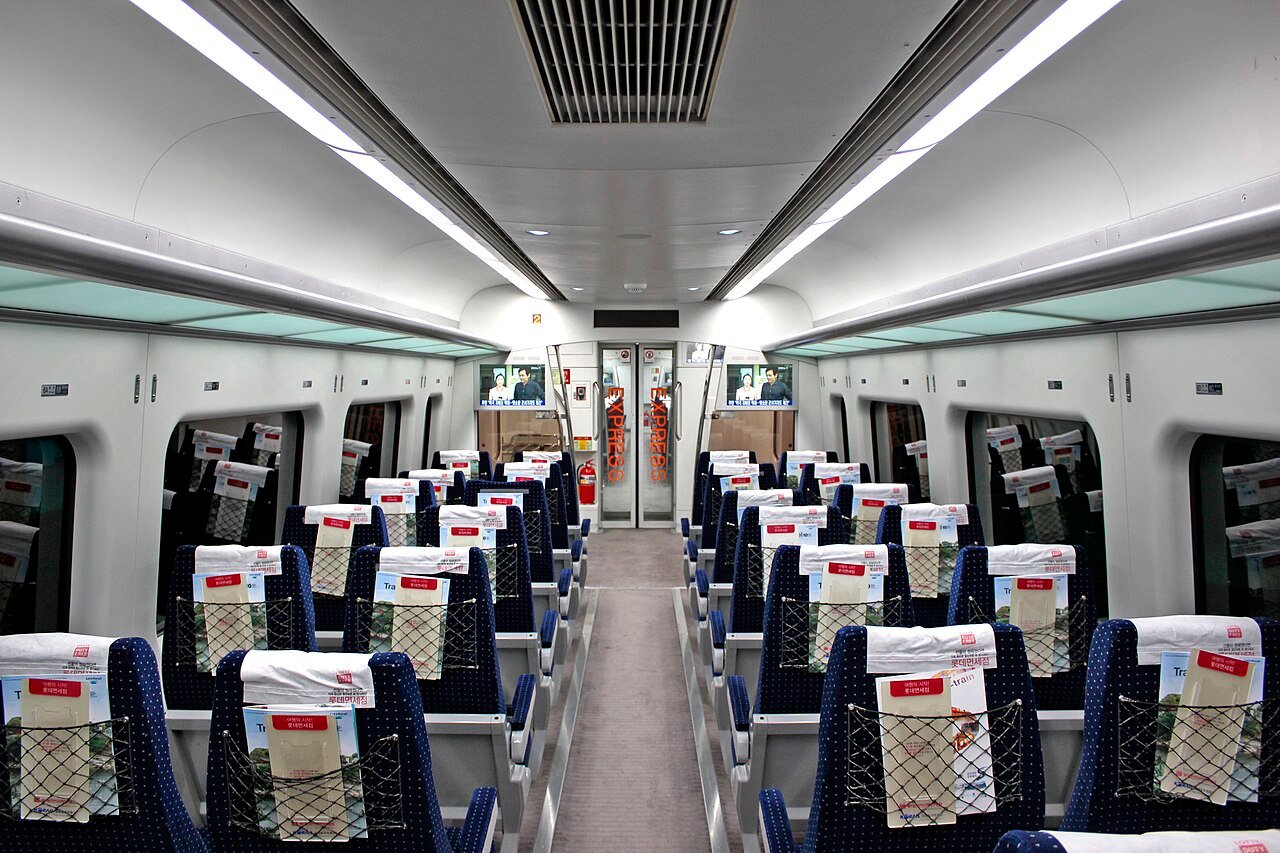
The express — the sign says Express, the Korean says 직통 — is a different train altogether: reserved seats, proper luggage racks, and no stops at all between the airport and Seoul Station. It takes 43 minutes from Terminal 1 and 51 from Terminal 2, and runs every 20 to 40 minutes.
So what you are buying is about sixteen minutes.
Seoul’s own transport guide lists the express at ₩13,000 one way. In practice AREX has run a discount on that fare for years and has kept extending it, which means the number on the booth screen is often lower than the number written down anywhere — including here. Check it at the counter instead of deciding in advance, and do not let an old blog post set your expectations either way.
Even at the discounted price, my view is that the express earns its money in exactly two situations. One, you are travelling with someone who genuinely cannot stand for an hour. Two, you have serious luggage and the thought of a crowded commuter train with two large cases is worse to you than the fare. Otherwise sixteen minutes is not what will define your first day, and the difference is two decent meals.
The limousine bus, and the thing that changed
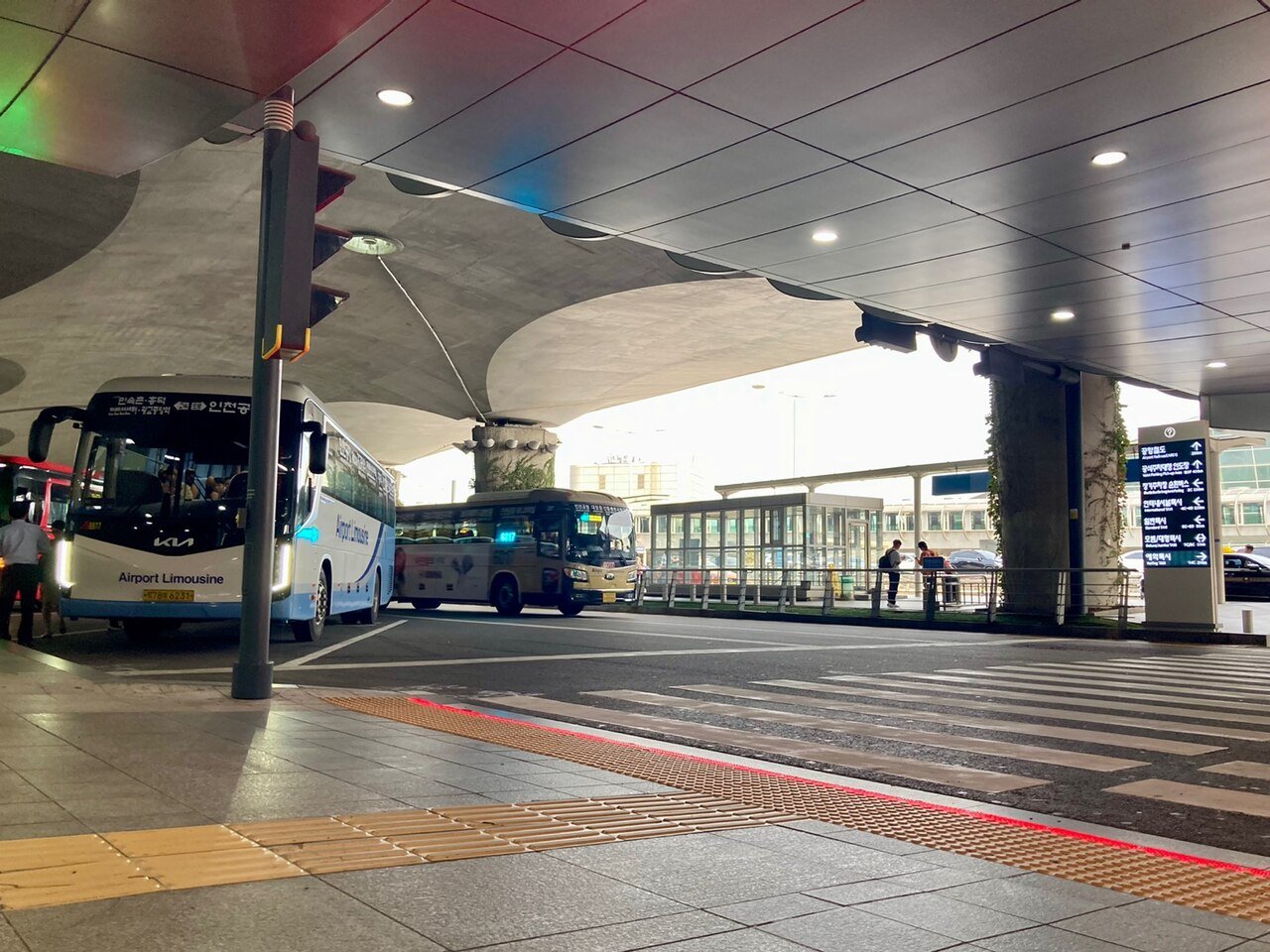
Airport buses are the most underrated option here and the one I see Koreans with luggage take most often. You walk out of arrivals, cross to the bus lanes, and coaches leave from numbered bays straight to specific neighbourhoods and hotel clusters. Sixty to eighty minutes depending on the route and what the traffic is doing, and somewhere between ₩5,000 and ₩15,000 depending on which bus.
The advantage over the train is physical rather than financial. Your suitcase goes in the hold. You sit in a large reclining seat. You do not carry anything up a staircase or through a transfer corridor, and for a lot of people arriving tired that is worth more than twenty minutes.
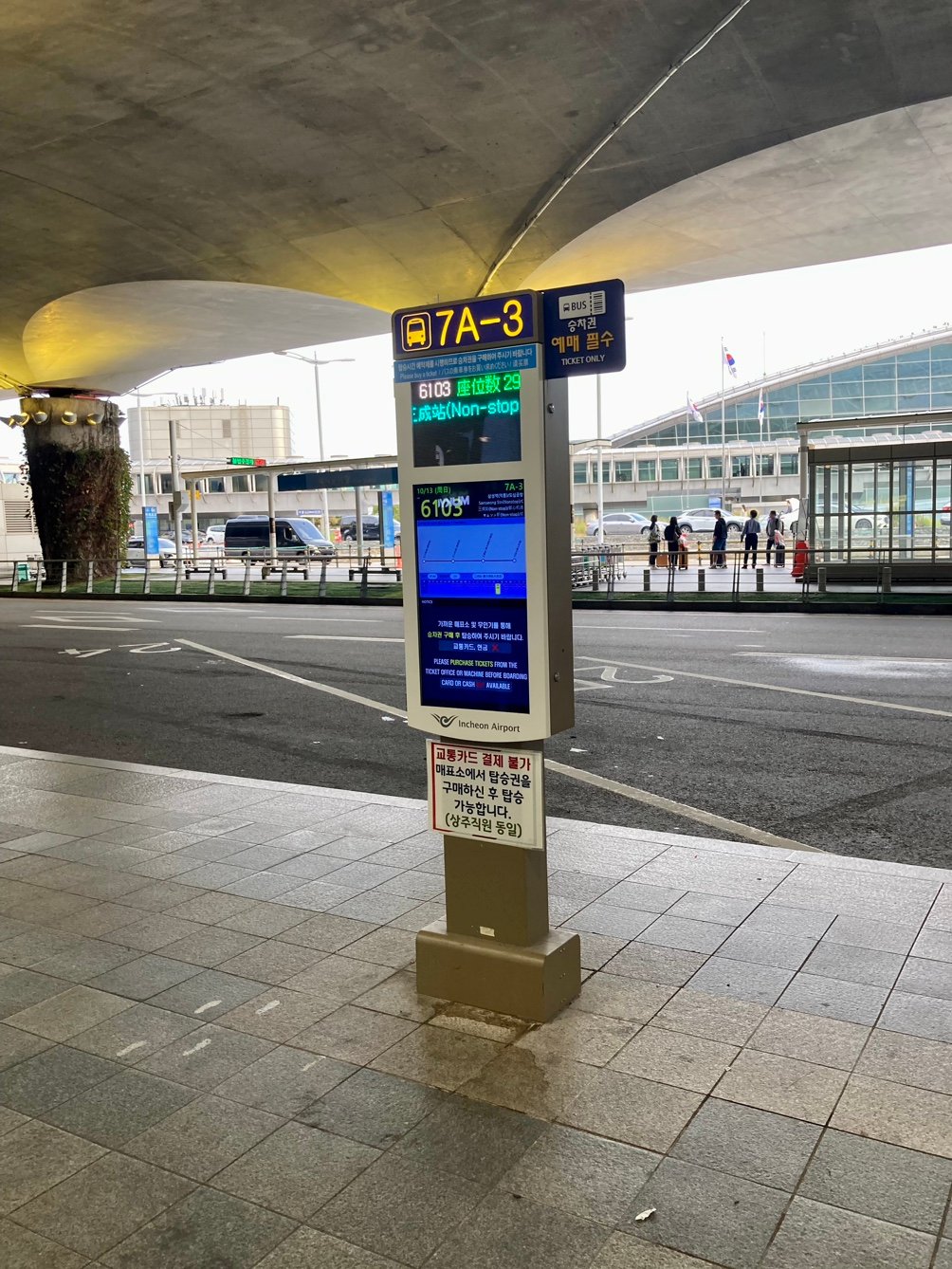
Here is the thing that catches people out now. You cannot pay on board. The signs at the stands say it in three languages: buy your ticket first. A transit card tapped at the door will not work, and neither will handing the driver cash. This is a change from how it used to be, so plenty of guides still tell you otherwise. Find the ticket window inside the terminal or the machine at the stand, buy the ticket, then walk to your bay.
Finding the bay is easier than it looks. The electronic pillars at each stand list the route numbers stopping there and when the next one is due, in Korean and English, and the staff at the ticket window will tell you the bay number when they sell you the ticket. Say your hotel or your neighbourhood; they do this several hundred times a day.
Taxi, and what it really costs
A taxi is the option most people assume is the default, and it is the one I would think hardest about.
Seoul’s official estimates put Incheon to Myeong-dong at ₩47,000–52,000 and 80 to 90 minutes; Dongdaemun Market at ₩50,000–55,000; Insa-dong at ₩44,000–48,500; Gimpo Airport at ₩31,000–34,000. On top of whatever the meter says, the Incheon Airport Expressway toll of ₩7,900 is added to your fare. Meters change and traffic is traffic, but the shape of it is stable: expect roughly ten times the all-stop train, for a journey that in the wrong hour is slower than the train.
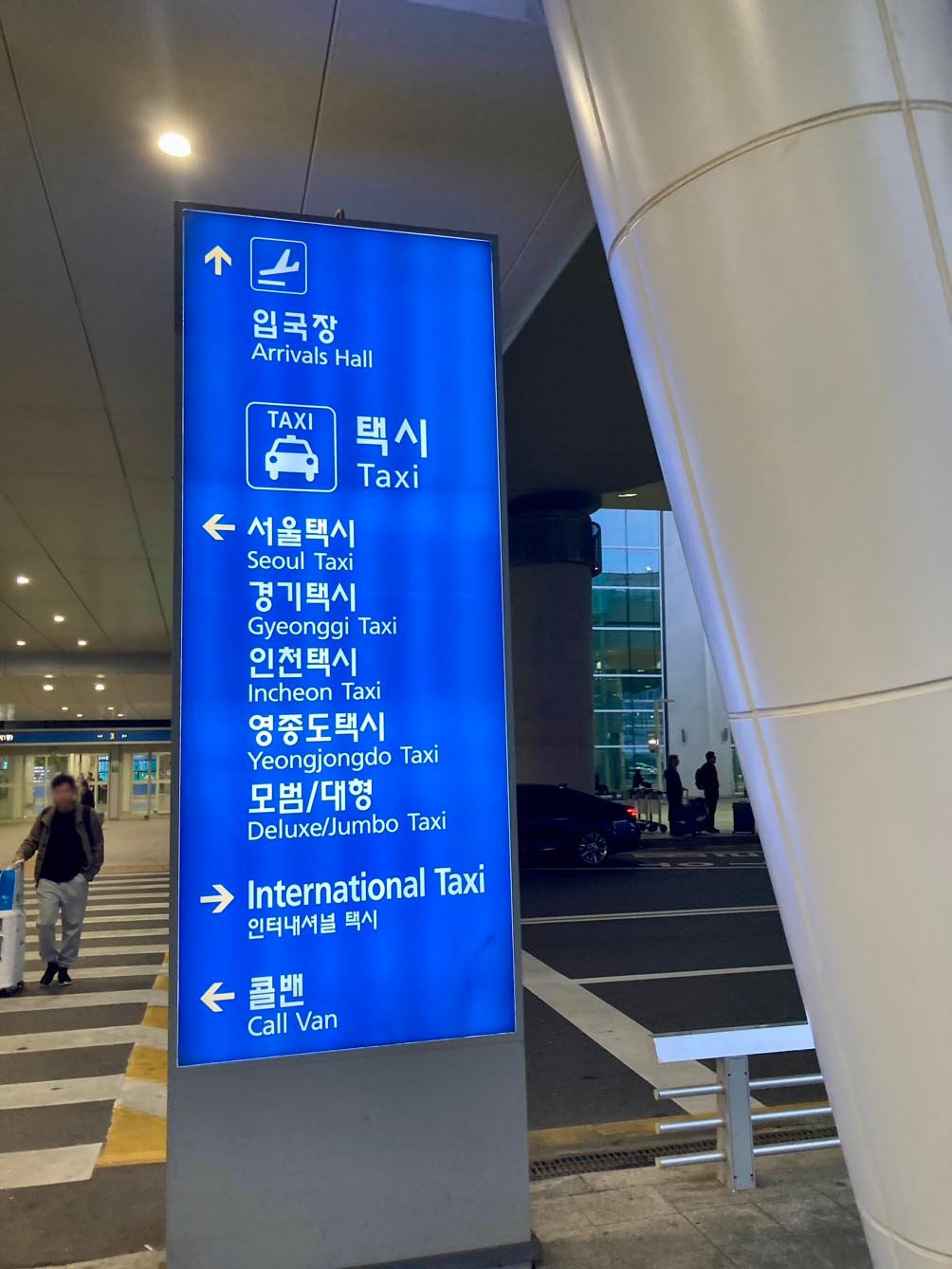
The tiers surprise people too. The black deluxe taxis run 40 to 50 percent above a regular one. A jumbo taxi seats up to eight at the deluxe rate, and that is the single case where a taxi becomes the sensible choice — six people with luggage splitting one van is a completely different sum from one person taking a sedan. There is also an International Taxi service with English-, Japanese- or Chinese-speaking drivers at around 20 percent above the standard fare, which is a fair price for not having to explain an address at midnight.
Whichever you take, have the app. Kakao T is how taxis actually get hailed here, and it matters more later in the trip than it does at the airport, where there is an orderly rank and a queue.
So which one
If you are arriving in daylight, travelling light, and staying anywhere along the line — Hongdae, Gongdeok, Digital Media City, Seoul Station — take the all-stop train and stop thinking about it. It is the cheapest thing here and it is also, most of the time, the fastest door to door.
If you have real luggage, or there are two or three of you heading to a hotel district, take the bus. Buy the ticket before you walk to the bay.
If you are a group of five or six with cases, price a jumbo taxi before dismissing the idea. Split enough ways, it stops being extravagant.
And if you land after midnight, the trains have stopped and the choice narrows to a taxi or waiting in the terminal until 5:30am. Plenty of people wait. The terminals stay open and lit and are busier at 3am than most city centres, which is its own small lesson in how this country handles the middle of the night.
One last thing, for the way out rather than the way in. Seoul Station has a city airport terminal attached to the AREX platforms, and AREX refurbished it in August 2026. If you are flying home from Incheon it is worth looking into what it can do for you before your departure morning, rather than finding out it exists as you walk past it with your bags.
Read next
Where to Leave Your Bags in Seoul: Lockers, Prices, and What Actually Fits — The next problem on arrival day, if your room is not ready yet.
KTX Tickets for Foreigners: The App, the Station, or the Rail Pass? — Going further than Seoul, and which ticket to buy.
Survival Korean: What to Say at Restaurants, Shops, Cafes, and in a Taxi — What to say in the first taxi, shop and restaurant.