Ask any Korean where to eat in Daejeon and you’ll get one answer before anything else: Sungsimdang. Not a restaurant, not a market, a bakery. That alone should tell you something. This is a city of over a million people, and its single biggest tourist draw is a bread shop that’s been running since 1956.
I’ll admit I went in skeptical. Every country has that one “famous” food spot that turns out to be famous mostly for being famous. Sungsimdang isn’t that, but it’s also not quite what the hype photos make it look like either.
What is Sungsimdang, and why is it famous?
Sungsimdang (성심당) is a bakery in Daejeon, and it is the answer almost every Korean gives when you ask what to eat in the city. In English you will see it written Sungsimdang, Sung Sim Dang or Sungsim Dang — same place. What makes it unusual is that it never turned into a nationwide chain the way Korean food brands normally do. Everything is still in Daejeon, which is why people build a stop at Daejeon Station around it instead of just picking one up at home.
The short version, if you only want the short version: the fried soboro bun is the one it is known for, the garlic baguette is the one I would actually queue for, most individual breads run 1,500 to 4,000 won, and the line moves faster than it looks. All of that is below.
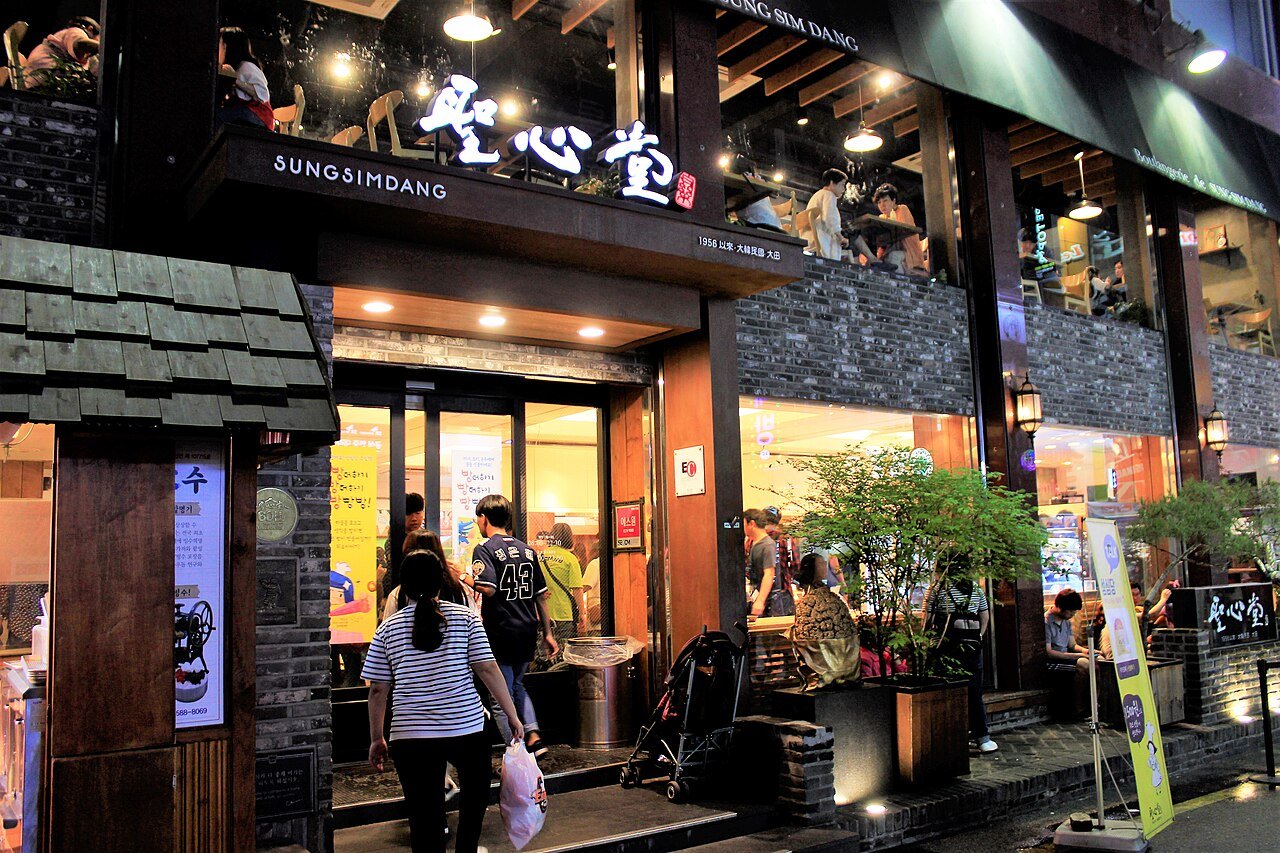
The other half of the answer is the story, which Koreans know and visitors usually don’t. The founder, Im Gil-sun, got his family out of Hungnam in December 1950 on the Meredith Victory, one of the last ships out. By the bakery’s own account he made a promise while the port burned behind him: if his family survived, he would spend the rest of his life on people who had nothing. The family settled in Jinhae, then took a train toward Seoul that broke down at Daejeon Station. He got off, liked the look of the place, and stayed. The priest at the Catholic church in Daeheung-dong gave him two sacks of flour, his wife learned to steam buns, and a few days later there was a tent outside Daejeon Station with a hand-lettered sign on it. The name is Catholic — it’s the Sacred Heart, written in Chinese characters.
And then the part that turns a nice origin story into the reason people still bring it up: from the beginning he closed early, so he could take the day’s unsold buns down to the people living under Mokcheok Bridge. Every evening. Seventy years later the company still hasn’t opened a branch outside the city. In a country where a successful food brand franchises nationwide within two years, that refusal reads as loyalty, and Daejeon has decided to be proud of it.
The line is real, but it moves
The main store near Daejeon Station has a queue that can wrap around the building on weekends, especially in the afternoon. People sometimes see that from the street and just leave. Don’t. It’s a bakery with dozens of registers and a huge floor, so the line eats itself fast, usually 10 to 15 minutes even when it looks brutal from outside. Weekday mornings, right after opening, there’s barely a wait at all.
What actually slows things down isn’t the checkout, it’s the crowd inside grabbing trays and tongs, elbow to elbow, trying to figure out what half the display cases even are. First-timers freeze up. Don’t be that person, have a mental shortlist before you walk in.
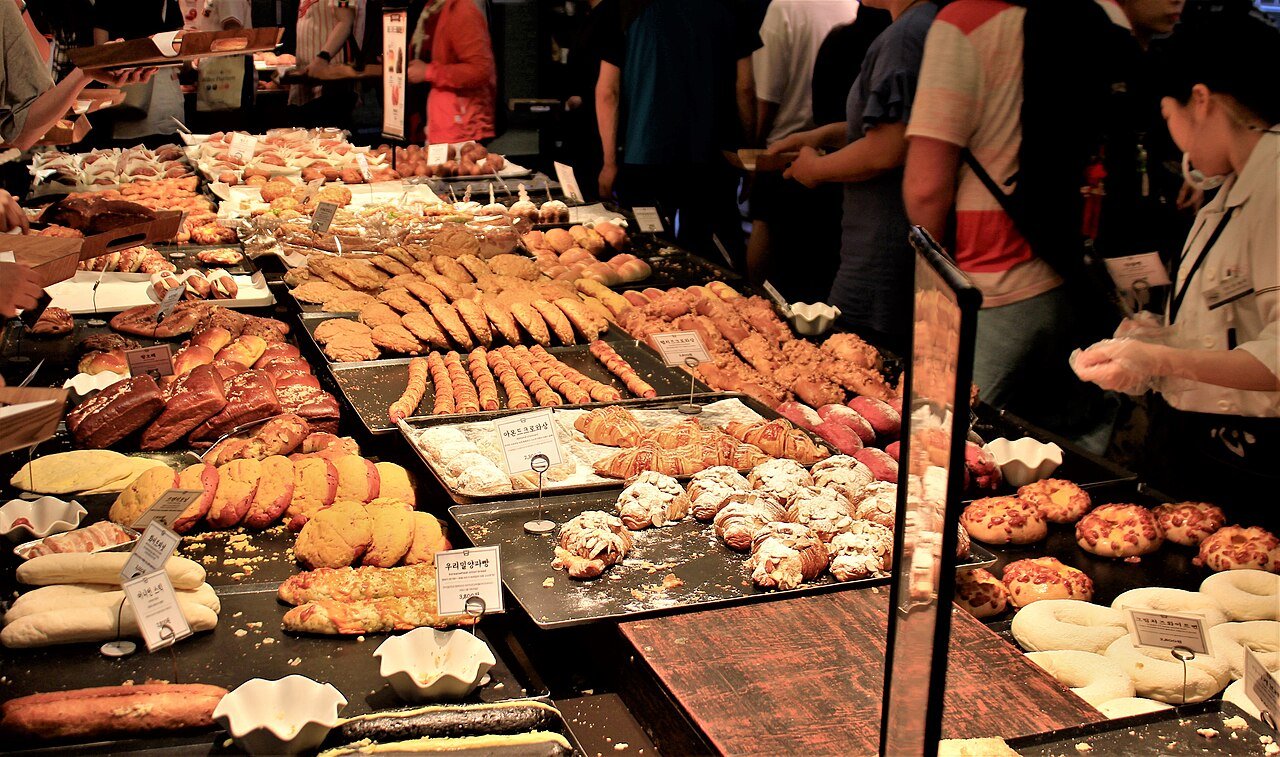
It helps to know what the room sounds like before you’re in it. Tongs clicking all over the floor, staff calling out what’s just come out of the back, trays landing on racks with a bang. Watch what happens when a fresh one appears: people who were browsing three metres away turn and converge without hurrying and without saying anything, and the tray is half empty inside a minute. Nobody is rude about it, but nobody is waiting for you either.
The two places people freeze are the doorway, holding an empty tray in a current of people who know exactly where they’re going, and the fried soboro counter, watching a local sweep five into a bag without breaking stride and wondering whether five is normal. It is. Pick up a tray, move with the flow, and decide what you want before you’re inside.
One timing note worth having: the branch inside Daejeon Station opens at 07:00, an hour before the main store does, which makes an early train the easiest way to skip all of this. And if something specific is sold out, ask rather than giving up — trays come out through the day, and staff will tell you flatly when the next one is due.
What’s actually worth buying
The fried soboro bun (튀김소보로, twigim-soboro) is the one everyone mentions, and it earns it. Deep-fried sweet bun with a crumbly sugar topping and a red bean filling, it sounds like it shouldn’t work and somehow does. Around 2,200 won each. Buy at least two because you will regret buying one.
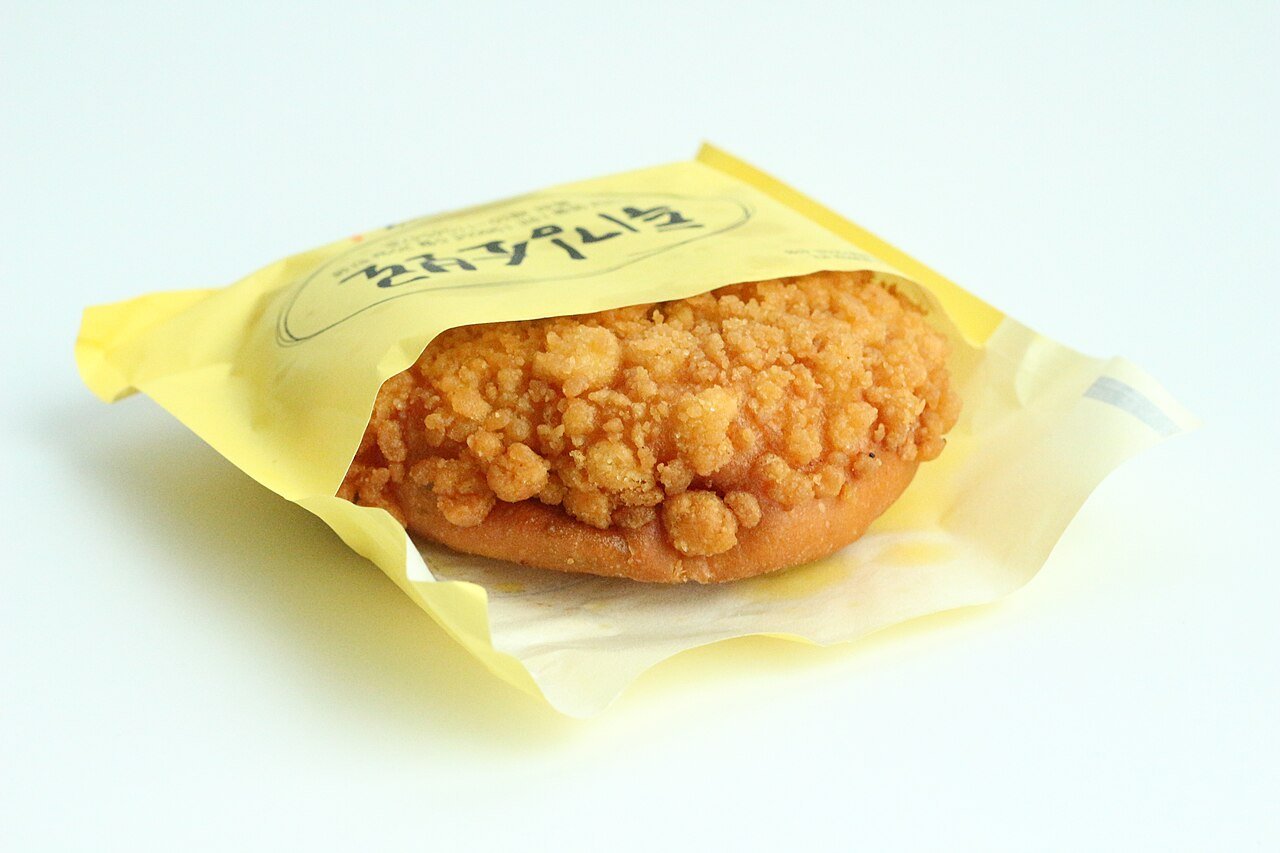
Worth understanding why it works, because it’s an odd invention. Start with two of the dullest items in any Korean bakery: soboro-ppang, a soft bun with a dry, sandy crumb topping, and danpat-ppang, a soft bun with red bean paste inside. Both have been on every shelf in the country for sixty years and neither is anybody’s first choice. Sungsimdang’s second-generation owner put them together and dropped the whole thing in the fryer, which is the entire idea.
What the fryer does to the crumb topping is the point. On a normal soboro bun that topping is powdery and half of it ends up on your shirt. In hot oil the same crumb takes on fat and sets into a shell — sandy becomes brittle, the sugar catches slightly and turns toasted rather than just sweet, and the surface starts making a noise when you bite it. Then the bite arrives in three stages: the shell cracks, under it is a band of bread the fryer has made denser and slightly chewy, and then the red bean, coarse and not very sweet, cool against everything else.
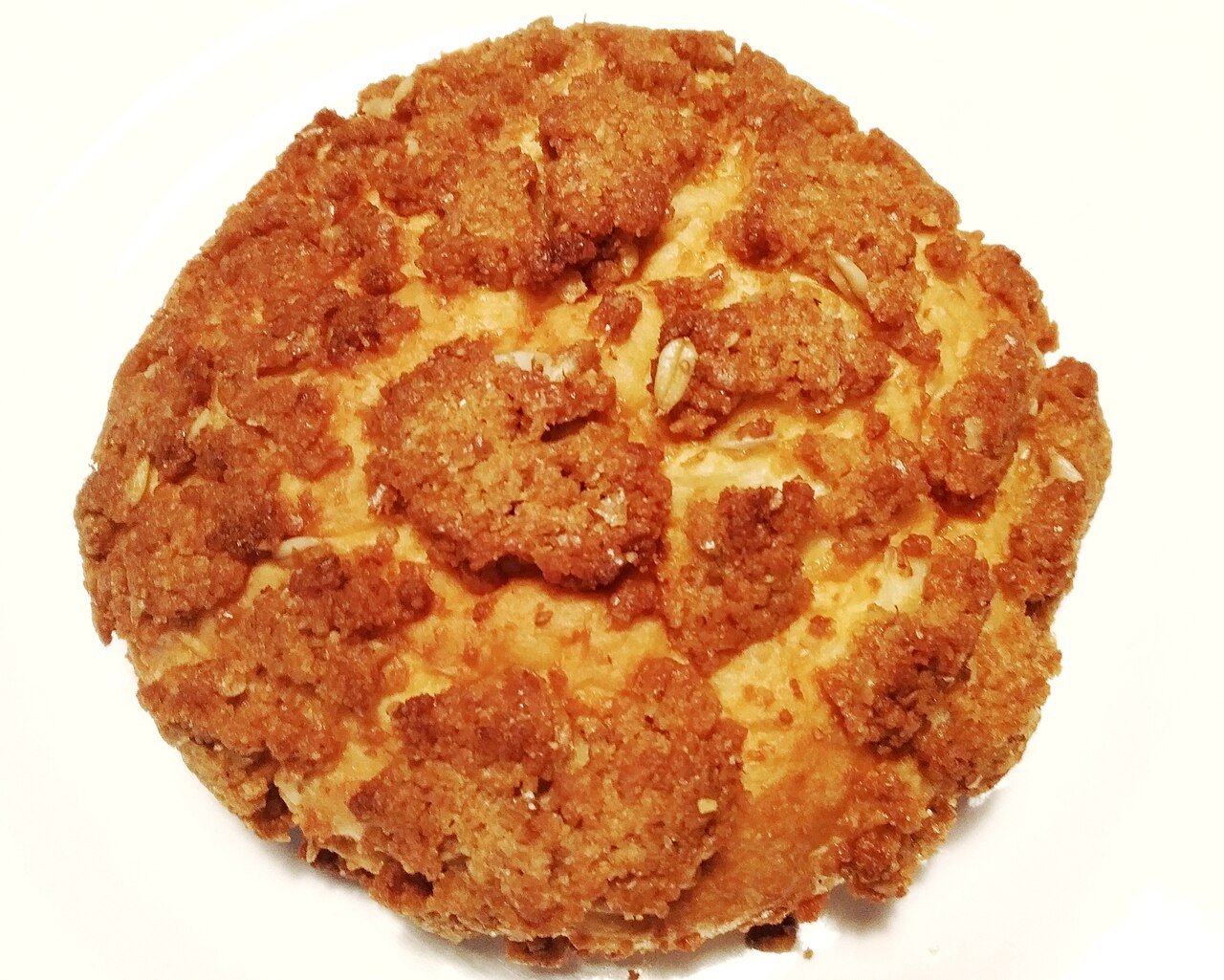
It is a different object hot and cold, and that matters more than anything else here. Within an hour or two of the fryer the shell is loud and the paste is warm. By that evening the shell has gone quiet and slightly greasy and the bread firms up. Still decent, not the same food. This is exactly why some people carry a box back to Seoul, eat one on the sofa at eleven at night and conclude the country has lost its mind over a doughnut. Eat one standing outside the shop before you judge it, then buy the rest.
Less talked about but better in my opinion: the garlic baguette (마늘바게트). It’s not subtle, garlic butter soaked through a crispy baguette, but it’s genuinely one of the better savory breads I’ve had anywhere, chain bakery or otherwise. It sells out early on busy days.
The other one I’d push you toward is the chive bread — pantalon buchu-ppang, a soft savoury bun stuffed with garlic chives bound in cream, developed in 1986 and patented. Foreigners assume Koreans grew up eating this. We didn’t, and plenty of us hesitate the first time, because chives belong in pancakes and dumplings and soup, not packed into a white bun next to the cream buns. It reads as a category error until you eat one. The cream rounds off the sharpness, the filling is heavier and greener than you expect, and the bun is barely sweet. Fair warning: it is pungent in an enclosed space, so if you’re eating it on the train, the carriage will know.
Skip the plain cream cakes unless you’re already a fan of Korean-style sponge cake, which runs lighter and less sweet than Western versions. It’s fine, just not why people fly to Daejeon for bread.
It’s not just one shop anymore
This is the part that surprises visitors. Sungsimdang has expanded into something closer to a small bread district around the original location, a garden branch, a DIY workshop building, a cafe wing. You could spend a full afternoon there if you wanted to, though most people don’t need more than 30-40 minutes to grab what they want and move on.
Prices are lower than you’d expect for something this famous. Most individual breads sit between 1,500 and 4,000 won, and even a full box of assorted pastries rarely breaks 20,000 won. Cash and card both work fine, and yes, they take Naver Pay too, which matters more than it sounds like it should in Korea.
If you’re choosing between branches, the three that matter are these. The Daejeon Station branch is inside the station building, open 07:00 to 22:30 daily — the one to use if you’re passing through. The main store in Eunhaeng-dong runs 08:00 to 22:00 and is the one worth the ten-minute walk, since the fryer kitchen and their own flour mill are in the same building. The convention centre branch out in Yuseong has a second-floor cafe with actual seating, which the main store effectively doesn’t. Hours are on the company’s own branch pages and every one of them is open year-round; I checked them in September 2026.
A few honest complaints
The seating area, when it has one, fills up almost instantly, so plan to eat outside or take it with you. In summer the walk from the station gets sticky and there’s not much shade. And because everything sells at volume, some items go stale faster than a smaller neighborhood bakery’s stock would, so if you’re buying to bring home rather than eat same-day, ask staff which items travel well. They’ll tell you straight, the bakery staff here don’t oversell.
If you want the answer before you get to the counter, use the bakery’s own behaviour as the guide. Their official online shop will courier exactly three categories nationwide: traditional sweets, roll and pound cakes, and hangwa. None of the breads are on that list — not the fried ones, not the loaves, not the pastries. They won’t post their own fried soboro across the country, and they know the product better than anyone. So the boxed sweets are what travels, and the bread is for today.
Getting there
It’s a short walk from Daejeon Station, maybe 10 minutes, well signposted the whole way since half the foot traffic near the station is headed there anyway. If you’re taking the KTX through Daejeon and have a layover of even 40 minutes, it’s genuinely doable, that’s how close it is.
Rough arithmetic if you’re planning that stop: 40 minutes covers the station branch and nothing else, an hour and a half gets you to the main store and back through the crush with room to spare, and three hours turns it into an actual afternoon. Nothing stops you holding two separate tickets to build the gap — the mechanics of that are in our guide to buying KTX tickets as a foreigner.
I wouldn’t build a whole trip around it. But if you’re already passing through Daejeon, or you’re the kind of traveler who plans routes around food, it’s one of the rare “famous” spots in Korea that actually lives up to the reputation instead of just riding on it.
Read next
- Is Coffee Actually Cheap in Korea? A Local Price Breakdown — What a coffee costs once you’ve had the bread.
- Korean Convenience Store Food: What to Actually Buy (Price List Included) — The cheaper way to eat between meals.
- Gwangjang Market: What to Actually Eat at Seoul’s Oldest Food Market — If you’d rather queue for street food.